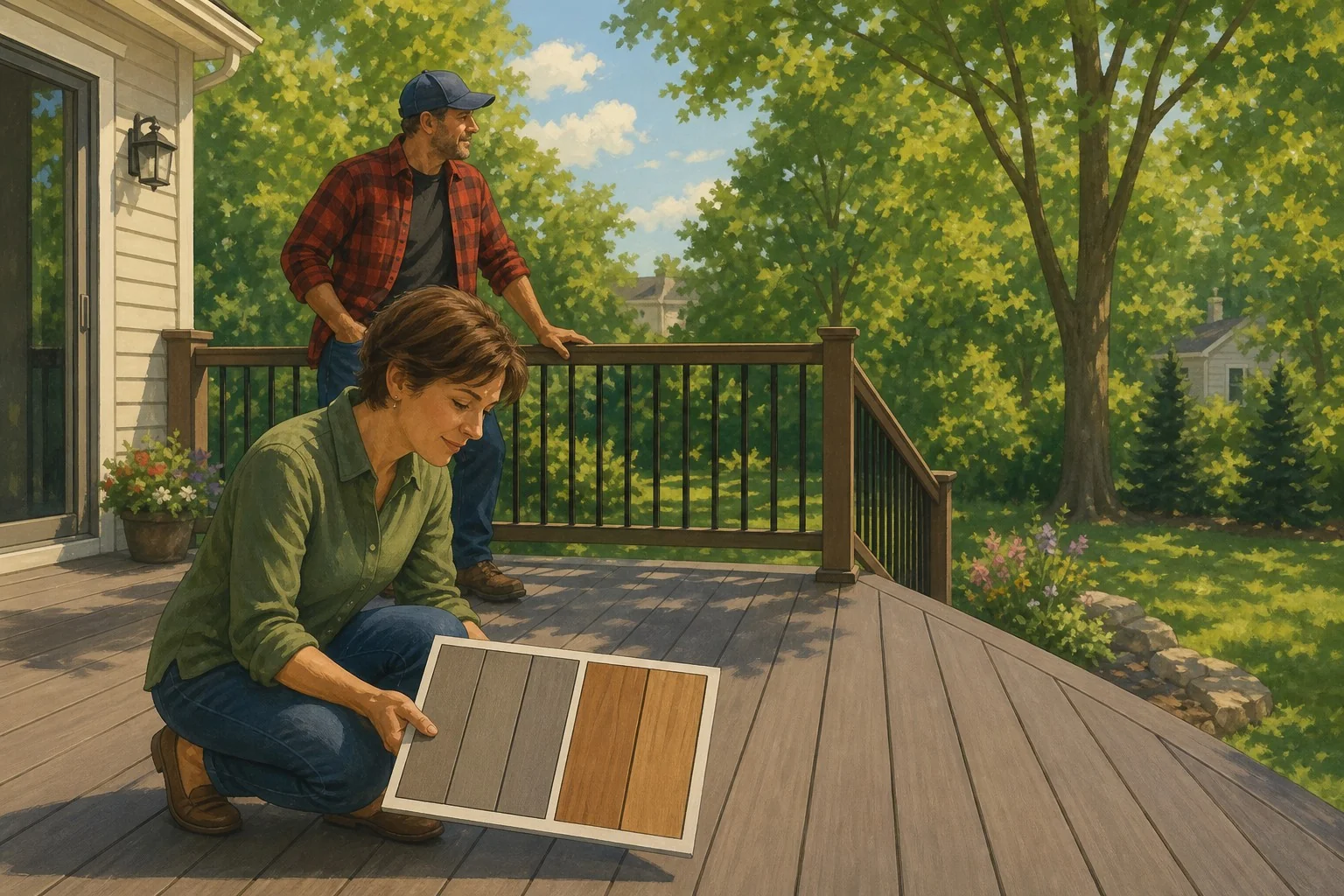
Look, if you’re deck shopping in July around here, you’re doing it right. This is when it counts. You want to know what a deck actually feels like when it’s 92 degrees and the sun’s been beating on it since 10 a.m. — you don’t figure that out in a showroom in April. You figure it out standing barefoot on a sample in a parking lot.
So let’s talk about what actually happens to composite, PVC, and wood when Pennsylvania cranks up the heat, and what you should be paying attention to if you’re pulling the trigger this season.
First truth: color matters more than material
I’ll save you a week of research. Whether you go composite, PVC, or wood — dark colors get hot. Period. That charcoal composite board that looks so slick in the sample photo? At 2 p.m. in a South Jersey sun, it’ll cook an egg. Same goes for espresso-tone PVC and dark-stained cedar.
If you want a deck you can walk on barefoot in July, the single biggest decision you make is the color. Lighter grays, driftwoods, tans, weathered wood tones — those stay drastically cooler. I’m talking sometimes 20 to 30 degrees cooler on the surface. Don’t overthink this part. Pick light.
Composite decking — good, but with an asterisk
Composite (Trex, TimberTech, Fiberon, and the rest) is what most Pennsylvania homeowners end up buying, and there’s a reason for it. Low maintenance. Won’t rot. Won’t splinter. Comes with a warranty that outlives the house.
The problem is composite absorbs and holds heat like a cast-iron skillet. It’s a mix of wood fiber and plastic, and both of those materials love to soak up sun. Some manufacturers now sell “cool” lines with reflective additives in the surface cap — the higher-end TimberTech AZEK lines and a few of the newer Trex boards run noticeably cooler. Pay attention to which line you’re buying, not just the brand.
Also: don’t cheap out. The bottom-shelf composite from the big box store is going to fade, cup, and get scary hot faster than the mid-grade stuff. If your budget can’t handle the better tier, look at a different material. Cheap composite is a five-year regret.
PVC decking — the coolest of the plastics
PVC is 100% plastic, no wood filler. Brands like AZEK Vintage, Wolf Serenity, and Deckorators are the main players. PVC generally runs cooler than composite because it doesn’t hold heat the same way — the light-colored PVC boards are about as cool underfoot as anything you’ll find in the synthetic world.
Downsides? It’s expensive. It can feel a little slick when wet, depending on the embossing pattern. And PVC moves — it expands and contracts more than composite, so gapping during install matters a lot. A guy on my crew years back put PVC down for a family in Havertown and butted the boards too tight on a cool April morning. By mid-July those things had pushed apart at the seams like piano keys and we had to pull half the deck and redo it on my dime. That’s when I started checking every joint myself before the crew clocked out.
Lesson: if you go PVC, make sure whoever’s installing knows the manufacturer’s gap spec and actually follows it.
Wood decking — cooler than you’d think, but it wants attention
Here’s the thing nobody selling composite wants to admit: real wood, especially pressure-treated pine or cedar, often stays cooler underfoot than composite in direct sun. Wood breathes. It doesn’t lock heat in the same way plastic does.
Ipe and other tropical hardwoods look gorgeous and last forever, but they run hotter than softer woods because they’re denser. If you’re going hardwood for the barefoot factor, you’re missing the point of hardwood.
The catch with wood is maintenance. In PA we’ve got humidity, freeze-thaw cycles, and a solid four months a year where everything wants to rot. A pressure-treated deck needs cleaning and sealing every two to three years, or it turns gray and starts checking. Cedar’s the same story, maybe a little worse. If you’re the kind of homeowner who’s not going to pick up a sprayer every couple of years, don’t buy a wood deck. You’ll hate it by year four.
Three things to do before you sign anything
1. Do the hand test in the sun. Every decent supplier has sample boards. Take the ones you’re considering, set them outside for 20 minutes on a hot day, and put your hand on them. That’s your answer. Marketing lies. Your palm doesn’t.
2. Think about shade before you think about material. A pergola, a sail shade, a decent umbrella setup — any of those knock 15 to 25 degrees off surface temp. Sometimes the right answer isn’t a fancier deck board. It’s just some shade over a normal one.
3. Ask about installation gaps. Especially for composite and PVC. If your contractor is butting boards tight in cool weather, they’re going to buckle in July. Proper gapping is not optional. If the guy quoting you can’t tell you the manufacturer’s spec off the top of his head, get another quote.
Bottom line
If you want the coolest deck for Pennsylvania summers with the least fuss: light-colored PVC, or a top-tier “cool” composite in a light tone. If you don’t mind maintenance and want cooler feet: cedar or pressure-treated pine, sealed light. If you want dark and dramatic: buy a pair of deck shoes and stop complaining in August.
Buy what fits your life, not what looks best in a brochure. And for God’s sake, do the hand test.