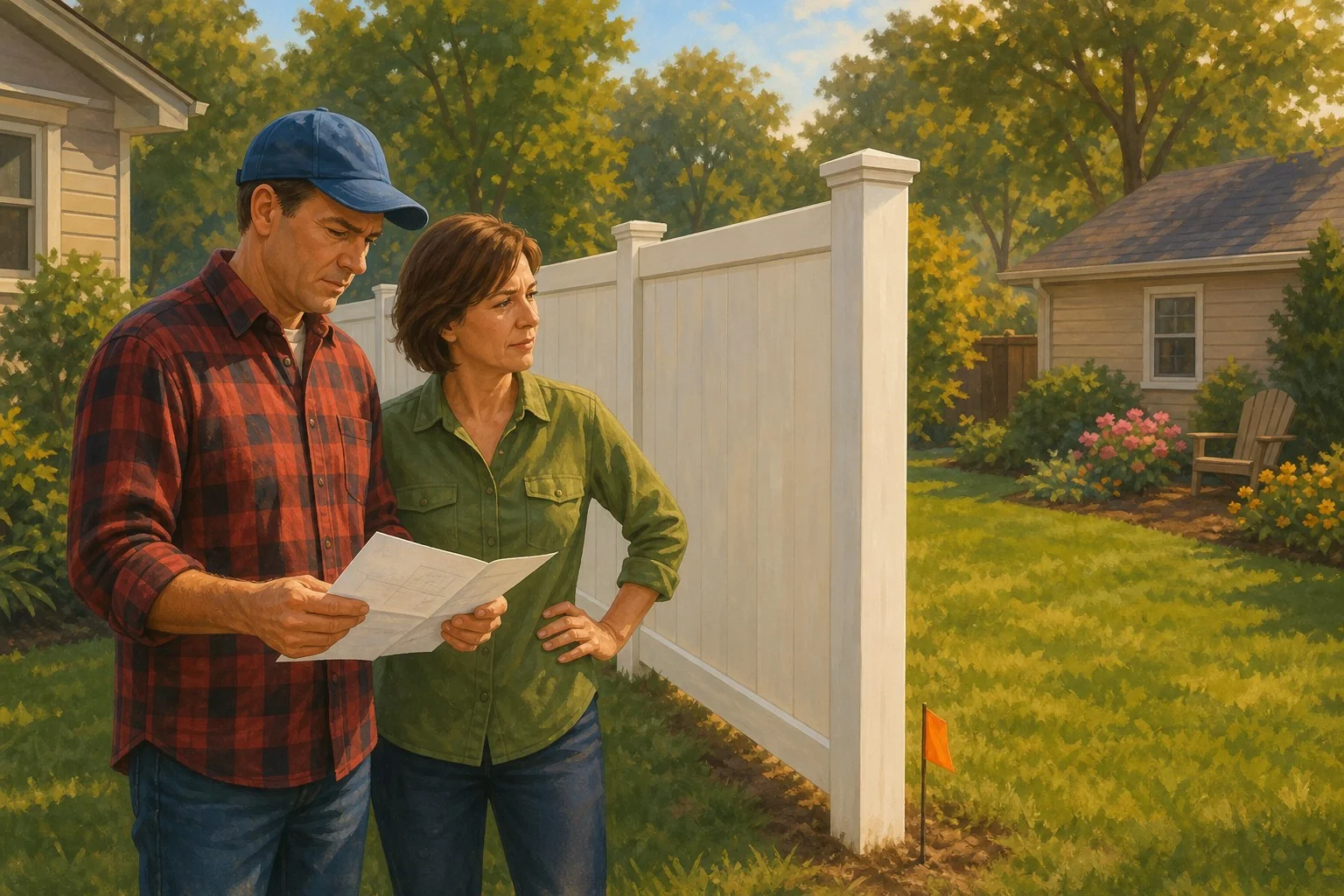
You want a fence. Your neighbor wants a fence. Nobody wants to pay for the whole thing. Welcome to the oldest argument in the Commonwealth.
I’ll cut to it: Pennsylvania does not have a statute that forces your neighbor to split the cost of a boundary fence with you. That’s the whole ballgame, right there. Some states — Ohio, for one — have old “partition fence” laws that say if a fence sits on the property line, both owners kick in. PA is not one of those states. If your neighbor tells you to pound sand when you ask for half, they’re not breaking any law. They’re just being difficult about it, which is a different problem.
That doesn’t mean it’s a free-for-all. There are rules — property lines, spite fences, local ordinances, and the plain old English of a written agreement. Here’s what actually matters.
Rule one: know where the damn line is
Nobody wants to hear this, but before you sink a single post, get a survey. A real one, from a licensed surveyor. Not the plot map you got at closing, not the fence line the last owner “always assumed” was correct, and definitely not what the guy across the street thinks.
I’ve been called in more times than I can count to fix jobs where the fence went in five inches over. Sometimes six inches. One job in Roxborough, a guy put in 80 feet of cedar privacy fence that turned out to be a full foot on his neighbor’s side. The neighbor waited until it was done, then made him tear the whole thing out. That’s legal. Encroachment is trespass on the neighbor’s land. Doesn’t matter that you paid for it, doesn’t matter how nice it looks — it’s not on your property, it’s coming down.
A survey runs three to eight hundred bucks depending on the lot. That is the cheapest insurance you will ever buy. Do it.
Rule two: if you’re splitting the cost, get it in writing
A handshake deal with your neighbor about splitting a fence is worth exactly what it’s written on. Which is nothing.
People are friendly on Saturday. Then Monday hits, the spouse looks at the number, and suddenly your neighbor “doesn’t remember agreeing to that.” Or they move six months later, and the new owner has never heard of you or your fence or your deal.
Write it down. It doesn’t need to be a fifty-page contract. A one-page letter that says who’s paying what, who picked the fence, who’s maintaining which side, and both of you sign it. Keep a copy. Have them keep a copy. Done. If the number is real money — say, over five grand — spend a hundred bucks and have a real estate attorney look it over. That’s what they’re for.
Rule three: Pennsylvania’s spite fence rule is real
PA courts have long recognized what’s called a spite fence — a fence built for no purpose other than to annoy or block out a neighbor. The case law goes back over a century, rooted in private nuisance doctrine. If the fence has no legitimate use, is unusually tall or ugly on purpose, and was clearly built out of malice, a court can rule it a nuisance and order it removed or lowered.
You cannot get your neighbor’s fence torn down just because you don’t like the color. The bar is high. It has to be genuinely useless and genuinely spiteful. But if your neighbor puts up a 12-foot plywood monstrosity three inches from your kitchen window because you didn’t invite them to a barbecue, you have a case. Call a real estate attorney, not me.
Rule four: the “good side” faces out
This isn’t state law, it’s just how it’s done. The finished side of the fence — smooth boards, no exposed posts or rails — faces your neighbor. The ugly framing side faces you.
Some townships in PA have actually written this into their zoning ordinances, so check yours before you flip it. And even in the places where it’s not code, doing it backwards marks you as the neighborhood pain in the ass forever. Not worth it over a few 2x4s.
Rule five: check the local rules before you buy a single picket
State law is only half the picture. Your township, borough, or city almost certainly has its own rules on fence height, materials, setback from the sidewalk, and whether you need a permit. Philadelphia requires a permit for fences over a certain height. Plenty of suburbs cap privacy fences at six feet in the backyard and four in the front. HOAs are worse — some of them will dictate the species of wood you’re allowed to use.
Call the zoning office. Takes ten minutes. Beats tearing down a $4,000 fence because it’s six inches too tall or missing a permit sticker.
The short playbook
- Get a survey. Always.
- Build a couple inches inside your line if you don’t want to share ownership or fight about future maintenance.
- Talk to the neighbor before you build. Even if you’re not splitting the cost, tell them what’s coming and where the line is.
- If you’re sharing the bill, put it in writing. Both signatures. Keep it in a drawer.
- Check township and HOA rules before you swing a hammer.
- Don’t build a spite fence. It’s tacky, it’s actionable, and it makes you the story at every block party for the next twenty years.
Fences make good neighbors when they’re built right. When they’re built wrong, they make lawyers rich. Your call.