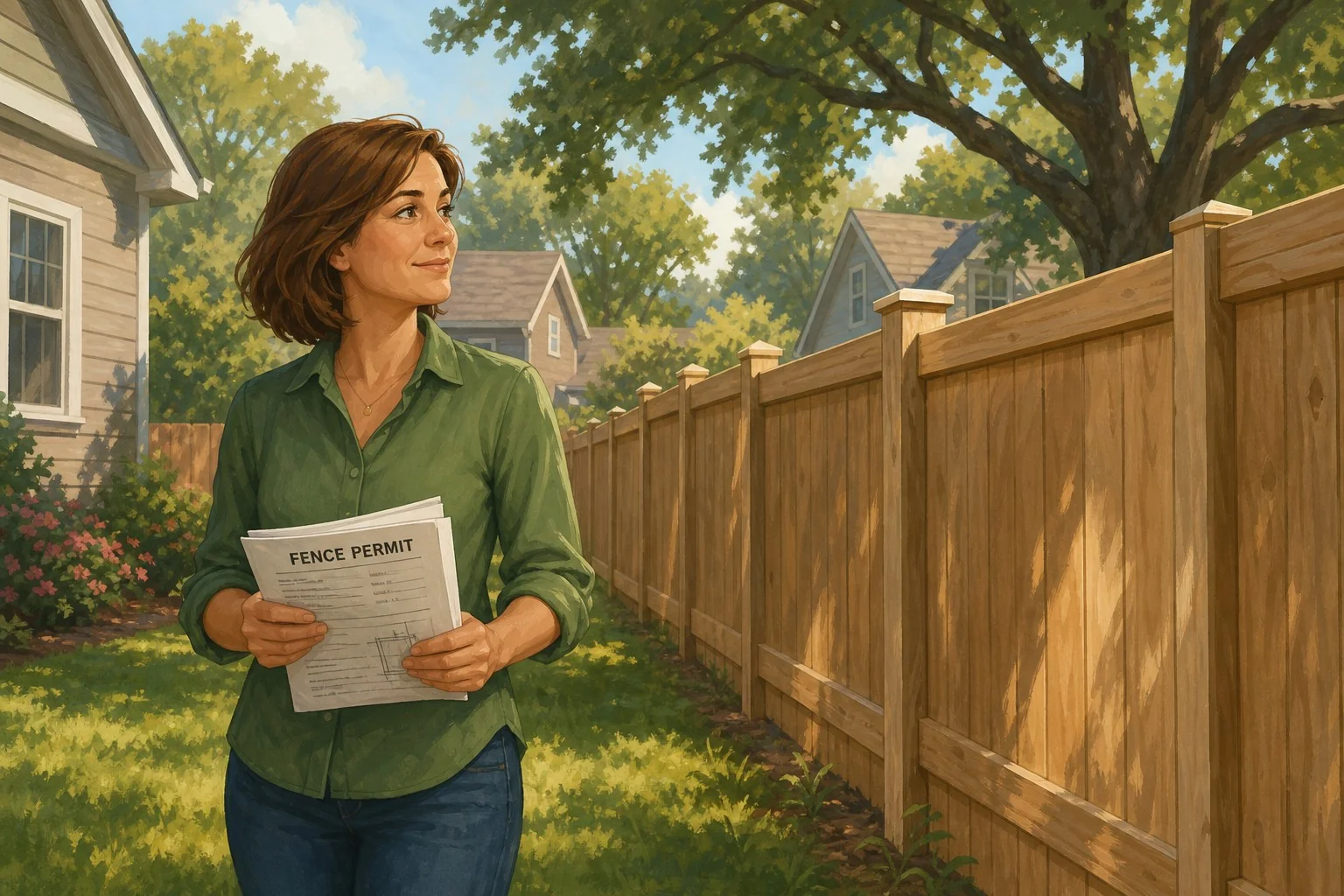
Look, you want to put up a fence. Good. Maybe you’ve got a dog, or kids, or a neighbor whose taste in lawn ornaments is making you reconsider your life choices. Whatever the reason — before you call the first guy with a magnet on his truck, sit down for ten minutes and read this. I’ve seen too many people in Bucks County set themselves on fire with this exact project.
I worked in and around Philly for over thirty years and pulled plenty of jobs out in Bucks — Doylestown, Newtown, Warrington, Langhorne, you name it. Fence jobs look simple. They are not. The fence itself is the easy part. Everything that happens before the first post goes in the ground is where it all goes sideways.
Get a real survey. Not a guess.
I don’t care how confident you are about where your property line is. You’re wrong. Probably not by much, but probably by enough to matter.
Most homeowners think the line runs where the old hedge is, or where the lawn changes color, or where some pipe is sticking up. None of that means anything. The only thing that means anything is a survey done by a licensed surveyor with the pins in the ground.
Spend the money. Get the survey. Find the pins. Mark them with flags. If you build a fence based on what you assume and you’re wrong by eighteen inches, your neighbor can — and probably will — make you tear the whole thing out. I had a client out in Newtown years back who put a beautiful cedar fence about two feet onto his neighbor’s lot. He was sure he was right. He wasn’t. The neighbor wasn’t friendly. The whole run came down and went back up at his expense. Cost him close to nine grand to learn where his property actually was.
Call your township before you do anything else.
Bucks County isn’t one place. It’s a pile of townships and boroughs, and every single one of them has its own rules. Doylestown Borough is not Doylestown Township. Newtown Borough is not Newtown Township. Warwick has different rules than Warminster. You get the idea.
Pick up the phone and call your zoning office. Ask:
- Do I need a permit?
- What’s the maximum fence height in my front yard? Side yard? Back yard?
- What’s the setback from the property line?
- Are there sight triangle rules if I’m on a corner lot?
- Are there material restrictions in historic districts?
Most townships allow six feet in the back and four feet in the front. Most. Not all. And if you’re in a historic district — parts of Doylestown, New Hope, Yardley — they will have opinions about what your fence looks like, and those opinions carry the force of law.
Build without a permit when you needed one and the township finds out, you’re looking at fines, a stop-work order, and possibly having to tear it down. Don’t be cute. Just call.
Call 811 before you dig. Every time.
PA One Call. It’s free. You make one phone call or fill out one form online, and they send the gas, electric, water, and cable folks out to mark where their lines run. They’ve got three business days to show up.
If you hit a gas line with a post hole digger, you are not having a good day. If you hit it with an auger, you might not be having any more days. This is not the part of the project to wing.
Check your HOA before you fall in love with a design.
Half the developments in Bucks have HOAs. Some are reasonable. Some are run by people who clearly need a hobby. Either way, if you’ve got one, they probably dictate what kind of fence you can install — height, material, color, even which side faces the street.
Read your covenants before you start picking out pickets. Get any required approval in writing. “The board president said it was fine over the fence at the cookout” is not approval. Get the signed form.
Pick material based on what you actually want from it.
Quick rundown:
- Pressure-treated pine: Cheapest. Will warp, twist, and gray out in two or three years if you don’t stain it. Most people don’t stain it.
- Cedar: Looks great. Holds up better than pine. Costs more. Still needs maintenance if you want it to stay looking good.
- Vinyl: No maintenance. Looks like vinyl, because it is vinyl. Bucks County winters will not destroy it, but big tree limbs in a windstorm will. And you can’t really fix vinyl — you replace panels.
- Aluminum: Great for pool code and for keeping the view open. Doesn’t contain a determined Labrador.
- Chain link: Honest. Cheap. Functional. Nobody’s writing poetry about it.
Pick based on what the fence is for, not what’s pretty in the showroom.
Don’t screw up the gates.
This is where most amateur jobs fall apart. Gates need to be sized for what’s actually going through them. If you ever want to get a riding mower, a wheelbarrow full of mulch, or a contractor’s truck into your backyard, a three-foot gate is not going to cut it. Put in a four-foot walk gate and a wider double-gate where it makes sense.
Hang your gates on the largest, deepest-set posts in the run. A six-by-six post in concrete, three feet deep, minimum. Cheap gate posts sag inside a year. Then the gate drags, the latch doesn’t catch, and your dog is out at the Wawa.
Set your posts below the frost line. No exceptions.
Frost line in southeastern PA runs about thirty to thirty-six inches. Your post holes need to be deeper than that — call it thirty-six to forty-two inches — and they need concrete. Anything shallower and the ground will heave every winter, and within a few years your fence will look like a roller coaster.
I don’t care what some kid on YouTube told you about driving posts in with a sledge. Dig the hole, set the post in concrete, do it right the first time. You’re not coming back to do this job again next spring.
One last thing.
Talk to your neighbor before you build. Not because you need their permission — assuming the fence is on your property, you don’t — but because a five-minute heads-up will save you fifteen years of cold-shoulder driveway encounters. Show them the survey. Tell them when the crew is coming. Offer them the “good side” if you’re feeling generous. In some townships, by the way, the finished side facing out is required. Check.
A fence is a long-term commitment. Do the boring parts right and it does its job for twenty years. Skip them and you’ll be paying for the lesson twice — once to build it wrong, once to tear it out and build it again.