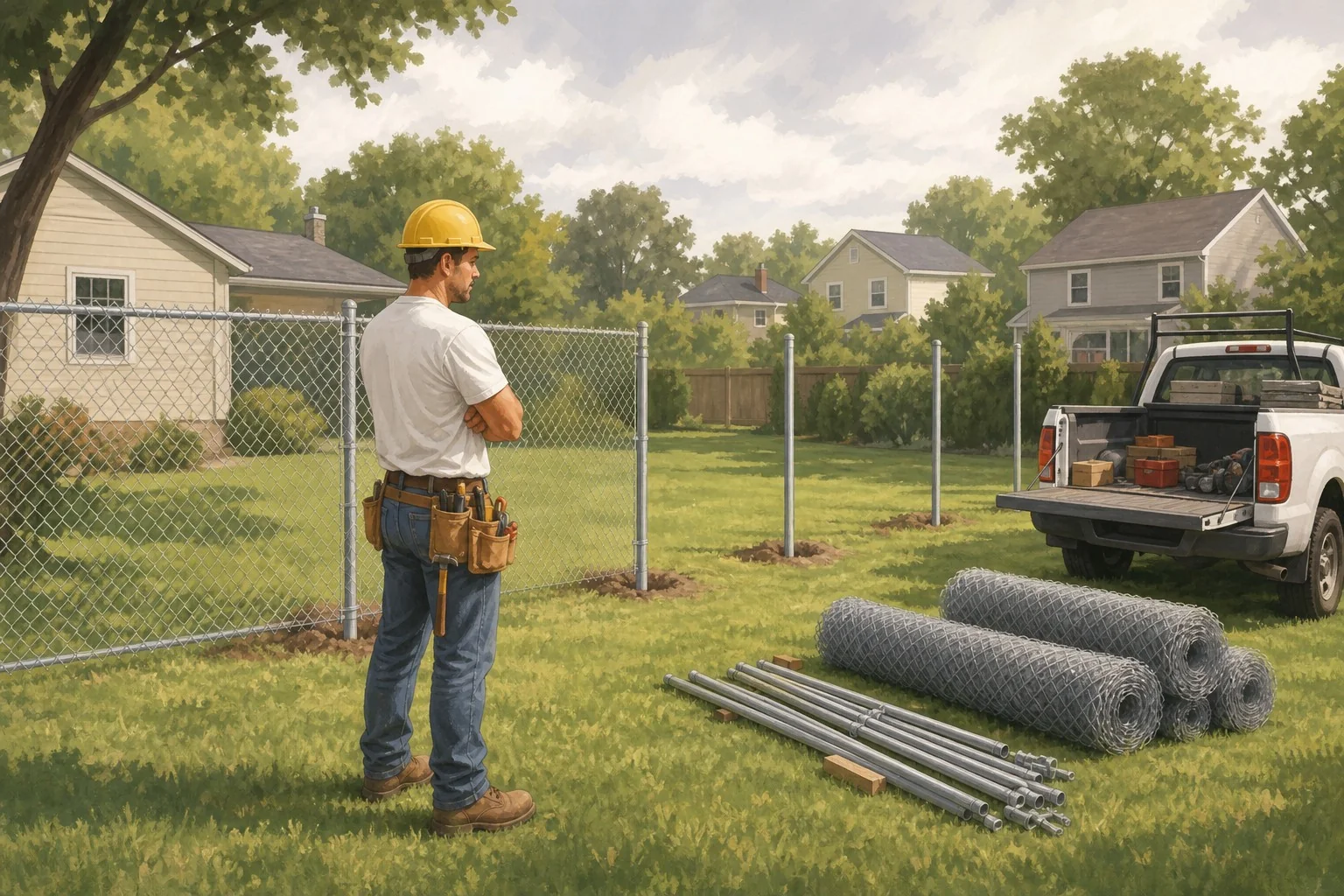
Chain-link gets treated like the simple fence. The no-brainer fence. The one you throw in over a weekend and move on. And it can be — if you order right and your supplier actually has everything you need. That second part is where a lot of homeowners and even contractors get burned.
Here’s the problem: chain-link isn’t just one thing. It’s a system. Fabric, pipe, fittings, tension bars, gate frames, hinges, latches — every piece has to match. And not just match in theory. They have to match in the actual sizes you’re running.
When they don’t, or when your supplier only stocks part of the system, the job stops.
The System Has to Match, or Nothing Works
Chain-link fabric comes in different heights: 36“, 42“, 48“, 60“, 72“, and on up. You spec the job, you order what you need. But fabric height alone doesn’t tell the whole story. The pipe running your line posts, corner posts, and end posts comes in different outside diameters — typically 1-3/8“, 1-5/8“, 1-7/8“, 2“, 2-1/2“ — and the fittings are sized to match the pipe, not the other way around.
Rail caps, tension bands, brace bands, loop caps — every single one of those fittings is keyed to a specific pipe OD. You can’t run 1-5/8“ fittings on 2“ pipe. They won’t seat right. The tension will be off. You’ll end up with a fence that looks sloppy at the connections, or worse, one that fails at the post when someone leans on it.
Same goes for the top rail. It runs through the loop caps and ties the fabric at the top. The diameter has to match the caps on your line posts. If your supplier has the fabric and the posts but ran out of top rail in the size you need, or only stocks one diameter, you’re stuck.
Gate Frames Are Where It Really Falls Apart
Gates are the most likely place for a system mismatch to bite you. A gate frame needs to match the pipe size of the rest of the installation — or at least be compatible with the hardware you’re hanging. Hinges and latches are sized to specific pipe diameters. You can’t just grab whatever gate frame is on the shelf and expect it to work with what you’ve already set in the ground.
I had a homeowner call me to finish a job another guy walked off mid-install. Posts were in concrete, fabric was rolled out, and there sat a gate frame in the wrong pipe size for the hinges the first guy had already ordered. The supplier he used only stocked one gate frame size. Nobody caught it until it was time to hang the thing. Two weeks to get the right hardware. The homeowner’s dog spent that time going under the fence through the unfinished opening.
That’s not a complicated problem. It’s a sourcing problem. It never had to happen.
What to Check Before You Buy Anything
Before you spend a dollar, get answers to these questions from your supplier:
1. Do they stock fabric in multiple heights? Not every job is a 4-foot privacy fence. If you’re fencing a yard with grade changes, or the homeowner wants 6-foot for security, you need the right height. A supplier who only stocks 48“ fabric is going to leave you short if the job calls for something different.
2. Do their fittings match the pipe sizes they sell? This sounds obvious. It isn’t. Some suppliers stock a full line of pipe but only fittings for the most common diameter. Ask specifically. “If I buy 1-5/8” pipe, do you have tension bands, brace bands, loop caps, and rail caps in 1-5/8“?“ Get a straight yes before you load your truck.
3. Do they have gate frames in sizes that match their pipe stock? Gate frames should be sized to work with the same hardware you’re buying for the rest of the fence. If your line posts are 2“ and your supplier only has gate frames spec’d for 1-5/8“, you’re going to have a hardware problem.
4. Is all of it actually in stock today? A supplier who can order it doesn’t help you if you’re trying to finish a job this week. Chain-link isn’t a custom material, but availability gaps happen — especially on less common heights or larger pipe sizes. If they have to back-order any component, you need to know that before the posts go in.
Work With Suppliers Who Stock Systems, Not Pieces
The right supplier for chain-link work stocks the full system in multiple sizes — not just the fabric and the posts, but all the hardware needed to connect them, in the right diameters, with gate options that actually line up with what you’re buying.
This is especially true if you’re doing multiple fencing projects or have a property with any complexity — grade changes, corners, double gates, a mix of fence heights. One incomplete order from a supplier who only carries part of the system can turn a two-day job into a two-week delay waiting for parts.
Ask the questions before you commit. A good supplier can walk you through the full material list and confirm they have it all. If they can’t do that, find a different supplier. The fence doesn’t care how close the supply house is to the job site.
Chain-link is simple fencing. Keep it that way by working with people who have the full inventory to back it up.