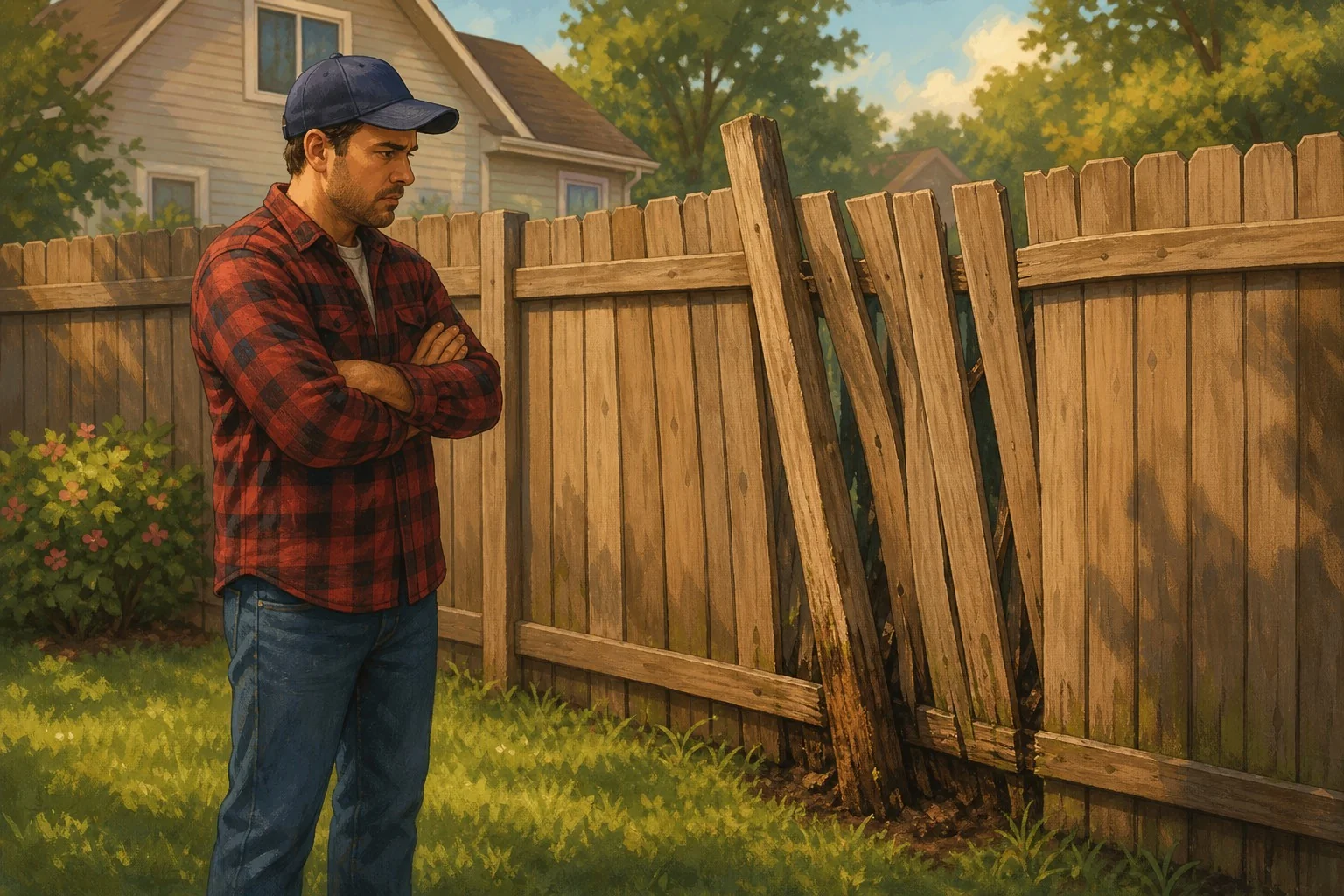
I’ve watched more fences fall over, rot out, or get ripped down by a pissed-off neighbor than I care to count. And nine times out of ten, the homeowner didn’t get burned by bad luck. They got burned by a mistake they could’ve avoided if somebody had told them the truth up front.
So here it is. If you’re about to put up a fence — or hire somebody to do it — these are the ones that’ll cost you.
Mistake 1: Buying the Wrong Material for Where You Live
Home improvement stores don’t care what climate you live in. They stock what sells. That means you can walk out with pine pickets in a wet Northeast climate and end up with a soggy, mildewed mess in four years.
Cedar and redwood handle moisture. Pressure-treated pine handles ground contact if it’s the right grade — and “ground contact” is not the same as “above ground,” so read the tag. Vinyl is fine but gets brittle in extreme cold and can crack if a branch takes a swing at it. Aluminum is great where salt air eats steel. Cheap chain-link with thin galvanization will rust through in a coastal town before your kid finishes middle school.
Match the material to the weather you actually get. Not the average. The worst of it. Because that’s the day your fence fails.
Mistake 2: Skipping the Permit
I know. Nobody wants to pay the township. Nobody wants to fill out paperwork. But skip the permit and one of two things happens: your neighbor calls it in, or you go to sell the house and the buyer’s inspector flags it.
Either way, you’re now tearing down a fence you already paid for, applying for the permit you should’ve gotten in the first place, and rebuilding. That’s paying twice. Sometimes three times if the township fines you on top.
A lot of townships also have height rules, setback rules, and rules about which side of the fence faces which way — the finished side almost always has to face the neighbor. Learn all of that before you buy lumber. Not after.
Mistake 3: Setting Posts Too Shallow
This is the one that gets people. A fence is only as good as what holds it up. If your posts aren’t deep enough, the fence will lean, sag, or come out of the ground in the first serious storm.
Rule of thumb: one-third of the post goes in the ground. A six-foot fence needs a nine-foot post, three feet buried. And below the frost line — which in the Philly area is about 36 inches. Skip that and every winter the ground pushes your posts around like it’s got a grudge. That’s called frost heave, and it doesn’t care how nice your pickets look.
I had a guy up in Roxborough call me one November because his whole back fence was tilted like it was drunk. Six-foot cedar, been up two years. I dug down and the previous crew had set the posts at maybe eighteen inches. No concrete. Just packed dirt. He paid to have it installed, paid to have it stood back up twice, and then paid me to tear the whole thing out and redo it right. Three fences, one yard.
Concrete around the post. Gravel at the bottom for drainage so water doesn’t sit against the wood. Depth below the frost line. Do it once, do it right.
Mistake 4: Cheap Hardware
Fence hardware is not the place to save twenty bucks. Cheap hinges rust and drop your gate. Cheap screws snap. Cheap nails work themselves loose over a couple of seasons and now your pickets are flapping every time the wind kicks up.
Use hot-dipped galvanized or stainless steel. Nothing less. On gates, get real hinges rated for the weight — not the flimsy strap hinges hanging on the pegboard next to the register. If the gate sees daily use, spring for a self-closing hinge. It’s forty bucks and saves you from a warped, dragging gate a year in.
Same story with the latch. A five-dollar latch on a gate you use every day is going to fail. Buy the good one.
Mistake 5: Not Calling Before You Dig
Quick one, but a big one. Call 811 before you put a shovel in the ground. It’s free. They come out and mark your gas, water, and electric lines. Hit a gas line with a post-hole digger and you’re not paying for a fence anymore, you’re paying for an evacuated block and a very long conversation with the utility company.
The Point
A fence isn’t complicated. But it’s not forgiving either. Get the material wrong, skip the permit, half-ass the posts, cheap out on hardware, or forget to call 811 — any one of those, and you’re paying twice. Sometimes worse.
Do it once. Do it right. That’s the whole game.