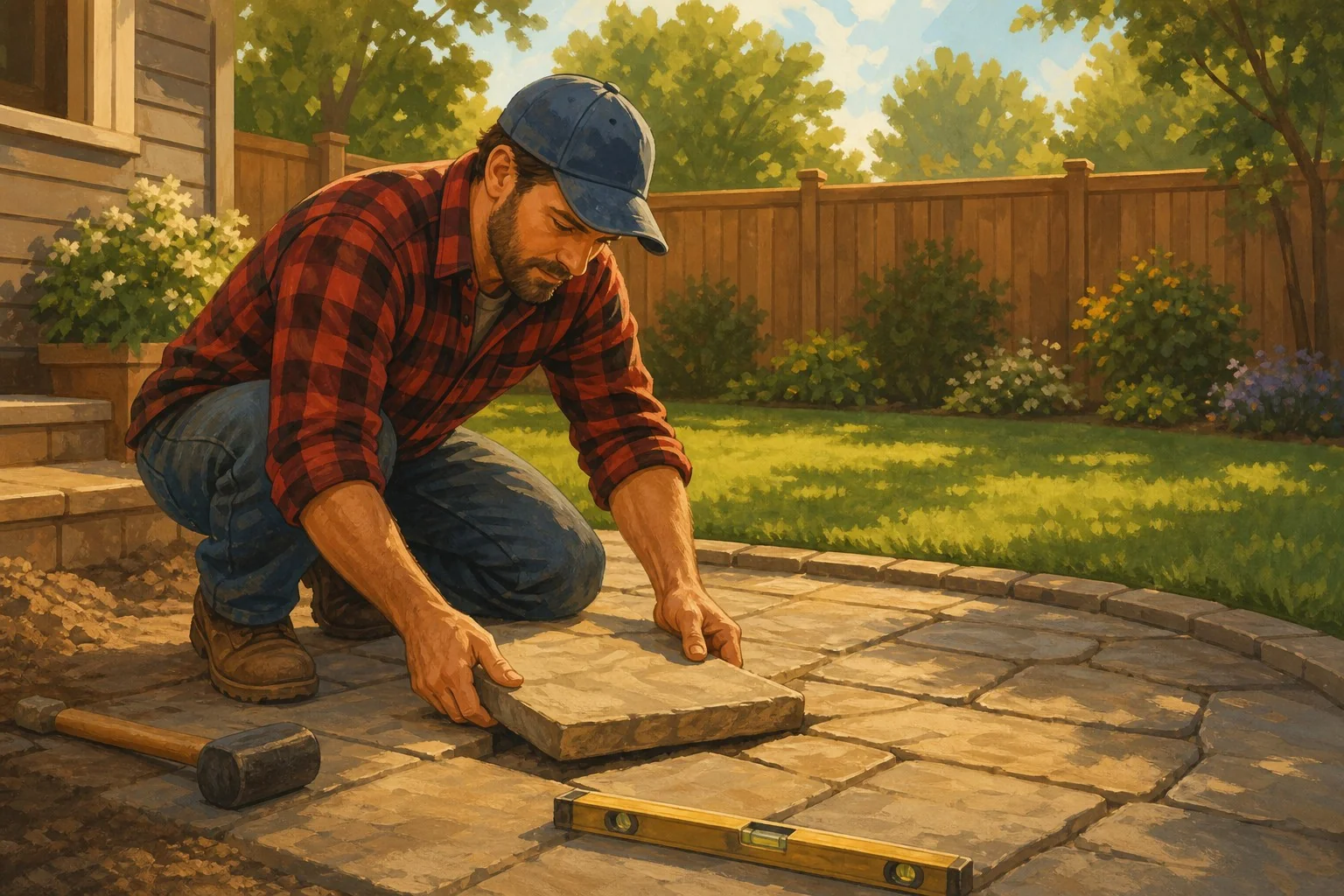
You can tell who cares about the work by what they’re willing to redo without being asked.
Pretty simple test, really. You don’t need a checklist. You don’t need to read fifty reviews on some website. You don’t need a fancy certification hanging on the wall of the guy’s office.
You just watch what he does when he screws up — or when something isn’t quite right and nobody’s looking.
The contractor who tears out his own crooked tile job at 7 PM because the grout lines bother him? He cares. The guy who shrugs and says “good enough” while he’s packing up his truck? He doesn’t. That’s the whole game, right there.
The problem is, you usually can’t tell which one you hired until something goes a little sideways. Because everybody looks good when the job is easy.
Why this matters for you specifically
You’re not hiring a contractor to do perfect work on perfect days. You’re hiring him to handle the surprise. Every renovation has surprises. Old plaster, rotted subfloor, somebody’s idiot uncle who did the plumbing in 1987 and ran the drain uphill. That’s the job.
When that stuff shows up — and it will — your contractor has two choices. He can do it right and eat the time. Or he can paper over it and hope you don’t notice for six months.
The guy who redoes without being asked is the guy who rips out the uncle’s plumbing instead of tiling over it. He’s the guy who pulls a piece of new drywall back down because the seam doesn’t look right under raking light. He’s the guy who swings by on a Saturday morning to recaulk your tub because the bead he ran on Thursday set up funny.
Nobody made him do any of that. He did it because the job was wrong and he knew it.
How to spot this guy before you sign
You can’t always see it up front, but there are tells. Pay attention to four things.
1. Look at his truck and his tools. Not whether they’re new — whether they’re taken care of. A guy who takes care of his stuff takes care of his work. A guy whose truck bed is a mess of fast food wrappers and rusted tools is showing you exactly what your basement is going to look like at the end of the day.
2. Ask him about a job that went wrong. Anybody who tells you he “never has problems” is either lying or has never done a real renovation. The honest answer sounds like, “Yeah, we found rot under a bay window on a house in Fishtown last year. Added three days to the job and I ate most of it because I should’ve caught it in the walkthrough.” That’s the guy you want. He owns it.
3. Look at the seams of his finished work. If you can, go see one of his finished jobs in person. Not photos. Photos lie. Stand in a room he finished and look at the corners. Look where the trim meets the wall. Look at the caulk lines along the cabinets. Sloppy work hides in the transitions. So does the good stuff.
4. Watch how he answers questions you don’t fully understand. The guy who cares will slow down and explain it. The guy who doesn’t will throw jargon at you to shut you up. If you walk away from a conversation more confused than when you started, that’s not because you’re dumb. That’s because he wanted you confused.
What it looks like once the job is going
After you’ve hired somebody, your job isn’t to micromanage. Your job is to notice.
The contractor who cares will tell you about problems before you spot them. He’ll call you out to look at something and say, “I don’t like how this is sitting. I want to redo it.” He’s not asking permission. He’s telling you what’s about to happen so you’re not surprised when he’s still here on day six.
The contractor who doesn’t care will keep his head down and his mouth shut. You’ll find the problems yourself two months later, usually with a flashlight and a sinking feeling.
I had a kid working for me back in the late ’90s on a kitchen in a row house off Passyunk. He set the upper cabinets and one of them was a sixteenth of an inch out of plumb. Nobody would’ve seen it unless they were really looking. End of the day, after the homeowner had already gone upstairs to bed, he pulled it down and reset it. Took him another forty-five minutes on his own time. I didn’t ask him to. The homeowner never knew. That kid runs his own shop now and he’s booked ten months out. Word gets around.
What to actually do about it
Three things, if you want this to be useful instead of just a nice thing to read.
One — when you’re interviewing contractors, stop asking how much it costs and how long it’ll take. Everybody answers those questions the same way, and half of them are lying. Ask what they’d do if they opened the wall and found something they weren’t expecting. The cheap guys hate that question. The good ones already have an answer.
Two — pay attention to how the contractor talks about his last crew or his last sub. If every story is about how somebody else screwed up and he had to fix it, that’s a guy who blames. If he talks about what he should have caught or done differently, that’s a guy who owns it. The first guy’s going to blame you when something goes wrong on your job too.
Three — when you find a guy who redoes his own work, pay him. Refer him. Don’t beat him up on price for the sake of saving a few hundred bucks. Guys like that are worth keeping around, and they remember which homeowners treated them right.
The bottom line
A contractor who redoes his own work isn’t doing you a favor. He’s doing his job the way it’s supposed to be done. The reason it feels rare is because it is rare. Most guys are halfway out the door before the last screw is set.
When you find one who isn’t, hold onto him. The rest will leave you with a kitchen that looks fine in the listing photos and falls apart in year two.