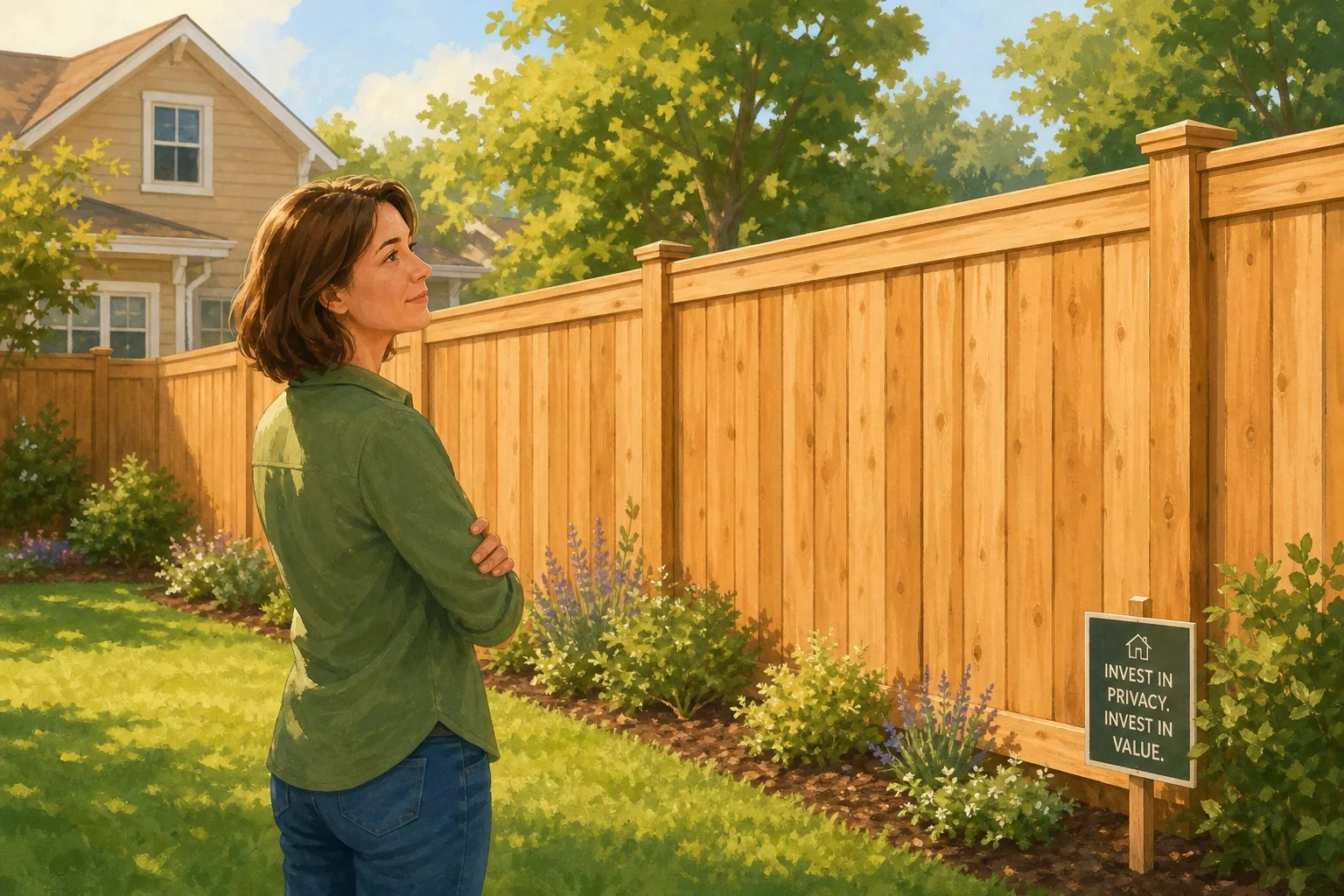
Homeowners ask this question a lot, usually right before they’re about to spend five to fifteen thousand dollars on a fence. They want someone to tell them it’s a smart investment. Fine. Here’s the honest answer: sometimes yes, sometimes no, and the difference comes down to what you’re building, what material you’re using, and what the rest of your block looks like.
Let’s go through it.
Does a Fence Show Up on an Appraisal?
Not the way you’re hoping.
Appraisers don’t typically line-item a fence the way they do square footage or a finished basement. What they do is consider the overall condition and appeal of the property. A fence in good shape, appropriate to the neighborhood, and properly installed contributes to that picture. A sagging chain-link with rust spots and a gate that won’t close? That cuts against you.
The baseline: a fence does not add a dollar-for-dollar return on what you spent. If you put in a $12,000 cedar privacy fence, you are probably not adding $12,000 to your appraisal number. You might add a few thousand. The real payoff comes somewhere else — which I’ll get to.
Privacy Fences vs. Ornamental: Know What You’re Installing
These serve different purposes, and buyers read them differently.
Privacy fences — solid panel, wood or vinyl, six feet tall — have the most direct value in the right context. If your yard backs up to a busy road, a commercial property, or a neighbor who’s got four ATVs and a yard full of parts, a privacy fence is a genuine selling point. Buyers with kids. Buyers with dogs. Buyers who work nights. They want that fence. It goes from nice-to-have to close-the-deal fast.
Ornamental fencing — wrought iron, aluminum, decorative wood picket — is primarily curb appeal. It defines the property line, it looks sharp, and it signals that the homeowner takes care of things. It does not give you privacy, and buyers know that. The upside here is perception: a clean ornamental fence in front of a well-kept house tells buyers this place has been maintained. That’s worth something in the overall package.
What neither type does: compensate for a bad location, a neglected yard, or a house that needs work everywhere else. A fence is not a magic trick.
ROI by Material
Not all fencing is the same investment. Here’s how the main materials shake out:
Wood — Cedar or pressure-treated pine is the most common, mid-range cost, and buyers understand it. It looks good when it’s new and maintained. The problem is it needs maintenance — staining, sealing, occasional board replacement. If it’s been neglected, it looks terrible and buyers will factor that into their offer. ROI is solid if it’s kept up; a liability if it’s not.
Vinyl — Higher upfront cost than wood, lower maintenance. It doesn’t rot, doesn’t need paint, and holds up through hard winters. In a lot of markets, buyers respond well to vinyl because they don’t want the headache of upkeep. Good return on investment for the long hold.
Aluminum and wrought iron — These are the ornamental materials. Durable, look great, cost more than wood. Strong curb appeal value but limited privacy value. Best suited to front yards and properties where appearance is the whole point.
Chain-link — Functional. Cheap. Does almost nothing for value unless you’re in an area where it’s the norm. Don’t expect a return on this one. It keeps the dog in the yard. That’s what it does.
What Buyers Actually Care About
Here’s where the real value lives: buyer perception at the time of sale.
Families with young children will pay for a fenced yard. Full stop. Dog owners the same. If your target buyer pool has either of those, a fence moves your property off the maybe list and onto the yes list faster than almost any other improvement. That’s not appraisal value — that’s competitive value. You might not get it back dollar for dollar, but you might get an offer you wouldn’t have otherwise.
I’ve seen deals stall because a house had everything except a fenced yard. Couple with a toddler, loved the house, couldn’t make the numbers work in their head knowing they’d need to add a fence themselves right after closing. They walked. The sellers eventually dropped their price more than the fence would have cost. Bad math all around.
Buyers also read a fence as a maintenance signal. A well-built, maintained fence says this owner took care of things. A broken-down fence — missing boards, posts heaving out of the ground, gate hanging off one hinge — says the opposite, and buyers will start wondering what else was ignored.
Before You Build, Answer These Three Questions
1. Is this fence appropriate for your neighborhood? A six-foot privacy fence in a neighborhood of open front yards looks wrong and won’t help you. A decorative picket fence on a street full of them blends right in. Match the fence to the context.
2. Are you maintaining it? A fence that’s let go is worse than no fence. Budget for upkeep or pick a material that doesn’t need it.
3. Who are you selling to? If families with kids and pets are your likely buyers, a fenced yard is a legitimate selling point. If you’re in an urban condo market or a neighborhood where no one has a fence, it matters a lot less.
Build for your buyers, maintain what you build, and pick materials that hold up. Do that, and a fence can absolutely work in your favor.
Don’t do that, and you’re spending real money to make your house harder to sell.