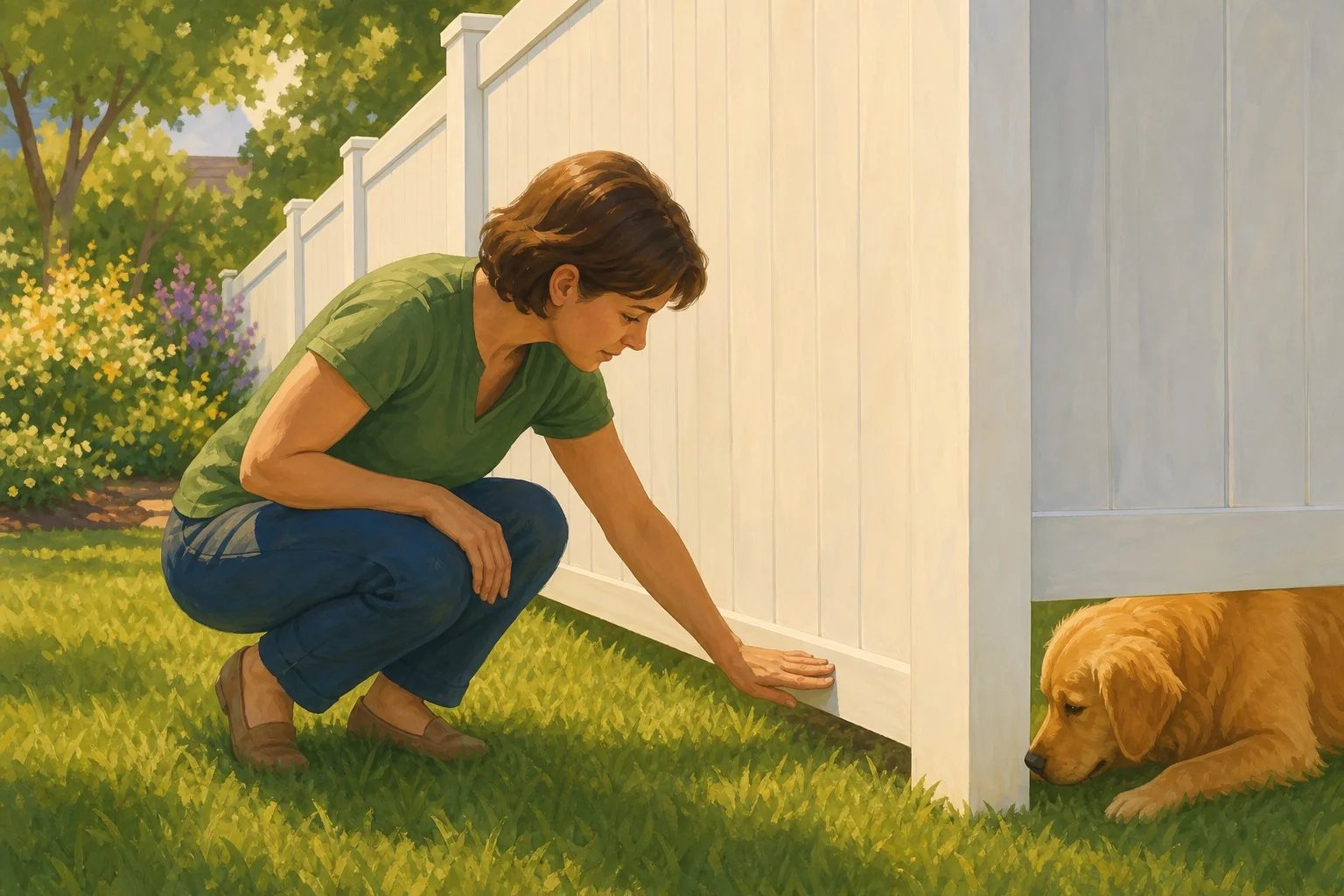
I’ve built more fences than I can count, and I’ve torn out plenty that failed because whoever put them up thought a dog was a dog. It’s not. A beagle isn’t a Belgian Malinois, and if you build the same fence for both, one of them is in your neighbor’s yard by Tuesday.
Here’s how to actually spec a fence for the animal you own.
Height: match the fence to what the dog can do, not what it weighs
The single biggest mistake homeowners make is picking fence height off a weight chart. Weight tells you nothing about vertical. A 15-pound Jack Russell will clear a 4-foot fence like it’s a curb. A 90-pound English bulldog probably can’t get over 3 feet without a running start and a stepstool.
Rough guide, by what the dog actually does:
- Low-drive small breeds (pugs, bulldogs, most dachshunds): 3 to 4 feet is fine.
- Terriers, whippets, small mutts with hops: 5 feet minimum. These dogs are springs with fur.
- Medium sporting breeds (labs, retrievers, standard poodles): 5 feet, 6 to be safe.
- Large working breeds (GSDs, rotties, boxers, pit mixes, huskies): 6 feet, non-negotiable.
- Serious jumpers and climbers (huskies especially, cattle dogs, high-drive shepherds, malinois): 6 feet plus an inward-angled top extension — 18 to 24 inches tilted in at 45 degrees. Or coyote rollers up top. If they can grip it, they’ll climb it.
Huskies in particular will scale chain link like a ladder. If you own a husky and you’ve got a 4-foot chain link fence, you don’t have a fence. You have a suggestion.
Gap spacing: if the head fits, the dog fits
Old rule from the trades: if the skull clears the gap, the whole animal is coming through. Dogs are basically muscle wrapped around a skeleton designed to squeeze through anything.
- Puppies and toy breeds: 2 inches max between pickets, slats, or wire openings. A 4-month-old min-pin will walk through a 3-inch gap without slowing down.
- Small dogs under 25 lbs: 3 inches max.
- Medium dogs, 25 to 60 lbs: 4 inches is usually safe.
- Large dogs: standard 4-inch picket spacing works fine. They’re not fitting through anything smaller than a doorway.
Watch the bottom of the fence especially. Wood privacy fences look tight up top but often have a 2 to 4 inch gap at grade because the ground isn’t flat. That gap is where the dog goes. Add a kickboard — a horizontal 2x8 pressure-treated board along the bottom — and you close it.
Chain link is worse for small dogs. Standard chain link comes in 2-inch mesh, which is fine for anything over 25 pounds. For small breeds, spec 1-inch mesh or line the bottom two feet with hardware cloth.
Dig-proofing: three methods that actually work
Most dogs won’t dig out. The ones that do will dig out of anything you don’t specifically stop, and they’ll do it in one afternoon.
Three real options, ranked by how much sweat they cost you:
1. L-footer (cheapest, works for most dogs). Take 2-foot-wide galvanized welded wire mesh — hardware cloth, 14 gauge or heavier. Bend it into an L. The vertical leg attaches to the bottom of your fence; the horizontal leg lays flat on the ground, extending outward into the yard. Bury it under 2 inches of soil or pin it flat with landscape staples every foot. When the dog digs, they hit wire. Most quit within a week.
2. Concrete footer (more work, permanent). Dig a trench 8 inches wide and 12 inches deep along the fence line. Set your posts, then pour concrete the entire run. This is the right answer for serious diggers — huskies, terriers with a mission, and any dog that’s already escaped once. Once they’ve tasted freedom, they will keep working at it.
3. Buried fence extension (belt and suspenders). Take chain link or welded wire and bury 12 to 18 inches of it vertically below the fence line, tied to the bottom of the main fence. Requires real digging and it’s brutal in clay soil, but nothing gets through it.
Whatever you pick, remember: dogs dig at the corners and along the gate posts first. Focus your effort there before you worry about the middle of a 40-foot run.
The gate is where you’ll fail
I did a fence job in South Philly about fifteen years back. Guy had a rescue pit, wanted the whole yard locked down. We built him a 6-foot cedar fence with a concrete footer, kickboard, the works. Two weeks later he’s on the phone yelling — dog is gone. I go out and look at the fence. Perfect. Look at the gate. Two-inch gap at the bottom where the ground dipped. Dog squeezed under, took a walk. The fence was fine. The gate ruined the whole thing.
Gates need the same specs as the fence, plus:
- Bottom gap no more than 2 inches, even at the lowest point of grade.
- Self-closing hinge — the tension-adjustable kind, not the cheap spring kind that quits after a year.
- Latch a dog can’t nose open. Two-way drop-pin latches are cheap and idiot-proof.
- Concrete pad or paver under the gate swing so the dog can’t dig the low spot deeper.
A few materials notes
Wood privacy blocks the view, which helps with barkers and dogs that get worked up by squirrels and mailmen. Downside: rough surface, easy to climb for anything athletic.
Vinyl is slick and hard to climb, which is good for jumpers who can’t get a paw grip. Downside: hollow panels can crack if a big dog hits them hard.
Chain link is cheap, easy to tension, easy to add hardware cloth or an L-footer to. Downside: sight lines, and huskies climb it like a Jungle gym.
Welded wire on wood posts is my usual pick for most homeowners with a medium-to-large dog and half an acre. It’s honest, it lasts, and you can dig-proof it without tearing the whole thing out.
Bottom line
Build for the actual animal. A greyhound and a corgi don’t need the same fence, and neither do a lab and a husky. Height stops the jumpers, gap spacing stops the squeezers, footings stop the diggers, and a properly hung gate keeps the whole thing from being a joke. Skip any one of those four and you’re spending the weekend driving around looking for your dog.