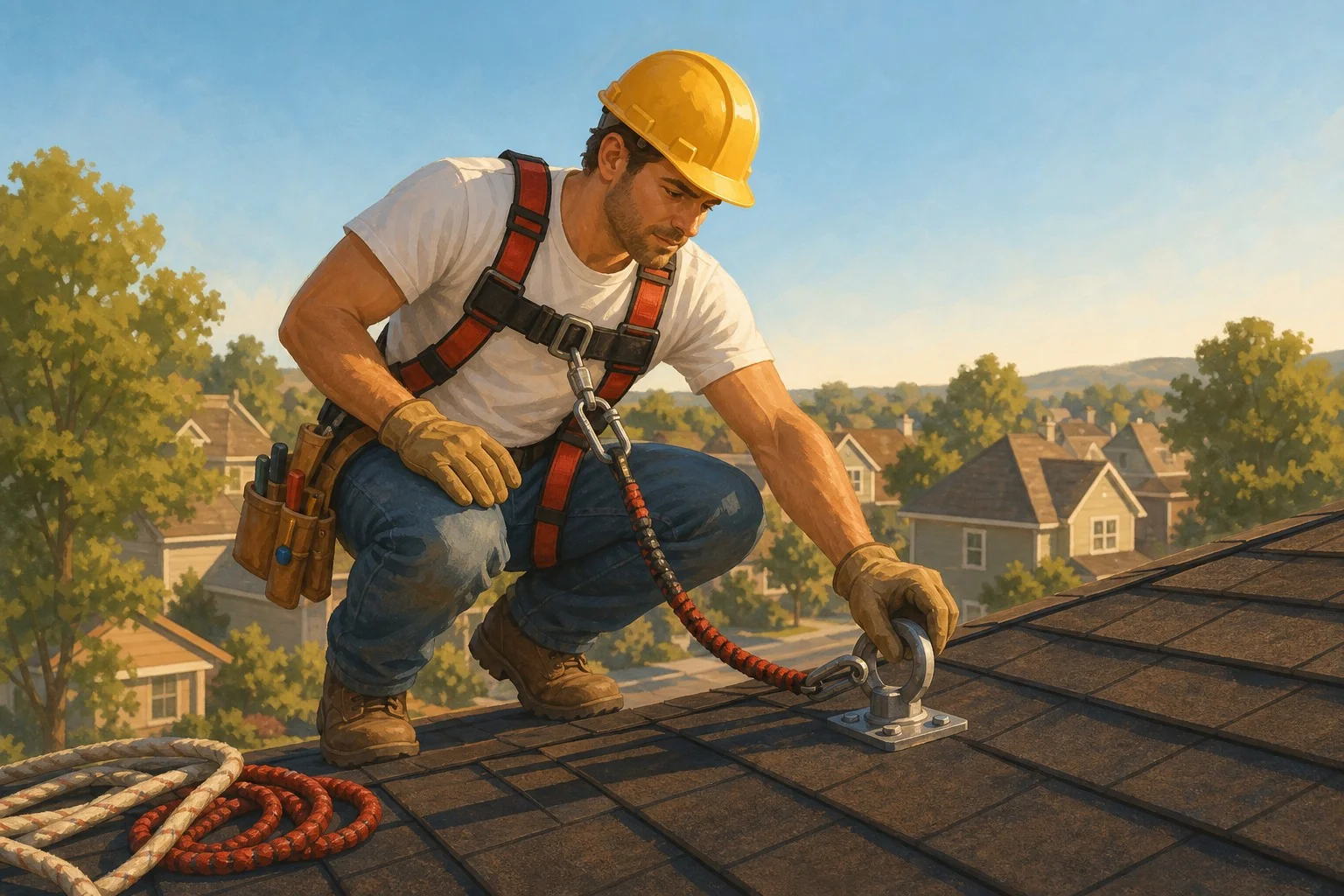
OSHA doesn’t hand out speeding tickets. They hand out fall protection violations. Year after year, it’s the number one citation they write. Not electrical. Not scaffolding structure. Not respirators. Falls. Guys falling off roofs, off ladders, off scaffolding, off the back of trucks. That’s where OSHA makes their money, and it’s where contractors lose theirs.
Here’s the thing homeowners don’t understand: this isn’t just a contractor problem. If some guy takes a header off your roof because his crew didn’t rig him properly, you’re not just watching a tragedy. You might be watching a lawsuit with your name on it.
So let’s talk about what you actually need to know.
Before Anyone Climbs Anything on Your Property
When you hire a roofer, a painter, a gutter guy, anybody working above six feet, you should be looking for harnesses, anchors, and a lifeline setup on the job. If the crew rolls up in a van and starts throwing an extension ladder against your house without a single piece of fall gear in sight, that’s your sign. Not “hmm, interesting.” Your sign. Send them home.
A woman in Fishtown called me a few years back after she hired a “roofing company” off Craigslist to redo a three-story rowhome. Two guys, no harnesses, no anchors, walking a steep pitch in sneakers. One of them slipped, grabbed the gutter on the way down, ripped it clean off the fascia, and landed in her rose bushes. He lived. Barely. Her homeowner’s insurance dropped her the next quarter, and the “company” didn’t exist on paper. Guess who paid for everything.
The lesson isn’t that cheap contractors are cheap. It’s that the cheapest contractors don’t own harnesses because harnesses cost money, and they don’t plan on being around long enough to need them.
Ask for a certificate of insurance before anyone starts. Not a photocopy. Not a “yeah, we’re covered.” A current certificate with workers’ comp listed. If they can’t produce it, they don’t work for you. That’s not paranoia. That’s how you keep your house.
Ladder Work — The Stuff You’ll Actually Do Yourself
Homeowners are going to climb ladders. I’m not going to pretend otherwise. So here’s the short version.
Three points of contact. Always. Two feet and a hand, or two hands and a foot. If you have to reach so far your belt buckle goes past the side rail, get down and move the ladder. That’s the rule. The belt buckle rule. Ignore it and you’ll learn why it exists.
Set an extension ladder at a 4-to-1 ratio. For every four feet up, one foot out from the wall. Steeper than that and it kicks out from under you. Flatter and the top slides off the gutter. It’s not complicated. It’s just ignored.
Don’t stand on the top two rungs of an extension ladder. Don’t stand on the top cap of a step ladder either. That’s not what those are for. They’re labeled. Read the sticker. It’s right there.
Tie the top off. A cheap ratchet strap around a solid anchor point at the top of the ladder takes ninety seconds and prevents about half the ladder falls that happen every year. Do it.
Roofs Are Not for the Weekend
You want to clean your own gutters, fine. You want to patch a shingle, I’m not going to talk you out of it. But if you’re up there for more than ten minutes and you don’t have a rope, an anchor, and a harness, you’re gambling with something you can’t afford to lose.
A roof anchor is thirty bucks. A harness is a hundred. A rope grab and lifeline is another hundred and change. For less than what you’d pay a contractor for one day of work, you can outfit yourself so a slip doesn’t turn into a hospital bill. Or a funeral.
Steep pitches are worse than shallow ones. Wet roofs are worse than dry ones. Frost is a killer. Moss on north-facing shingles is a killer. Metal roofs are their own animal — walk on those in the wrong shoes and you might as well have poured Crisco on your feet.
And don’t do it alone. A guy on the ground is not there to catch you. He’s there to call 911 and hold the ladder. Both of those matter.
What Homeowners Get Wrong About Heights
Six feet doesn’t sound like much. It’s the height of a tall guy. You look at it and think, worst case, I roll an ankle. That is not what happens. What happens is you go down head-first because your feet went up when your center of gravity went out. Six feet, head-first, onto concrete or a stair tread or a wrought-iron railing — that’s how people die in their own backyards.
Height is not measured by how bad you think a fall would look. It’s measured by what your skull hits on the way down.
The Point
Fall protection isn’t a suggestion. It’s the difference between a completed job and a phone call nobody wants to make. Homeowners keep treating it like a contractor problem — it’s not. You invited them onto your property. You’re the one on the ladder Saturday morning. Act like it matters.
Because it does.