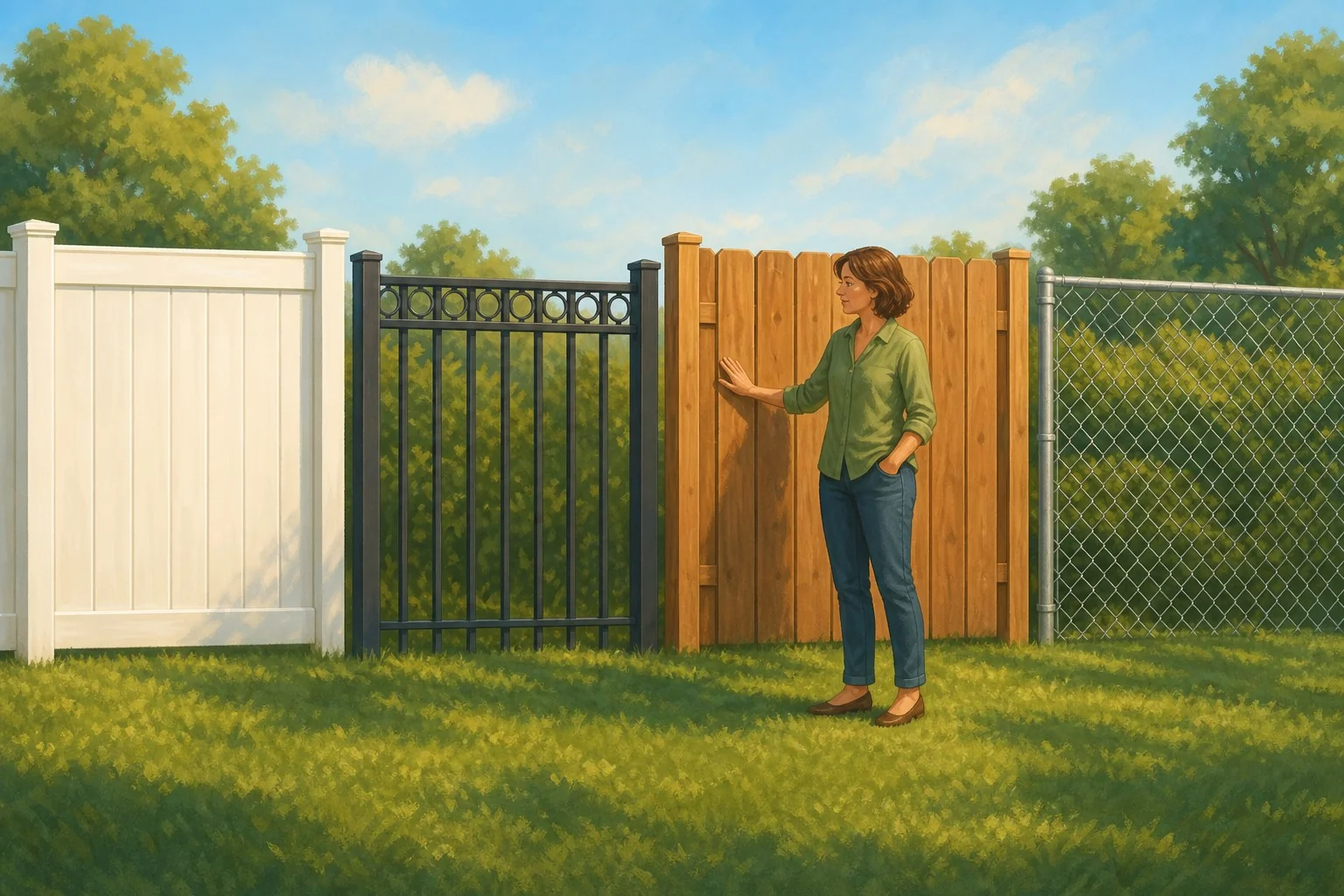
Every fence company in the tri-state area will tell you their material lasts “a lifetime.” That’s marketing. The truth depends on what you buy, how it’s installed, and whether you live somewhere that freezes solid four months a year. Around here, it does.
So here’s the real breakdown — how long these things actually last, what kills them, and what holds up when the weather throws everything at it.
Wood: 10 to 20 years, and that’s being generous
Pressure-treated pine — the stuff most people put in because it’s cheap — you’re looking at 10 to 15 years before the posts start going soft at the ground line. Cedar gets you closer to 20 if it’s stained and maintained. Redwood lasts longer than both, but good luck finding it in Philly at a price that doesn’t make you laugh.
The killer for wood isn’t the boards. It’s the posts. Water sits at the soil line, freezes, thaws, freezes again, and the wood fibers blow apart from the inside. By year 12, you push on a post and it wiggles. By year 15, the whole panel’s leaning. I had a guy in Roxborough call me to “fix a couple boards” — opened it up and every post was rotted from six inches below grade down. The fence wasn’t being repaired. It was being replaced. He just didn’t know it yet.
If you go wood, do these three things or don’t bother:
- Use 4x4 posts set in concrete with a sloped crown so water runs off instead of pooling
- Stain it every two to three years, not when it “looks bad” — by then you’re behind
- Keep mulch, dirt, and shrubs off the boards. Anything touching wood holds moisture against it
Chain link: 15 to 25 years if it’s galvanized right
Chain link is ugly. We all know it. But it works, and it lasts. Standard galvanized fabric runs 15 to 20 years before rust starts eating the bottom edge. Vinyl-coated chain link — the black or green stuff — gets you 25, sometimes 30, because the coating keeps moisture off the steel.
What kills chain link is the bottom rail rusting out and the top rail bending when a tree limb lands on it. The posts themselves, set in concrete, will outlast everything else. I’ve pulled chain link posts out of yards that were put in during the Reagan administration and the steel was still fine.
If a dog’s the only reason you need a fence, chain link is honest, cheap, and it’ll be there long after you’ve moved.
Vinyl: 20 to 30 years, with a few asterisks
Vinyl fence companies love throwing around “lifetime warranty.” Read the warranty. It covers manufacturing defects in the panels — not UV fading, not cracking from a snowblower, not the post sleeve splitting when the wood post inside rots out.
Good vinyl — thick wall, UV inhibitors baked in, proper steel or aluminum reinforcement inside the posts — will give you 25 to 30 years easy. Cheap vinyl from a big-box clearance aisle will yellow in five and crack in ten when the temperature drops to single digits. There’s a real difference between the two, and you pay for it.
Cold weather is what separates good vinyl from junk. Quality vinyl is engineered to flex without cracking. The bargain stuff goes brittle around 20 degrees. We get plenty of nights below that around here. Do the math.
Aluminum: 30 to 50 years, hands down the winner
Aluminum doesn’t rot. Doesn’t rust. Doesn’t warp. The powder coating might fade in 20 years but the metal itself isn’t going anywhere. I’ve seen aluminum fences from the late ’80s that still look fine with a fresh coat of paint.
The catch: it’s not cheap, and it won’t stop a determined dog or give you privacy. It’s an ornamental fence — pool barriers, front yards, decorative property lines. If that’s what you need, nothing else competes on lifespan.
What actually kills fences in the Northeast
Doesn’t matter what material you pick — the same handful of things take fences out around here:
- Freeze-thaw at the post line. Water gets in, freezes, expands, breaks things. Wood rots, vinyl sleeves crack, concrete heaves. Set posts below the 36-inch frost line or you’re rebuilding in 10 years.
- Snow load and plow piles. That mountain of snow your plow guy dumps against the fence every storm is putting 800 pounds of lateral pressure on it. Vinyl and wood lose this fight.
- Road salt if you’re within 50 feet of a treated street. It eats galvanized steel and corrodes fasteners.
- Bad installation. A premium fence installed badly will fail before a cheap fence installed right. Most “fence failures” I get called to look at are install failures, not material failures.
Bottom line
If money’s no object and you want it to last forever, aluminum. If you want privacy and you’ll actually maintain it, cedar. If you want privacy and you won’t, good-grade vinyl. If you just need a barrier and don’t care how it looks, chain link.
Whatever you pick, the install matters more than the brochure. Get the posts deep, get them plumb, get them in concrete, and stop trying to save $400 by hiring the cheapest crew that answers the phone.