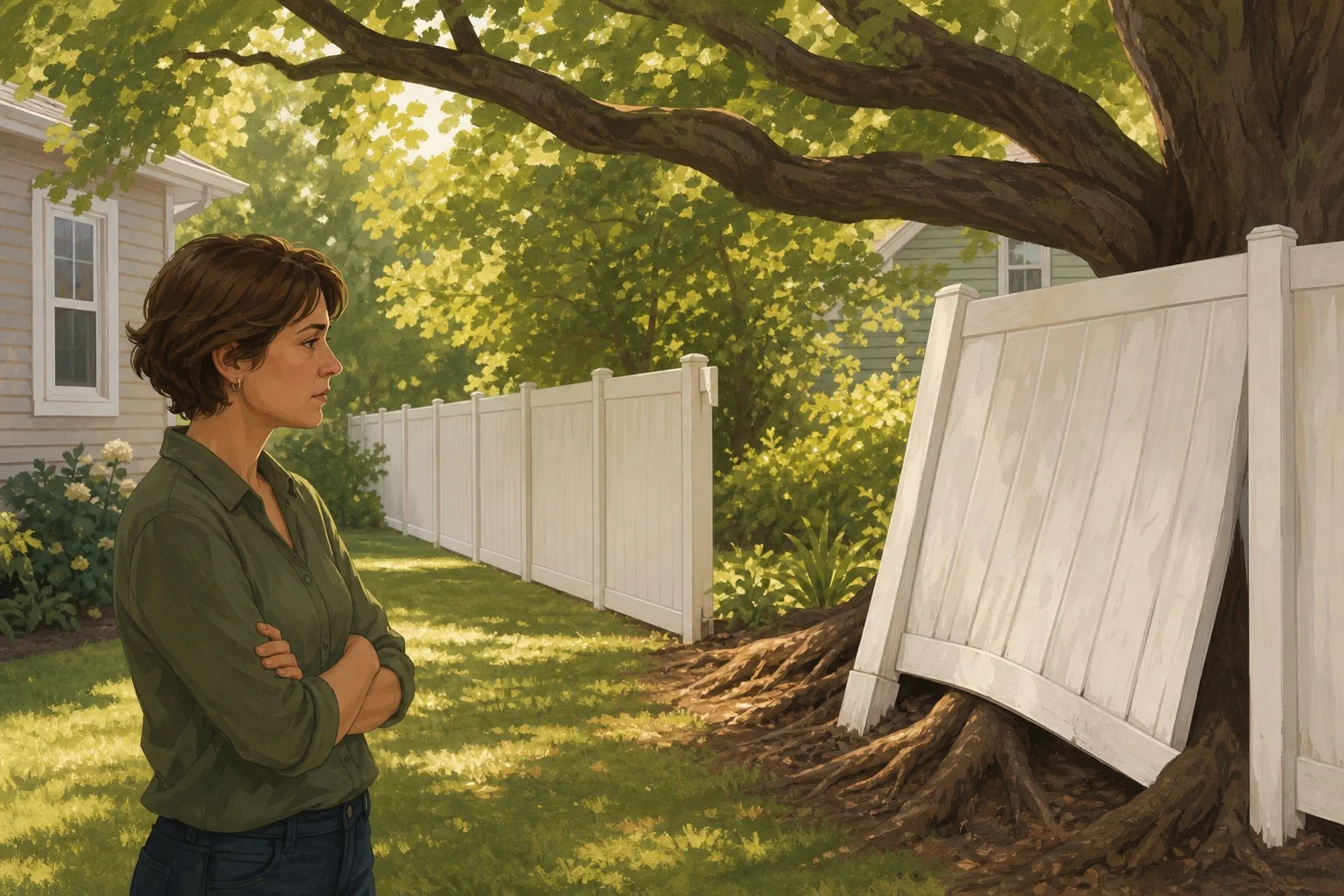
Your neighbor’s silver maple is eating your yard. The branches are hanging over your driveway, dropping seed pods on your car, and the roots are pushing your fence sideways like it’s leaning into a stiff wind. You’ve asked nice. Nothing happened. Now you want to know what you can actually do about it.
Here’s the straight answer for Pennsylvania. Not the version a lawyer gives you at $400 an hour. The version you can actually use this weekend.
Pennsylvania Follows the “Self-Help” Rule
PA courts have been consistent about this for decades. If a branch or a root crosses the property line onto your side, you can cut it. You don’t need permission. You don’t need a court order. You don’t need to send a certified letter first. That branch on your side of the line is fair game.
This is called the Massachusetts Rule, and most states use some version of it. In plain English: what’s on your property is your problem, and you’re allowed to fix it.
But there are three hard limits, and if you blow through any of them you go from “responsible homeowner” to “defendant.”
The Three Limits You Do Not Cross
One — you cut only what’s on your side of the line. Not one inch over. If a branch comes across at four feet and keeps going another six feet into your neighbor’s yard, you get the four feet on your side. That’s it. Reaching over with a pole saw to nip an extra foot because “he’s not paying attention” is trespass and destruction of property. Don’t do it.
Two — you don’t set foot on their land without permission. Same rule. You can trim from your side, from your ladder, on your grass. You can’t walk over there to get a better angle. If you need access to do it right, you ask. If they say no, you find another way or hire an arborist who can do it from your side.
Three — you don’t kill the tree. This is where people get in real trouble. If you cut a root so aggressively that the tree dies six months later, or you top a branch in a way that lets disease in and takes the whole thing down, you owe your neighbor for the tree. And mature trees are not cheap. A healthy 40-year-old oak can be valued at ten, twenty, thirty grand depending on the appraiser. I’ve seen a homeowner in Roxborough hit with an eighteen-thousand-dollar bill because he cut a Norway maple’s roots back so hard it went yellow the next spring and had to come down. He was legally in the right to trim. He was legally in the wrong to kill it. Those are two different things.
What You Can Actually Do About the Roots
Roots under a fence are the ugliest version of this problem, because by the time you see the damage, the damage is already done. The rail is bowed. The posts are heaved. You’ve got a fence that looks drunk.
You have the right to sever roots at the property line. Get a sharp spade, a mattock, or a reciprocating saw with a pruning blade. Dig a trench along the line, cut clean, and install a root barrier — a sheet of HDPE plastic, 24 to 36 inches deep, is the standard. That barrier is what actually solves the problem. Cutting the roots without a barrier just buys you two or three years before they come back.
If the tree is close to the line and mature, do not go crazy with the root cutting. A good rule: don’t cut roots larger than two inches in diameter, and don’t cut inside the drip line if you can help it. You want to protect your fence, not turn a live tree into a hazard tree that eventually falls on someone’s kid.
Who Pays When Your Fence Gets Wrecked
Here’s where homeowners get their hopes up and then get slapped down. Under Pennsylvania’s self-help rule, the general answer is: you pay. Even though it’s their tree, even though the roots are theirs, even though you didn’t ask for any of this.
The reasoning the courts use is that you had the right and the ability to trim the roots before they caused damage. Since you didn’t, the damage is on you.
There’s one real exception, and it matters: if the tree is dead, diseased, structurally unsound, or the neighbor knew (or should have known) it was dangerous, negligence comes into play. A rotted-out silver maple with a huge cavity that everybody on the block has been talking about for five years? If that thing crushes your fence — or worse — the owner can be on the hook. But a healthy tree doing normal healthy tree things? That’s your bill.
How to Handle It Without Starting a War
Talk to the neighbor first. I know, I know. But hear me out. Ninety percent of these situations end with the neighbor saying “yeah, go ahead, cut what you need.” People are usually reasonable when you catch them before you’re already angry.
Say it plainly. “Your maple’s roots are pushing my fence. I’m going to trim the roots on my side and put in a barrier. Wanted to let you know before you saw a guy with a shovel back there.” That’s it. No lecture. No hint that you might sue. Just information.
Take pictures before you touch anything. Time-stamped photos of the fence, the roots, the branches, the whole scene. If this goes sideways later, that documentation is worth ten times what a good lawyer’s opening argument is.
Get the work done by somebody who knows trees. A landscaper with a chainsaw is not an arborist. If the tree is big and the roots are structural, spend the money on a certified arborist. They’ll cut in a way that protects you legally and keeps the tree alive — which keeps you out of that eighteen-grand conversation I mentioned above.
When It’s Time to Get a Lawyer Involved
Most of these disputes don’t need one. But some do. Get legal help if:
- The neighbor is threatening you for exercising your legal trimming rights
- The tree is clearly dead or dangerous and the neighbor refuses to deal with it
- The damage is significant — a fence is one thing, a cracked foundation or a busted sewer line is another
- You’re being asked to pay for a tree you didn’t kill
For anything under a few thousand bucks in damage, small claims court in your county handles it. You don’t need a lawyer for that either — you need your photos, your receipts, and a straight story.
The Short Version
Trim your side. Don’t cross the line. Don’t kill the tree. Talk to the neighbor before you swing anything. Document everything. Put in a root barrier if you want the problem to actually go away. And accept that in Pennsylvania, “his tree, his problem” is not how the law reads — you’ve got the right to protect your property, and along with it, the responsibility to actually do it.