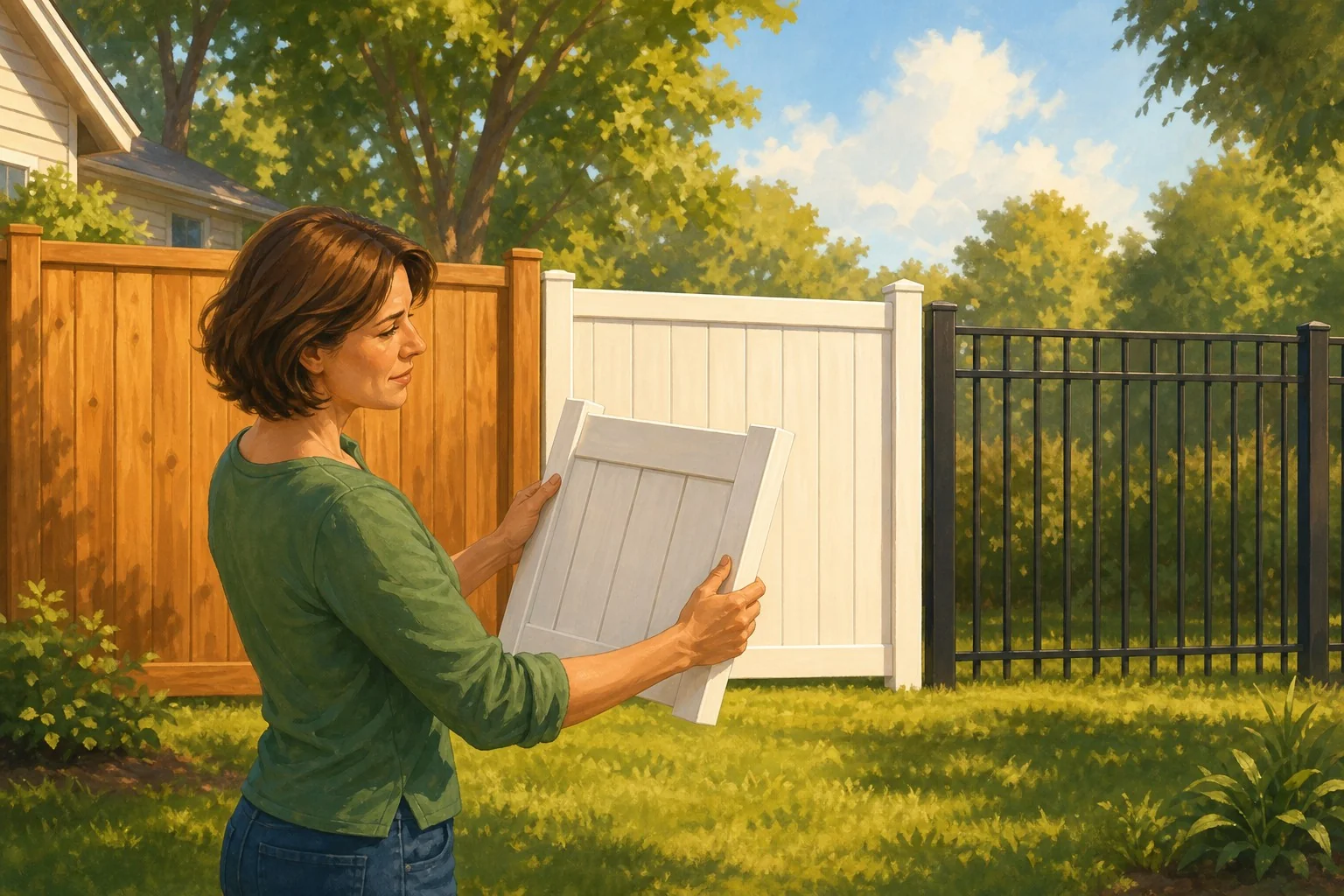
Every spring I get the same call. “Mike, we need a fence. What should we get?” And every spring I give the same answer: it depends on what you actually want it to do, how much you hate yard work, and how long you plan to live in the house.
Let’s cut through the showroom pitches. Three materials own the residential market: wood, vinyl, and aluminum. They all have a place. They are not interchangeable.
Wood: the classic that costs you every weekend
Wood looks great the day it goes in. A clean run of pressure-treated pine or cedar pickets along a backyard is hard to beat for that traditional look. It’s also the cheapest material going in. That’s the good news.
The bad news is everything that happens after year two. Wood moves. It warps, it splits, it cups. Pickets twist off their nails. The whole thing turns gray if you don’t stain it, and even if you do stain it, you’re back on a ladder every three or four years with a brush and a sore back.
And then there’s the post problem. Standard wood posts set in concrete will rot at the soil line. Not might. Will. I’ve pulled apart ten-year-old fences in Roxborough where the pickets were fine but every post snapped at the ground like a stale pretzel because the moisture wicks right into the grain at the dirt line. Once that happens, the whole section is done. You can’t patch it. You’re digging out concrete footings on a Saturday in July.
If you go wood, do yourself a favor: use steel post inserts like Postmaster, or sleeve your wood posts inside metal. The pickets are the cosmetic part. The posts are what keep the fence standing.
Vinyl: low-maintenance, but read the fine print
Vinyl is the move for the homeowner who wants a fence to look the same in year ten as it did in year one without lifting a finger. No staining, no sealing, no scraping. Hose it off in the spring and walk away.
The catch nobody tells you about at the big box store: dark vinyl fades. Black, dark brown, deep gray — UV will cook the color out of them. After three or four summers of Philly sun beating on a south-facing run, that rich charcoal you fell in love with will look like dirty asphalt. Stick to white, tan, or light gray if you want it to look right long-term. If you have your heart set on a dark fence, spend the extra money on a composite product designed to hold the color, or accept that you’ll be looking at a faded fence for most of its life.
Upfront cost is roughly double pressure-treated wood. Over twenty years it’s cheaper, because you’re not buying stain and sweating through summers maintaining it.
Aluminum: the one for views, pools, and front yards
Aluminum is a different animal. You don’t buy it for privacy — you can see right through it. You buy it for that clean, modern wrought-iron look without the rust headaches of actual iron. It’s the right call for pool enclosures (code-compliant in most townships), front yard decorative fencing, and any spot where you want a barrier but don’t want to block the view.
It’s basically maintenance-free. No painting, no rot, no warping. Powder-coated aluminum will outlast the house. Wind blows right through it, which means you’re not replacing sections after every nor’easter the way wood owners are.
It’s also the most expensive of the three per linear foot, and it gives you zero privacy. Use it where it fits the job. Don’t try to make it the backyard privacy fence — that’s not what it’s for.
The honest comparison
| Wood | Vinyl | Aluminum | |
|---|---|---|---|
| Upfront cost | $ | $$ | $$$ |
| Maintenance | High | None | None |
| Lifespan | 10–15 yrs | 20–30 yrs | 30+ yrs |
| Privacy | Yes | Yes | No |
| Best for | Classic look, tight budget | Set-and-forget privacy | Pools, front yards, views |
| Watch out for | Post rot, warping | Fading on dark colors | Cost, no privacy |
What I’d actually do
If I’m staying in the house ten-plus years and I want privacy, vinyl in a light color with steel-reinforced posts. Best return on the headache-to-dollar ratio.
If the budget is tight and I’m willing to put in the weekend hours, wood — but spend up for Postmaster-style posts. Don’t cheap out at the ground.
If I’m fencing a pool, a front yard, or anywhere with a view I don’t want to block, aluminum. End of conversation.
The worst thing you can do is pick the cheapest option, install it wrong, and pay twice. Pick the right material for the job, put real posts in the ground, and the fence will outlast the dog.