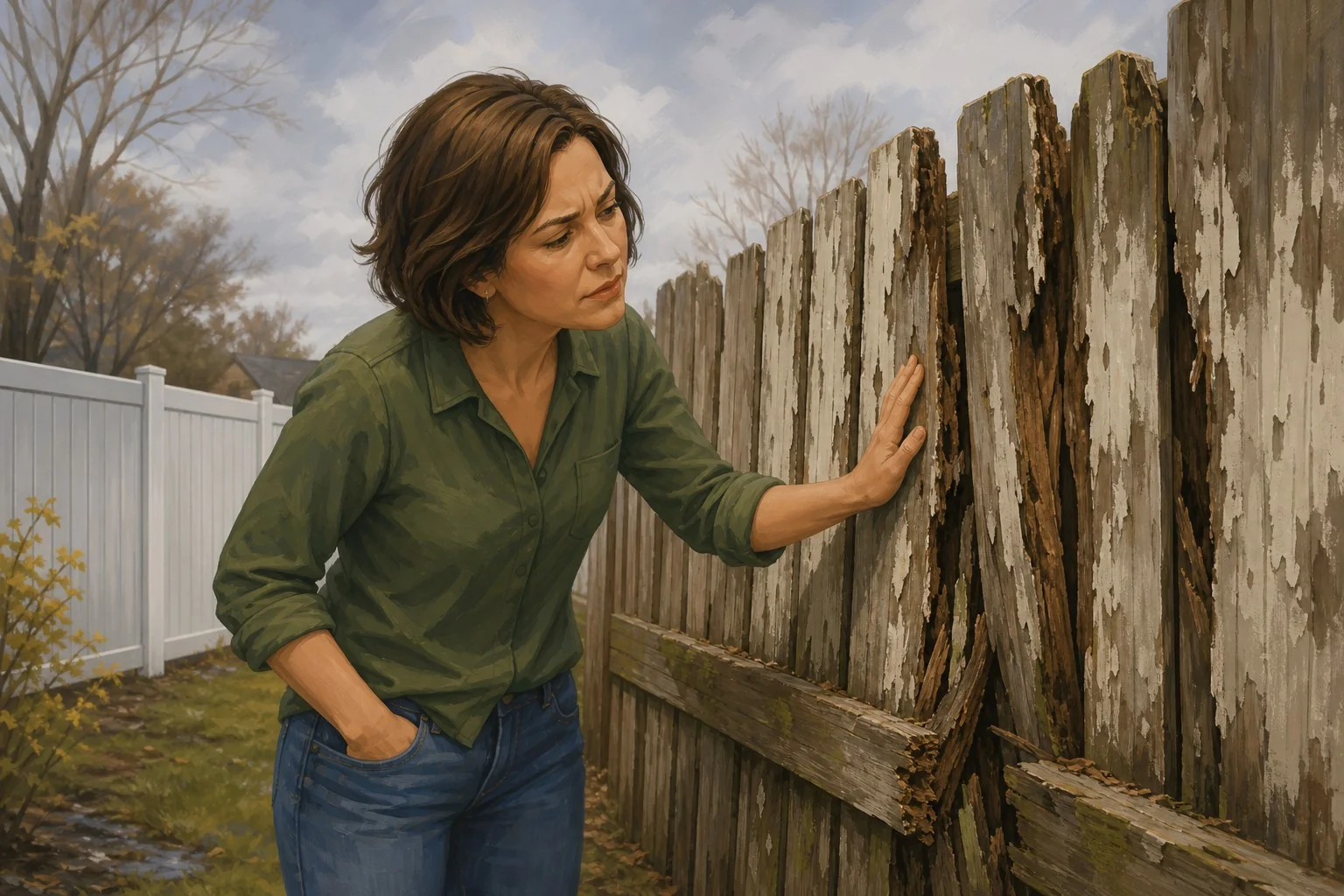
Pennsylvania weather is rough on fences. Not Florida-hurricane rough, not Arizona-bake-it-til-it-cracks rough — but a slow, year-round grinding that picks apart anything you cheaped out on. We get wet springs, humid summers, brutal freeze-thaw winters, and just enough wind off the rivers and ridges to find every weak post you installed.
If you’re putting up a fence in Pennsylvania, here’s what I’d tell you to stay away from, and why. Plain and simple.
1. Cheap vinyl is the biggest mistake homeowners make
I’m not talking about good vinyl. Good vinyl fencing exists. I’m talking about the bargain-bin stuff at the big-box stores — the thin-wall PVC panels that feel like a milk jug when you tap them.
In a Pennsylvania January, that material gets brittle. Real brittle. A snowblower throws a chunk of ice at it, a kid kicks a soccer ball into it, your neighbor’s branch comes down in a wind gust — it cracks. Not bends. Cracks. And once it cracks, you can’t fix it. You’re replacing the whole panel, and good luck matching the color after two years of UV fade.
I tore out a six-year-old “lifetime” vinyl fence in Roxborough that looked like somebody took a hammer to it. The homeowner thought he was being smart buying it on sale. He paid twice — once for the cheap fence, once for the real one. If you go vinyl, you want thicker-walled panels from a manufacturer that’s been around longer than your dog. Anything else is a countdown timer.
2. Untreated wood (yes, even cedar — depends how you use it)
Wood fencing can be beautiful and last a long time in PA. But untreated pine? Forget it. You’re looking at three to five years before the bottom rails are spongy and the pickets are cupping. Our humidity doesn’t give wood a break the way drier climates do.
Cedar gets sold as the magic answer, and yeah, cedar is naturally rot-resistant. But cedar pickets touching wet soil are still going to rot. Cedar posts buried in dirt without proper drainage are still going to fail. The wood matters less than how it’s installed and what touches the ground.
If you want wood, use pressure-treated for anything within a foot of grade, and keep the cedar (or whatever pretty stuff you want) up top where it can breathe and shed water. Don’t let any wood sit on the ground. Ever.
3. Bamboo fencing has no business in Pennsylvania
People see bamboo fencing on a beach vacation and decide it’d look great in their Doylestown backyard. It won’t. Bamboo is a tropical material. Our freeze-thaw cycle splits it from the inside out. By the second winter, you’ve got cracks running the length of every cane. By the third, the panels are coming apart and your yard looks like a hurricane hit it.
Same goes for those rolled reed screens you see at garden centers. One season, maybe two if you’re lucky. They’re decorative summer stuff. They are not a fence.
4. Wrought iron without proper coating
Real wrought iron and modern steel fencing can look fantastic and last forever. But if you buy the budget stuff that’s just painted — not powder-coated, not galvanized — you’ll have rust bleeding down your posts inside of two winters. Road salt, snowmelt, the constant wet-dry cycle. Paint flakes, water gets in, and it’s over.
If you want metal, spend the money on powder-coated aluminum or properly galvanized steel. Pay once. Skip this and you’ll be wire-brushing rust every spring until you give up and call somebody like me to replace it.
5. Big-box “decorative” panels made of composite junk
You know the ones. They look like wood. They’re not wood. They’re not real composite either. They’re some pressed material with a plastic skin, and they’re built for somebody’s patio in San Diego. The first hard freeze pops the skin. Water gets behind it. Within two years, the panel is bowed, ugly, and shedding particles.
Real composite fencing (the same family as Trex decking) is a different animal and holds up fine. But the cheap stuff dressed up to look like composite is garbage. Read what it’s actually made of before you buy.
What actually holds up here
If you want a fence that survives Pennsylvania without becoming a weekend project every spring, you’ve got a few good options:
- Pressure-treated wood posts with cedar or properly treated pickets, set in gravel-bottomed holes with concrete above. Drainage matters more than the wood.
- Powder-coated aluminum. Doesn’t rust, doesn’t rot, doesn’t care about freeze-thaw. Costs more up front. Worth it.
- Thick-walled vinyl from a real manufacturer, installed with steel-reinforced posts where wind matters.
- Galvanized chain link if you just need a fence and don’t care how it looks. Ugly, sure. But it’ll outlive you.
The real rule
Most fence failures in this state aren’t about the material — they’re about the cheap version of the material and the rushed install. A good cedar fence installed right will outlast a bad vinyl one. A real steel fence installed right will outlast both. Spend your money on materials that don’t fight the weather, and pay somebody who knows how to set a post that won’t heave on you the first hard freeze.
If you’re getting bids and the cheapest one is way under the others, there’s a reason. Usually three reasons. Ask what’s in the ground, what’s on the posts, and what the warranty actually covers. If the answers are vague, walk.
A fence is one of those things you don’t want to do twice.