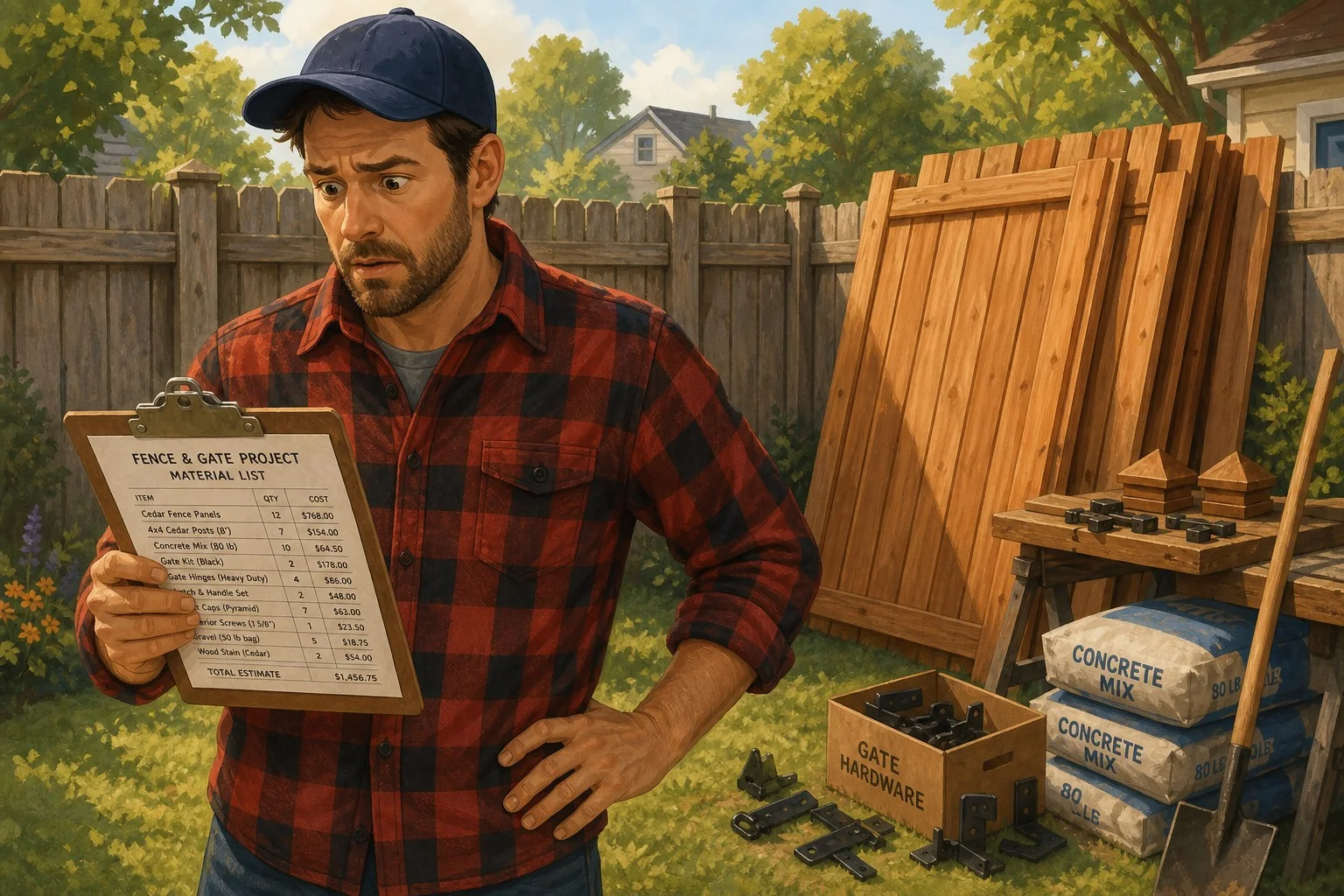
A fence quote is one of the easiest places in this trade for a contractor to play games. The headline number looks good. You compare it to two others, pick the cheapest, sign the contract, and a year later your gate is sagging, your posts are wiggling, and the guy who built it stopped answering the phone.
The warning signs are almost always in the material list. Most homeowners just don’t know what they’re reading.
Here’s what to look for.
1. Posts. This is where they cut corners first.
A fence is only as strong as the posts holding it up. That’s it. Pretty pickets on weak posts is a fence that doesn’t make it through three winters.
When you read a quote, find the posts. You want four things spelled out:
- Size. A 4x4 is the bare minimum for a six-foot residential wood fence. A 6x6 is better, especially on corners and gate posts. If the quote says 4x4 everywhere, including the gate posts, you’re getting the cheap version.
- Material. Pressure-treated southern yellow pine, ground-contact rated. There’s a difference between “treated” and “ground contact.” The cheap quote will sometimes just say “treated lumber.” Make them write down ground-contact. Anything else rots from the inside out.
- Depth. Three feet in the ground for a six-foot fence. Two feet is what the cheap guy does so he doesn’t have to dig as much. Two-foot posts come out of the ground. I’ve pulled them out by hand.
- Concrete. Every hole, not just corners. The quote should say how much per post — a bag and a half is a reasonable minimum. “Set in concrete” means nothing if it’s a coffee cup of mix and a lot of dirt.
If a quote doesn’t answer those four questions, ask. If the guy gets cagey, that’s your answer.
2. The gate is where the whole job goes sideways.
A fence is panels and posts. A gate is a moving part. Moving parts fail. And cheap gates fail fast.
A real gate spec includes:
- A diagonal brace running corner to corner inside the gate frame — from the bottom hinge corner up to the opposite top corner. Without it, the gate sags within a year. Guaranteed.
- Heavy-duty hinges. Three of them on anything wider than three feet. Not the two flimsy strap hinges from the bargain bin.
- A real latch. Not a sliding bolt that rusts shut in six months.
- A drop rod on double gates. If you have a wide driveway gate with two leaves and no drop rod listed, one side is going to flop around every time you open the other.
I had a homeowner over in Mayfair call me to fix a six-month-old double driveway gate that had pulled one of the posts halfway out of the ground. Previous contractor used 4x4 gate posts in skinny holes, two hinges per leaf, no drop rod, and call it a day. The whole assembly was tearing itself apart every time the wind hit it. Cost her more to make it right than the original job. That’s the real price of a cheap quote.
3. What’s NOT on the list is what’ll cost you.
This is where a low headline number really hides. Read the exclusions section. If there isn’t one, ask for one in writing.
- Demo and disposal of the old fence. If you’ve got an existing fence coming down, somebody has to tear it out and haul it away. That’s labor plus a dump fee. Not in the quote? You’re paying for it later. Or doing it yourself.
- Permits. Most townships around Philly require a permit for any fence over a certain height. Permit fees aren’t big money, but a “we’ll figure it out later” approach means a stop-work order the day a neighbor calls it in.
- Stain or sealer. Almost never included. A bare cedar or pine fence needs to be sealed within a few months or it grays out, cups, and starts cracking. Budget for it separately or write it into the contract.
- Delivery and dump fees. Some yards charge them, some don’t. Some contractors eat them, some pass them through with a markup. Ask.
- Concrete quantity. Said it above, worth saying twice. Make them put the bag count in writing. Concrete is heavy and expensive to truck around, which is exactly why cheap installers skimp on it.
If the quote is silent on any of these, assume you’re paying for it on the back end.
4. The pickets and rails matter more than people think.
Most homeowners look at a fence and see pickets. That’s the face of it. Two things to check before you sign.
- Picket thickness. A real dog-ear picket is 5/8 of an inch thick. The cheap ones run closer to 1/2 inch and they cup and warp in one summer. If the quote doesn’t specify thickness, that’s a tell.
- Two rails or three? A six-foot privacy fence needs three horizontal rails — top, middle, bottom. Two-rail fences sag in the middle and the pickets get loose. If you’re seeing only two rails on a six-footer, the contractor’s saving lumber at your expense.
Same goes for fasteners. Hot-dipped galvanized or stainless screws and nails. Anything less rusts and streaks down your pickets in a year. If the quote says “fasteners included” with no other detail, ask.
The headline number is bait.
Get three quotes. Then ignore the totals for a minute and put the material lists side by side. The cheapest quote is almost never the cheapest job. It’s the job that gets fixed twice or replaced in five years.
If a quote is fifteen percent under the other two, there’s a reason. The reason is in the post size, the gate hardware, the rail count, or what got left off entirely. Find it before you sign.
A fence done right is a ten-year purchase. Maybe fifteen. Don’t let a low headline number talk you into a three-year fence.