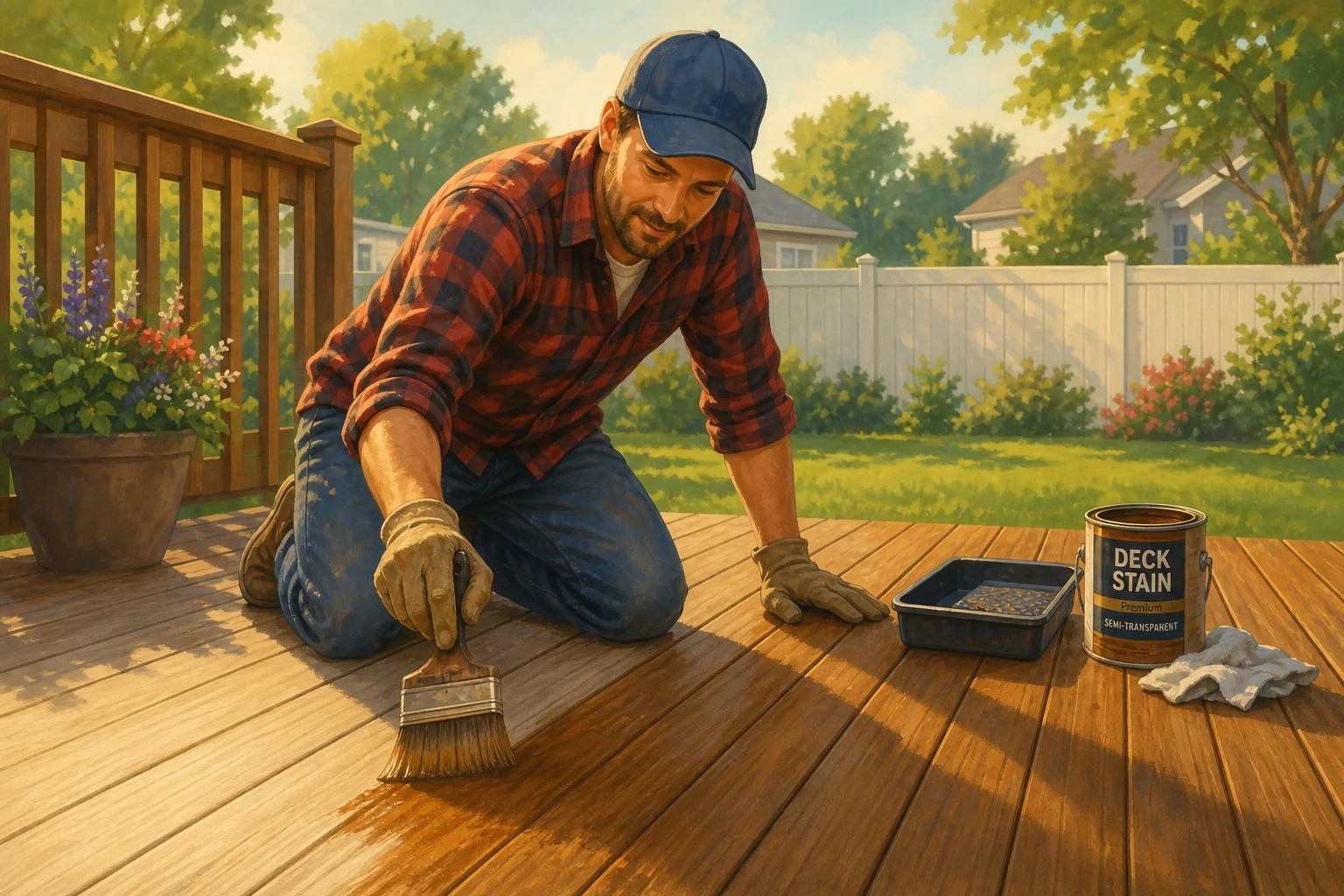
You’ve got a window right now. Early June in Pennsylvania is about as good as it gets for deck work — temperatures are reasonable, the wood has dried out from spring rain, and peak humidity hasn’t set in yet. Wait until July and August, and you’re fighting the weather every step of the way. The stain won’t cure right, the wood is already baking in moisture it pulled up from May, and you’re going to redo this in two years instead of five.
So let’s talk about how to do it right before that window closes.
First: Figure Out What You’re Actually Dealing With
Before you buy a thing, go out there and look at your deck. Really look at it.
Splash a cup of water on the boards. If it beads up, the old sealer is still working. You might just need a light clean and a fresh coat. If it soaks straight in, the finish is gone and the wood is drinking up whatever hits it — rain, dew, condensation from a cold beer sitting on the boards. That’s the situation you’re trying to prevent.
Now check the color. Is it gray and weathered? That’s oxidized wood — UV exposure stripped the color and left you with surface fibers that are starting to break down. Is there black streaking or dark patches? That’s mildew. Is the wood cracking, checking, or starting to splinter along the grain? Those are stress fractures from repeated wet-dry cycles.
If it’s just faded and the water soaks in, you can clean and restain. If you’ve got mildew, gray oxidation, and the old stain is peeling or flaking off in chunks, you’re stripping it. No way around it. Staining over peeling stain is just postponing the same problem by one season.
Strip vs. Refresh: Know the Difference Before You Spend Money
A lot of homeowners try to skip the strip because it’s work. I understand that. But putting a new coat of semi-transparent stain over failing old stain is like painting over rust — it looks fine until it doesn’t, and then it looks worse than if you’d done nothing.
Here’s the line I draw: if the existing finish is still adhering — meaning it’s not flaking, not peeling, just faded and thin — you can clean aggressively, let it dry completely, and apply a fresh coat. That’s a maintenance coat. Two or three days of work, tops.
If the finish is failing — peeling, bubbling, or you can scrape it off with a fingernail in places — you need a deck stripper. Apply it, let it work, scrub it off, neutralize the wood with a deck brightener (this matters, don’t skip it), and let the deck dry for at least 48 hours before you touch it with stain. In Pennsylvania in June, three days dry time is better. The wood needs to be genuinely dry, not just surface-dry.
I had a customer in Bucks County a few years back who pushed back on the dry time. He wanted it done for a graduation party that weekend. We stripped it Thursday, he stained it himself Saturday morning. Stain blushes milky white when it cures over trapped moisture. His deck looked like someone spilled milk on it from end to end. He called me Monday.
Don’t skip the dry time.
Product Selection: Stain vs. Sealer, and Which One You Actually Need
Sealers protect against water. That’s mostly it. They’re clear or near-clear, and they do a decent job of keeping moisture out, but they offer zero UV protection. UV is what grays the wood and breaks down the surface fibers. In a state where you get full summer sun from June through September, a sealer-only approach means you’re back out there every year.
Stains add pigment, which blocks UV. Semi-transparent stains let the wood grain show through while giving you real protection. Solid stains cover the grain completely — they look more like paint, they last longer on flat horizontal surfaces, and they’re the right call on older wood that’s already weathered significantly. You’re not hiding anything beautiful at that point; you’re protecting wood that needs a little more help.
For Pennsylvania homeowners with a standard pressure-treated pine or cedar deck, I’d go semi-transparent if the wood is in decent shape. Solid if it’s beaten up. Either way, skip the two-in-one stain-and-sealer products from the big box store. The marketing is better than the product. Buy a quality dedicated stain — Defy, Armstrong Clark, and TWP are all solid choices — and do one job properly instead of two jobs mediocrely.
Oil-based stains penetrate the wood. Water-based stains sit on top and form a film. Both work. Oil-based is more forgiving on application, easier to blend wet edges, and tends to last longer on rough-sawn or weathered wood. Water-based cleans up easier and dries faster. If you’ve got good wood and good conditions, either will do the job. If the wood is older or rougher, lean oil.
Timing and Application: The Part Everyone Rushes
Don’t stain in direct sunlight. Morning or late afternoon, when the sun is off the boards. Hot wood in direct sun will cause the stain to dry before it penetrates, and you’ll get lap marks and uneven absorption.
Don’t stain if rain is in the forecast within 24 hours. Check the extended forecast, not just the day-of. The stain needs time to penetrate and begin curing before any water hits it.
Apply thin coats. Two thin coats beat one heavy coat every time. A heavy coat puddles, gets tacky, and doesn’t penetrate evenly. Thin coat, let it absorb for 15 or 20 minutes, wipe off any excess that’s sitting on the surface. Second coat the next day if the product calls for it.
Work with the boards, not across them. Stain one full board at a time, end to end, so you’re not creating a stop line in the middle of a plank. That line will show.
And for the love of everything, do your railings and vertical surfaces last. Stain drips. It will drip onto your freshly stained deck boards if you do the railings first, and you’ll be chasing drip marks for the rest of the afternoon.
The Bottom Line
Early June is the right time. The wood is dry, the weather is cooperative, and you’ve still got a full summer of use ahead of you if you get this done now. Clean it right, dry it completely, pick a real product, and don’t rush the application. Done properly, a good stain job on a Pennsylvania deck lasts four to six years without much fuss.
Wait until August, and you’re fighting humidity, heat, and wood that’s already absorbed two months of summer punishment. The job gets harder and the results get worse. Do it now while the doing is good.