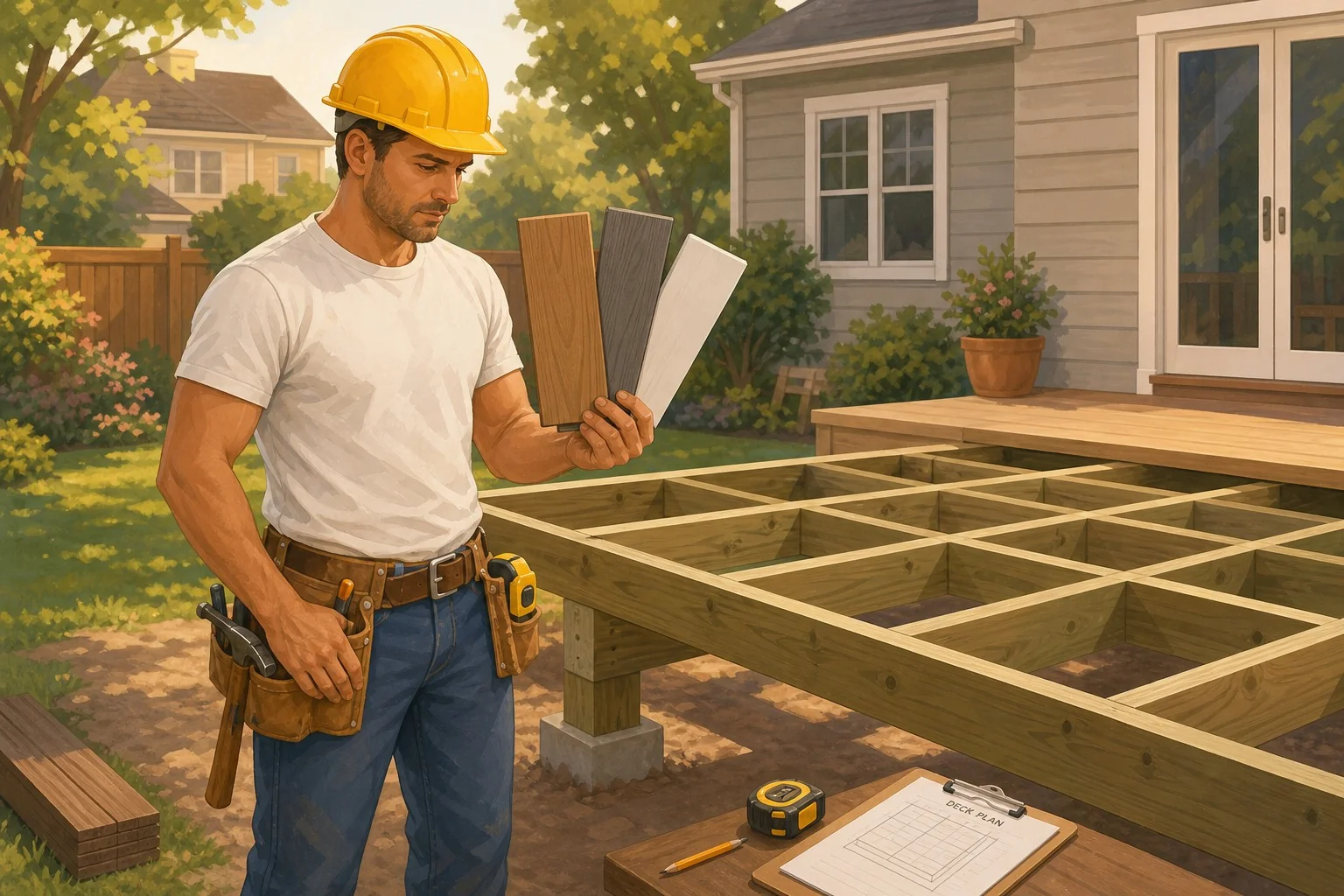
Budget is the first thing people bring up. It’s never the only thing that matters.
I’ve been building decks in and around Philadelphia for over three decades. The number of times I’ve seen a homeowner pick a material because it was cheapest — and then call me back two years later because they hate it — is embarrassing. Not because they made a bad financial decision. Because nobody had the conversation with them about what they were actually signing up for.
That conversation is part of the job. If you skip it, the deck becomes your problem long after the check clears.
Pressure-Treated: Cheap to Buy, Expensive to Own
Pressure-treated lumber is the entry point. It’s everywhere, it’s affordable, and there’s nothing wrong with it if you understand what it demands in return.
It warps. It checks. It needs to be sealed and stained on a regular cycle — typically every two to three years if you want it to hold up and not look like a shipwreck. If your client is someone who will actually do that maintenance, or budget to have it done, pressure-treated is a perfectly legitimate choice.
But a lot of homeowners have a different picture in their head. They want a deck that looks good, weathers gracefully, and doesn’t require babysitting. Pressure-treated will disappoint those people. Not because it’s a bad product — it isn’t — but because it’s the wrong product for someone who doesn’t want to think about their deck six months after it’s built.
The other thing nobody mentions upfront: pressure-treated needs time to dry before you can stain it properly. You’re building something they can’t finish the way they want right away. Some clients understand that. Some don’t, and they’ll blame you when the finish peels because they jumped the gun.
Set that expectation before you swing the first nail. Tell them what they’re getting. Tell them what it needs. Let them decide with their eyes open.
Composite and PVC: Higher Cost, Fewer Headaches
Composite and PVC decking costs more. That’s the conversation ender for a lot of people — until you explain what they’re not paying for on the back end.
No sealing. No staining. No checking every spring to see if the boards need work. You clean it a couple times a year and mostly leave it alone. For a busy family that wants to use the deck, not manage it, that’s worth real money.
Installs cleaner too. The hidden fastener systems on most composite products give you a finished surface without exposed screws, which matters when someone is spending real dollars on their outdoor space and wants it to look the part. And because the material is stable, you’re not coming back to fix boards that cupped or fasteners that backed out as the wood dried and moved.
The callbacks on composite are a fraction of what you see with pressure-treated — assuming you install it correctly, which means following the manufacturer’s specs on spacing, not improvising. Skip the expansion gaps and you’ll be back regardless of what the material cost.
One thing that trips people up: composite is not wood. It doesn’t feel like wood underfoot, especially in the heat. If your client has a specific sensory expectation — they love the feel of real lumber — you need to surface that before you sell them composite, because no amount of visual appeal fixes the sensation of walking on a hot vinyl surface in August.
Three Questions Before You Spec a Single Board
Before you put together any deck proposal, you should know the answers to these three things:
1. How much maintenance are you actually willing to do?
Not how much they think they should do. How much they’ll realistically do. Most people overestimate. If they hedge on this, assume low maintenance tolerance and spec accordingly.
2. What’s the ten-year picture?
Are they selling in two years? Do they want this to outlast them? A short-term owner might not care about a material that holds up for thirty years. A forever-home buyer should factor lifetime cost, not just sticker price.
3. What does it need to look like?
Some people want a deck that blends into a natural yard. Wood does that. Some people want a clean, finished, architectural surface. Composite does that better. Neither is wrong. But if you spec the wrong one, nobody’s happy.
I had a client years back in Chestnut Hill — nice yard, older house, husband and wife who both worked full schedules and had two kids. They came in with a number in mind and wanted pressure-treated because that’s what their neighbor had. I asked them flat out how often they thought they’d seal it. Long pause. “We’d probably hire someone.” I told them to add that cost to the pressure-treated price and compare it to composite over ten years. They went composite. They were glad they did.
The Real Job
Your job isn’t to hand someone the cheapest deck that passes inspection. It’s to build something that works for how they actually live — and make sure they know what they’re getting before you start.
That means talking through materials the way you’d talk through anything else: what it costs, what it needs, what it’s going to look like in five years if they take care of it, and what it’s going to look like if they don’t.
Do that work upfront and you’ll build decks that people brag about. Skip it and you’ll spend the next two years fielding calls from someone who can’t figure out why their pressure-treated deck looks terrible when they’ve never once touched it with a brush.
The deck is the easy part. The conversation is what separates a contractor from a carpenter who builds stuff and moves on.