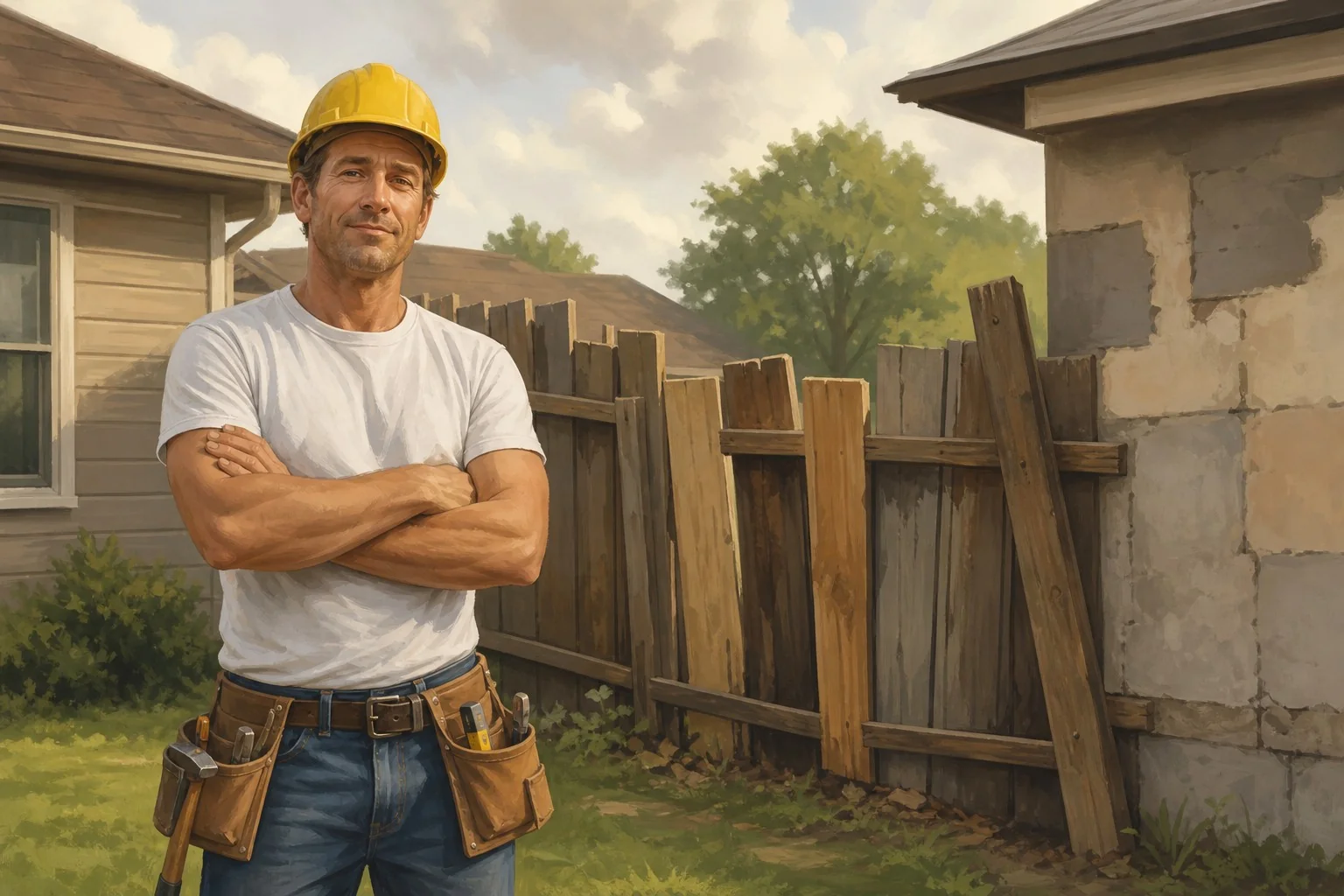
After thirty-something years of fixing other people’s disasters, I can tell you the homeowner’s opening line is almost always the same. They walk me through a kitchen with crooked cabinets, a bathroom that leaks through the ceiling below, a deck pulling away from the house. And before I can ask what happened, they say it.
“He seemed like a nice guy.”
That sentence has cost more homeowners more money than termites and water damage combined.
Here’s the thing nobody wants to hear. Nice has nothing to do with whether a guy can build. Nice is a personality trait. Building is a skill. You’d be amazed how often those two have absolutely no relationship to each other. The guy who chats with your kids and brings his own coffee can still install a load-bearing beam wrong and leave you with a sagging second floor. I’ve seen it. More than once.
Why do homeowners keep falling for it? Because contractors who can’t build know they have to sell something, and what they sell is themselves. Easy smile. Quick handshake. “We’re family-owned.” “I treat every house like it was my mother’s.” All the right noises. Meanwhile the guy who actually knows what he’s doing is running late because he’s elbows-deep in someone else’s project and can’t be bothered to perform for you.
I’ll give you one. A couple in South Philly hired a guy off Facebook to renovate their kitchen. Great personality. Showed up with his nephew, brought donuts on day one. Knocked out a wall they were told was non-load-bearing. It wasn’t. Within six weeks the second-floor bedroom had a crack across the ceiling you could fit a pencil into. I got called in to shore the whole thing up — temporary post, sister the joists, rebuild the wall with a proper header and the right hardware. The nephew was nowhere to be found. The “nice guy” had stopped answering his phone. The couple was out forty grand and still didn’t have a working kitchen. They told me, word for word, “He seemed like a nice guy.”
So here’s how you actually protect yourself. Not feelings. Facts.
Verify the license and insurance yourself
Don’t take a guy’s word for it. Don’t look at a card he hands you. Call the licensing board in your state. In Pennsylvania, any contractor doing more than $5,000 a year in home improvement work has to register with the Attorney General’s office — you can search the registry online in two minutes. Then ask for a certificate of insurance and call the insurance company directly to confirm the policy is active and the coverage limits are real. Twenty minutes of your time. Saves you twenty thousand dollars and a lawsuit later when his uninsured laborer falls off your roof.
Ask for references from jobs that are at least two years old
Anybody can pull off a project that looks good the day they hand you the keys. The question is what it looks like after two winters and a couple of hot summers. Joints open up. Caulk fails. Settled tile telegraphs every shortcut underneath. Call those older references. Drive by the houses if you can. And ask the old client what went wrong, not what went right — because something always goes wrong on a job, and how the contractor handled the wrong part tells you everything you need to know about him.
Get a written contract with a real scope of work
Not a one-page handshake printout. A real contract that spells out exactly what’s being done, what materials are being used (brand and model number, not “high-quality”), the payment schedule, the start and finish dates, and how change orders are handled in writing. If a contractor pushes back on putting any of that on paper, that’s your answer right there. Walk. The good ones expect a real contract because the contract protects them too.
Watch the payment schedule like a hawk
Never pay more than 10 percent up front, and even that should be tied to materials being delivered to your jobsite, not to the contractor’s truck. Anybody asking for 30, 40, 50 percent before they’ve done a thing is either broke, planning to disappear, or using your money to finish the last guy’s job. A working contractor uses your deposit to buy your materials. Tie the rest of the payments to milestones — rough-in inspection passed, drywall hung and finished, final walkthrough complete — not to dates on a calendar. And hold back at least 10 percent for final punch list. That last check is the only leverage you have left.
Pay attention to the actual red flags
Won’t pull permits. Wants cash only. Pressures you to decide today. Drops the price way down if you sign right now. Trash-talks every other contractor in town. Can’t give you a written estimate. Truck has no company name on it. Address on the business card is a UPS Store mailbox. Any one of those, slow down. Two or more, run.
What “nice” actually looks like on a real contractor
The best contractors I’ve ever worked with are usually the least charming. They don’t have time for it. They’re booked solid because their work holds up, and they don’t need to sweet-talk anybody. They show up when they say they will, they answer your questions straight, and they tell you no when something can’t be done the way you want it. That can feel a little rough at first if you were expecting somebody who wants to be your friend.
The smooth talkers are the ones who need the patter, because the work doesn’t speak for them.
Personality is the worst data point you have. Use the boring ones. Look at the paperwork. Call the references. Read the contract. Watch how the guy answers a hard question — does he get specific, or does he get reassuring? Specific is what you want. Reassuring is what you get sold.
If your gut says “nice guy” and that’s the strongest thing you can say about him, that’s not a recommendation. That’s a warning.