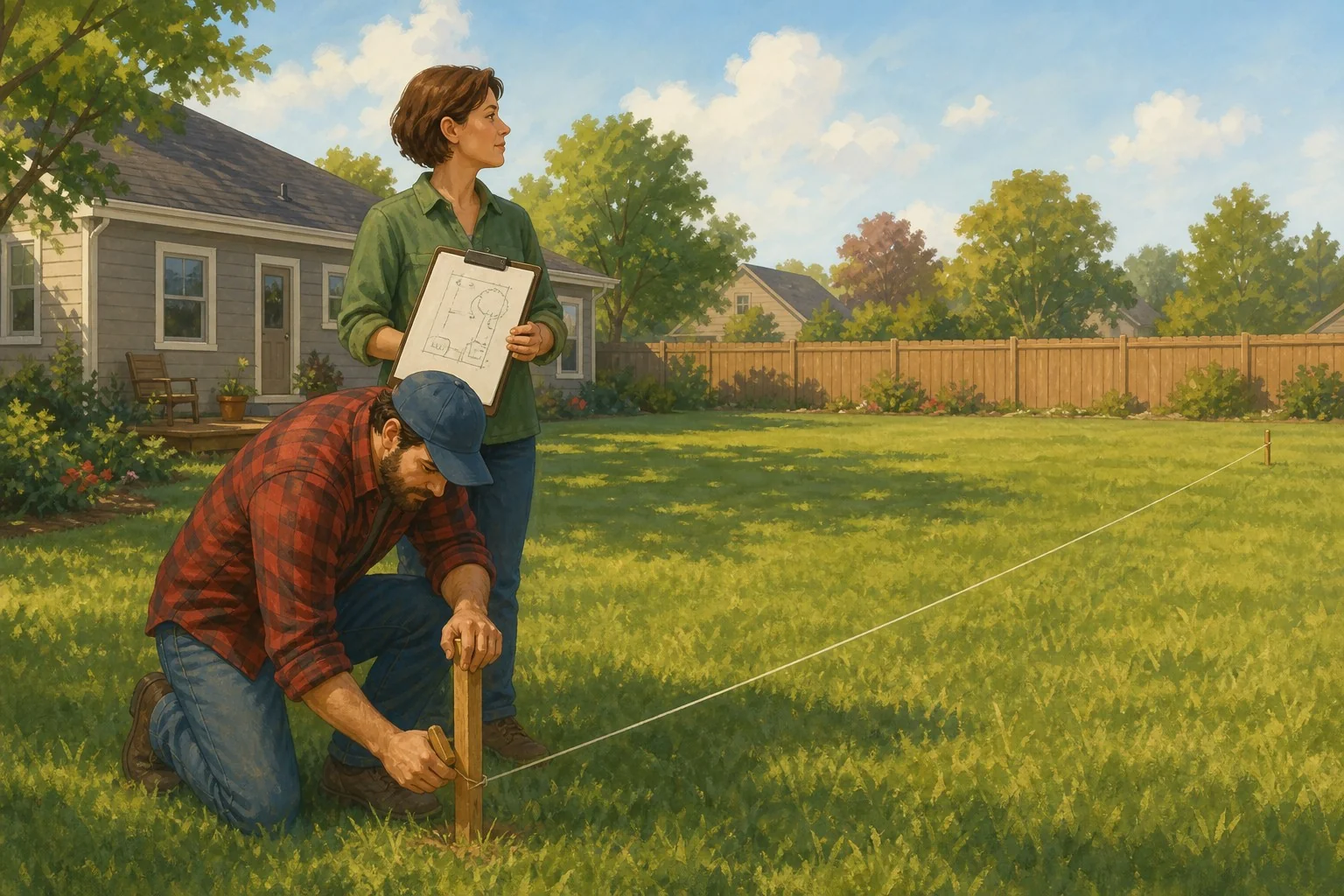
Before you call a single contractor, sit down and figure out what you actually want the fence to do. Nine out of ten people who call me about a fence have no idea. They just know their neighbor got one, and it looked nice.
That’s not a plan. That’s how you get talked into 180 feet of the wrong thing.
Step one: figure out what the fence is actually for
Fences do different jobs. Keep your dog in the yard. Keep your kid out of the pool. Block the view of the guy next door who works on cars in his boxers. Mark a property line. Cut wind. Add curb appeal. Every one of those goals points to a different fence.
If you don’t know what you want, you’ll pay for features you don’t need and skip the ones that matter. A 7-foot privacy fence to hold in a beagle is overkill. A 3-foot picket around a pool is illegal in most townships and stupid everywhere else.
Write down the top two reasons you want it. Rank them. That’s your compass for the rest of the decisions.
Step two: pick your privacy level honestly
There are basically three tiers, and the difference between them matters more than most people realize.
- See-through. Chain link, split rail, picket. Cheap, marks the line, keeps pets in, and that’s about it.
- Semi-private. Shadow box, spaced board. You see silhouettes, not the whole picture. Good airflow. Good compromise if you don’t want to feel boxed in.
- Full privacy. Solid board-on-board or vinyl panels. You see nothing. Your neighbors see nothing. Wind hits it like a sail, which matters for post depth and bracing.
The mistake people make is going full privacy because they’re mad at one neighbor for one thing. Then they spend the next ten years staring at their own back fence like they live in a shipping container. Think five years out, not five minutes out.
Also — and I cannot say this loud enough — talk to your neighbor before you build. I don’t care if you love them or hate them. Talk to them. I had a job in South Philly where the homeowner slapped up an 8-foot solid stockade without a word to the guy next door. Turned out the property line ran 14 inches into the neighbor’s yard. Whole thing came down. Homeowner ate the demo, the rebuild, and a surveyor bill he should’ve paid on day one. Don’t be that guy.
Step three: pick a material based on how you actually live
- Pressure-treated pine. Cheapest wood option. Warps and twists if you don’t seal it. Expect to babysit it every couple of years.
- Cedar. Nicer wood, more stable, silvers out beautifully if you leave it alone. Costs more up front, less over time.
- Vinyl. Zero maintenance, looks like vinyl. That’s not a knock — some people want that. Panels can crack in a hard freeze if the install is lazy.
- Aluminum or steel. Great for pools, sloped yards, and anywhere you want to see through it. Not cheap. Lasts forever.
- Chain link. Ugly but honest. Does exactly what it says. Coat it black and it more or less disappears into the yard.
Match the material to the maintenance you’ll actually do. If you’ve never oiled a deck in your life, don’t buy a wood fence and swear to yourself you’ll stain it every two years. You won’t. And a neglected wood fence looks worse at year five than any vinyl fence ever will.
Step four: don’t forget the gates
Gates are where fences fail. Every single time. They sag, they scrape, they warp, the latch stops lining up in July because the wood swelled a quarter inch. Two things matter: proper hinges rated for the actual weight of the gate, and a gate post set deep enough — 42 inches minimum in this region — to handle the swinging load without leaning.
Think about width too. A 3-foot gate is fine for people. If you own a mower, a wheelbarrow, or you plan to ever haul anything into the yard, get a 4-foot minimum on at least one gate. A double gate — 8 to 10 feet wide — is worth every dollar if you have a driveway-side yard. You will thank yourself the first time you don’t have to lift a mower over the fence.
Step five: set a real budget before you get quotes
Ballpark for the Philly area, installed, materials plus labor:
- Chain link: $15–$30 per linear foot
- Pressure-treated wood privacy: $30–$50 per linear foot
- Cedar privacy: $40–$70 per linear foot
- Vinyl privacy: $45–$75 per linear foot
- Aluminum: $40–$80 per linear foot
Those are ranges, not gospel. Corner lots, sloped yards, tree roots, buried rock, and old fence removal all push the number up. If someone quotes you way below those ranges, ask why. Usually it’s because they’re not pulling a permit, not setting posts in concrete, or planning to vanish halfway through the job.
Step six: how to read a quote without getting hosed
Any real quote should spell out:
- Total linear footage and where the fence starts and ends
- Post depth and setting method — concrete or gravel, and how deep
- Post spacing — 6 or 8 feet on center
- Rail count — two rails vs. three matters for durability
- Hardware grade — galvanized, stainless, or the cheap zinc junk that rusts by year two
- Gate specs — width, hinge type, latch type, drop rod if it’s a double
- Permit handling — who pulls it, who pays the fee
- Debris removal — is the old fence going with them, or sitting in your yard for a month
- Warranty — on labor specifically, not just the material warranty from the manufacturer
If the quote is one line that reads “Install fence — $6,400,” throw it in the trash. You have no idea what you’re buying, and neither does the guy who sent it.
One last thing
Get three quotes. Not one. Not seven. Three. And don’t take the cheapest just because it’s cheapest. Take the one where the contractor showed up on time, measured properly, asked about your goals, and put every detail in writing. That guy is going to build you a fence. The other two are going to build you a headache.
Do your homework before you spend a dime. Fences aren’t complicated, but they’re expensive to fix when they’re wrong.