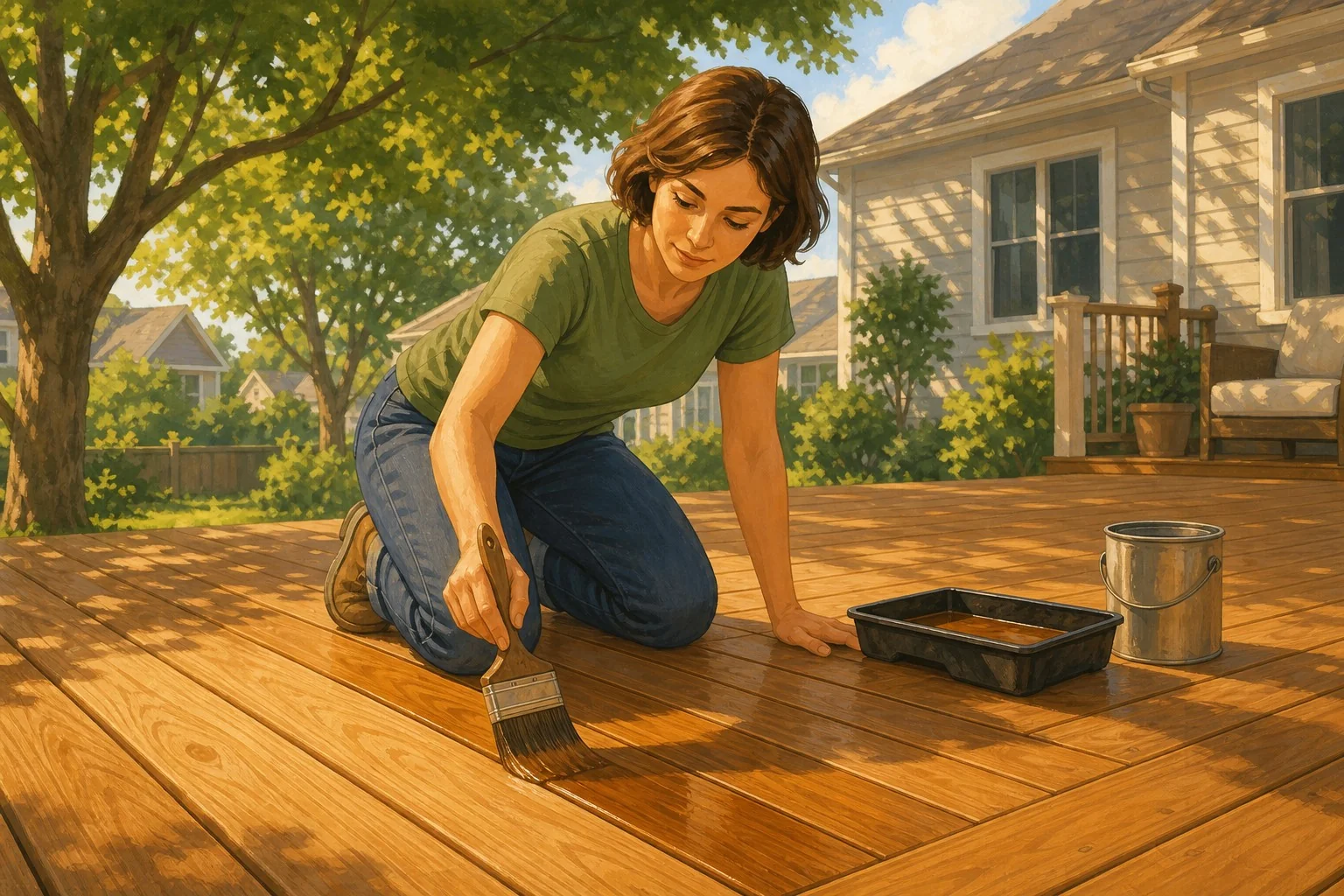
Pennsylvania summers will eat your deck alive if you let them. Humidity that sits in the 80s for weeks, temperature swings from 95 in the afternoon to 65 at night, and a sun that’s been hammering those boards since April. Wood doesn’t care that you spent ten grand on it. It will warp, gray out, crack, and splinter — and it will do it fast.
The good news: most of that damage is preventable. The bad news: most homeowners wait until the boards look like driftwood before they do anything about it. By then you’re not protecting anything. You’re trying to resurrect a corpse.
Here’s how to do it right, in June, before the worst of it hits.
Clean it before you do anything else
You can’t seal dirt. You can’t stain mildew. Whatever you put on top of a filthy deck locks the gunk underneath and peels off in eight months.
Start with a stiff-bristle brush and a deck cleaner — the oxygenated kind, not bleach. Bleach kills mildew, sure, but it also bleaches the wood, kills the plants around your patio, and breaks down lignin in the boards. Skip it. Use a sodium percarbonate-based cleaner. Any decent hardware store carries them.
If you’re pressure washing — and I know you are — keep it under 1500 PSI on a fan tip, at least a foot off the deck, and move with the grain. Sit too long in one spot and you’ll tear up the wood fibers. I had a homeowner in Roxborough call me one June because his pressure-treated deck looked like shredded wheat. He’d cranked his washer to 3000 PSI and held the wand six inches off the boards. Took us a full weekend of sanding to get it back to something stainable. More pressure does not mean cleaner wood. It means a destroyed deck.
When you’re done, let it dry. Forty-eight hours minimum. Pennsylvania humidity laughs at the 24-hour rule printed on the back of the cleaner bottle.
Fix what’s broken before you seal it
This is where people screw up. They clean, they seal, and they ignore the popped nails, the cupping boards, and the soft spot near the grill.
Walk every board. Push on it. If it gives, find out why. Replace any screws that have backed out — and use coated deck screws, not the cheap drywall screws somebody might have left behind. Sand splintered edges. Countersink anything sticking up. If a board is split end to end or rotted at the joist, replace it. A new board takes stain fine if you let it weather for a couple weeks first.
While you’re down there, look at the joists and the ledger board where the deck meets the house. If there’s no flashing where the ledger ties in, you’ve got bigger problems than UV damage. Water has been running behind that board into your rim joist for years. That’s a different article — but don’t ignore it.
Pick the right product for our climate
This is where homeowners blow it. You walk into Home Depot, grab whatever’s on the endcap, and call it a day. Don’t.
For Pennsylvania — hot, humid, wet, then dry, then wet again — you want a semi-transparent oil-based stain with UV inhibitors. Not solid color (it sits on top and peels). Not clear sealer (no real UV protection). Not water-based over a deck that’s already had oil on it (it won’t bond, and you’ll watch it flake off in October).
Brands that actually hold up around here: Ready Seal, TWP 1500 series, and Penofin. Australian Timber Oil works on hardwood decks like ipe or mahogany.
Ignore anything that promises “5-year protection.” It’s marketing. Around here, you’re recoating horizontal surfaces every two to three years no matter what the can says. Vertical stuff like railings can stretch to four or five because the sun and rain don’t beat on it the same way.
Apply it correctly or don’t bother
Pick a stretch of three clear days. Apply when the wood is dry, the temperature is between 50 and 90, and the sun isn’t cooking the surface. Mid-morning or late afternoon is best. Stain that hits hot wood flashes off before it can soak in.
Use a stain pad on a pole for the field, a brush for the railings and corners. Back-brush everything. That means after you pad it on, you go back over it with a brush to work it into the grain. Skip the back-brushing and you’ll end up with a blotchy, streaky mess that looks worse than bare wood.
Two thin coats beat one thick coat every time. Thick stain doesn’t soak in. It sits on top and peels. That’s not protection. That’s a paint job waiting to fail.
Keep up with it through the season
Once the deck is sealed, you’re not done. You’re maintaining.
Sweep weekly. Leaves and pollen trap moisture against the boards and stain the surface. Move planters around every couple weeks so you’re not getting permanent water rings or dead spots where the wood can’t dry. Don’t leave a wet outdoor rug or a pile of pool toys sitting on the boards for a month. Wood needs to breathe.
If you see graying start to show up in August, that’s UV doing its thing. Note where it’s worst — usually the south-facing boards and anything near a railing reflection — and plan to hit those spots first next spring before the full recoat.
The math
A wood deck is not a maintenance-free product. Anybody who tells you otherwise is selling something.
Twenty hours of work in June — cleaning, fixing, staining — will save you ten grand in replacement lumber five years from now. That’s the trade. Do it now or pay later. Pennsylvania doesn’t give you a third option.