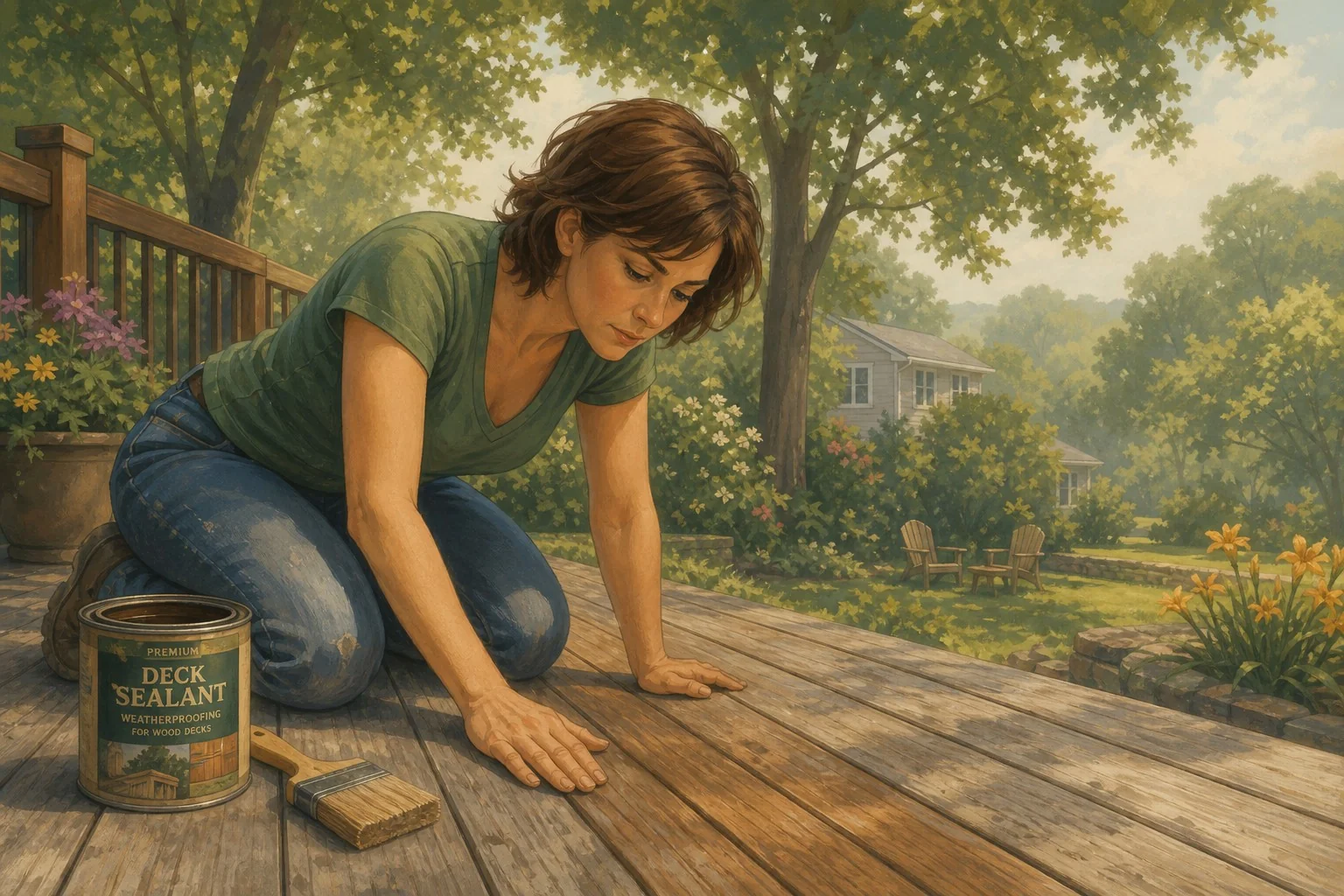
Short answer? Usually no. Not in July. Not around here.
Long answer takes a minute, because there’s a right way to think about this, and most of what you’ll read online was written by someone who’s never touched a deck brush in their life.
Pennsylvania summers are wet. Not tropical wet, but wet enough. The air sits on 70 percent humidity for weeks at a time, thunderstorms roll through every third afternoon, and the boards on your deck are quietly holding more moisture than you think. You slap sealant on top of that, and you’re basically trapping water inside the wood. That’s how you get peeling, cloudy patches, black spots, and a deck that looks worse a year later than it did before you “protected” it.
What humidity actually does to the finish
Sealant needs to bond with dry wood. Water-based, oil-based, doesn’t matter — the chemistry needs the fibers to accept the product and let the solvents flash off cleanly. When the wood is damp, the sealer sits on top instead of soaking in. When the air is damp, it can’t cure the way the manufacturer designed it to. You end up with a film that looks fine for two weeks and then starts flaking like a bad sunburn.
Oil-based sealers hate high humidity because they dry slower and stay tacky. Water-based sealers dry too fast if the wood is warm and then cure poorly if the air is thick. Neither one wins in a Philadelphia July.
The other thing nobody mentions: mildew. If you seal over damp wood in humid weather, you’re feeding whatever spores are living in those boards. Six months later you’ve got black streaks running with the grain and no way to fix it without stripping the whole thing.
What the UV is doing while you’re deciding
Sun is the other half of the beating your deck takes. UV breaks down the lignin in wood — that’s the stuff that holds the fibers together and gives wood its color. That gray, fuzzy look on an unsealed deck? That’s UV damage. Sealant with a pigment in it (a semi-transparent stain, basically) is what actually blocks that. Clear sealers do almost nothing for UV. If your deck has been bare for two summers, no clear coat is going to bring it back.
So yeah, the deck needs protection. But putting the wrong product on at the wrong time is worse than waiting.
How to tell if your deck is even ready
Forget the calendar. Test the wood.
- Sprinkle test. Dump a cup of water on the boards. If it beads up, your old sealer is still working and you don’t need to reseal. If it soaks in within 10 seconds, the wood is thirsty and open to a new coat.
- Moisture meter. Pick one up at the hardware store for 30 bucks. You want the boards reading under 15 percent moisture content before you seal. In July, after a rainy week, I’ve seen decks meter at 22 percent. That deck is not ready for anything except sitting there.
- Dry stretch. You need at least 48 hours of dry weather before you seal, and another 24 to 48 after. Check the forecast. Not the weather app on your phone that lies to you — check the actual radar. If there’s a pop-up storm on the horizon, don’t start.
If you’re going to do it in July anyway, here’s how not to blow it
Sometimes you can’t wait. Deck’s peeling, in-laws are coming, whatever. Fine. Do it right.
- Wash it first, then wait. Pressure wash or use a deck cleaner, but give the boards a full three or four dry days after. I don’t care if it looks dry on top — the wood underneath is still holding water. This is the single biggest mistake homeowners make. I got called out to a place in Roxborough one August where the owner had washed the deck on Saturday, sealed on Sunday, and by Wednesday half the boards looked like a bad paint job at a rental. Whole thing had to come off with a stripper and a lot of cursing. Wait the extra days.
- Work in the morning. Start at 7 a.m. Get done by 11. You want the wood cool and the sun off it. Sealing hot boards in direct sun causes the product to flash-dry on the surface and never actually penetrate. You’ll get lap marks and a film that won’t last.
- Pick the right product. In humid weather, a penetrating oil-based semi-transparent stain gives you the most forgiving results — it soaks in, doesn’t form a film, and if it fails, it fails gracefully instead of peeling in sheets. Film-forming products (the ones that leave a shiny coat) are a nightmare in this climate. Stay away.
- Thin coats. One thin coat, wait, then a second if the wood is still drinking it. Do not glob it on. Excess sealer that doesn’t absorb turns into a sticky mess that never fully cures. Wipe off anything still pooling after 20 minutes.
When to actually do this job
The sweet spot in southeastern PA is late September through mid-October. Cool nights, dry days, low humidity, the wood has had all summer to dry out. May can work if we’ve had a dry spring, but you’re rolling the dice.
If your deck genuinely needs help right now and can make it another two months, wait. If it can’t, follow the steps above and pick your window carefully. A deck sealed poorly in July will need to be redone next year. A deck sealed properly in October will hold for two or three.
That’s the whole story. Don’t let a can of stain and a free Saturday talk you into a job the weather isn’t ready for.