If you priced a run of cedar privacy fence at the big box lately, you already know what I’m about to say. The numbers are stupid. A 6-foot cedar picket that used to run eight bucks is fifteen, sixteen now, and by the time you add posts, rails, hardware, and concrete, a hundred feet of fence eats a chunk of money you didn’t plan on spending.
Salvage is the answer. Not always. Not for every job. But for most homeowners in Pennsylvania who want a real fence that doesn’t look like it came out of a suburban outlet mall, salvage will cut your material bill in half — sometimes more. You just have to know where to look and what you’re staring at.
Here’s how you do it without getting burned.
Architectural Salvage Yards Are Your First Stop
Pennsylvania is one of the best states in the country for architectural salvage, and it’s because we’ve been tearing down and rebuilding here since before your grandmother was born. Every old rowhouse in Fishtown, every abandoned mill in Reading, every collapsing barn in Lancaster County — that stuff gets pulled apart by people who know what it’s worth, and it ends up in yards.
Places worth your time:
- Philadelphia Salvage Company in Kensington — doors, iron, timbers, and plenty of fence-worthy material like old wrought iron panels and reclaimed pickets.
- Provenance in Philly — leans more high-end, but if you catch them on a slow week they’ll deal.
- Habitat for Humanity ReStores — you’ve got them in Chester County, Lancaster, Pittsburgh, Bethlehem, Harrisburg, and about a dozen other spots. Prices are the best you’ll find, and inventory turns over weekly.
- Salvage yards up around Scranton and the Lehigh Valley — worth a drive if you’re building something with real character and you want stuff nobody else has.
- Amish barn wood dealers across Lancaster and Berks County — they pull down old barns and resell the siding, beams, and gate hardware. Some are proper businesses. Some are a guy with a pole barn and a hand-lettered sign at the end of a driveway. Both are fine.
Call ahead before you drive anywhere. Half these places don’t post inventory online, and the good stuff moves fast.
Get Friendly With Demo Contractors
This is where you can really steal a deal, and almost nobody does it because it takes a little effort. Demo contractors — the guys who rip houses and buildings apart for a living — usually end up hauling perfectly good material straight to the dumpster because it’s faster than sorting it. Wood, iron, brick, hardware. Gone.
Here’s the play. Find out who’s doing demo work in your area. Drive around older neighborhoods where houses are getting flipped or knocked down. Look for the roll-offs and the crews. Walk up, be polite, and ask the foreman if you can buy or grab a specific thing before it goes in the dumpster. Not “everything.” Not “I’ll pick through your junk.” Something specific. “I’m looking for old picket or fence pipe if you come across any this week.”
I had a homeowner in Manayunk last spring who furnished an entire 80-foot fence line with panels and iron posts he pulled off three different demo sites over about six weeks. Total cost, including a case of beer and two coffee runs: forty-something dollars. That’s not a typo. Contractors like people who don’t waste their time. Be that guy and doors open.
How to Vet What You’re Actually Buying
This is where most homeowners get burned, so pay attention.
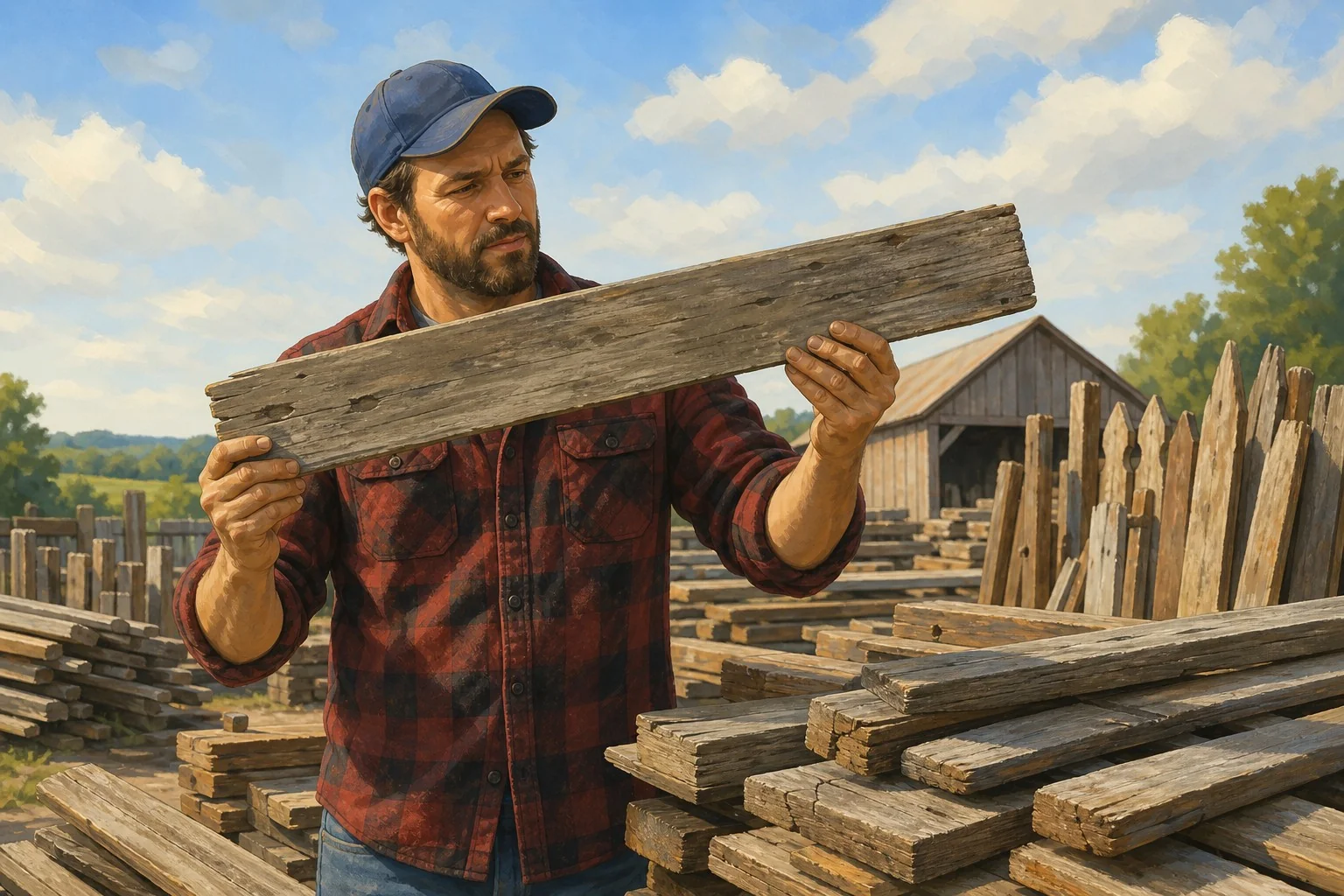
For wood — bring a flashlight and a pocket knife. Push the tip into the wood in a few places, especially near the ends and along the bottom edge where water sits. If it sinks in like cake, walk away. That’s rot. Also look for termite galleries — little tunnels running with the grain. Old-growth cedar, redwood, and oak are gold and worth almost any price. Pressure-treated pine older than about fifteen years may contain arsenic-based CCA. Don’t put that where kids play or where a vegetable garden runs.
For iron and steel — surface rust is nothing. Comes right off with a wire wheel. What you don’t want is pitting, where the rust has eaten into the metal and left craters. Tap it with a screwdriver handle. Solid iron rings. Rotten iron thuds. Check every weld and joint. Old ornamental iron was often cast, and once cast iron cracks, it’s done.
For hardware — hinges, latches, gate posts, brackets. Reproduction stuff is fine but boring. Real old hardware is heavier than what they make today and usually rebuildable. Bring a magnet. If it grabs hard, it’s steel or iron. If it doesn’t, you might be looking at bronze or brass, which is worth more than most people realize.
Always ask where it came from. A yard that can’t tell you is a yard that either doesn’t care or is moving something they shouldn’t be moving. Legitimate salvage has a story.
One Last Thing
Don’t try to build an entire fence out of mismatched salvage. That’s how you end up with something that looks like a hillbilly compound. Pick a system — say, iron posts with reclaimed cedar infill, or salvaged brick piers with new pickets between them. Mix salvage with new material where it makes sense. You get the cost break, you get the character, and you still end up with something the neighbors don’t stare at.
Salvage takes more time than driving to Lowe’s. It takes phone calls, some hauling, and a willingness to walk through a dusty yard. But it’s cheaper, it looks better, and it keeps decent material out of a landfill. If you’ve got a weekend and a truck, there’s no reason not to try it.