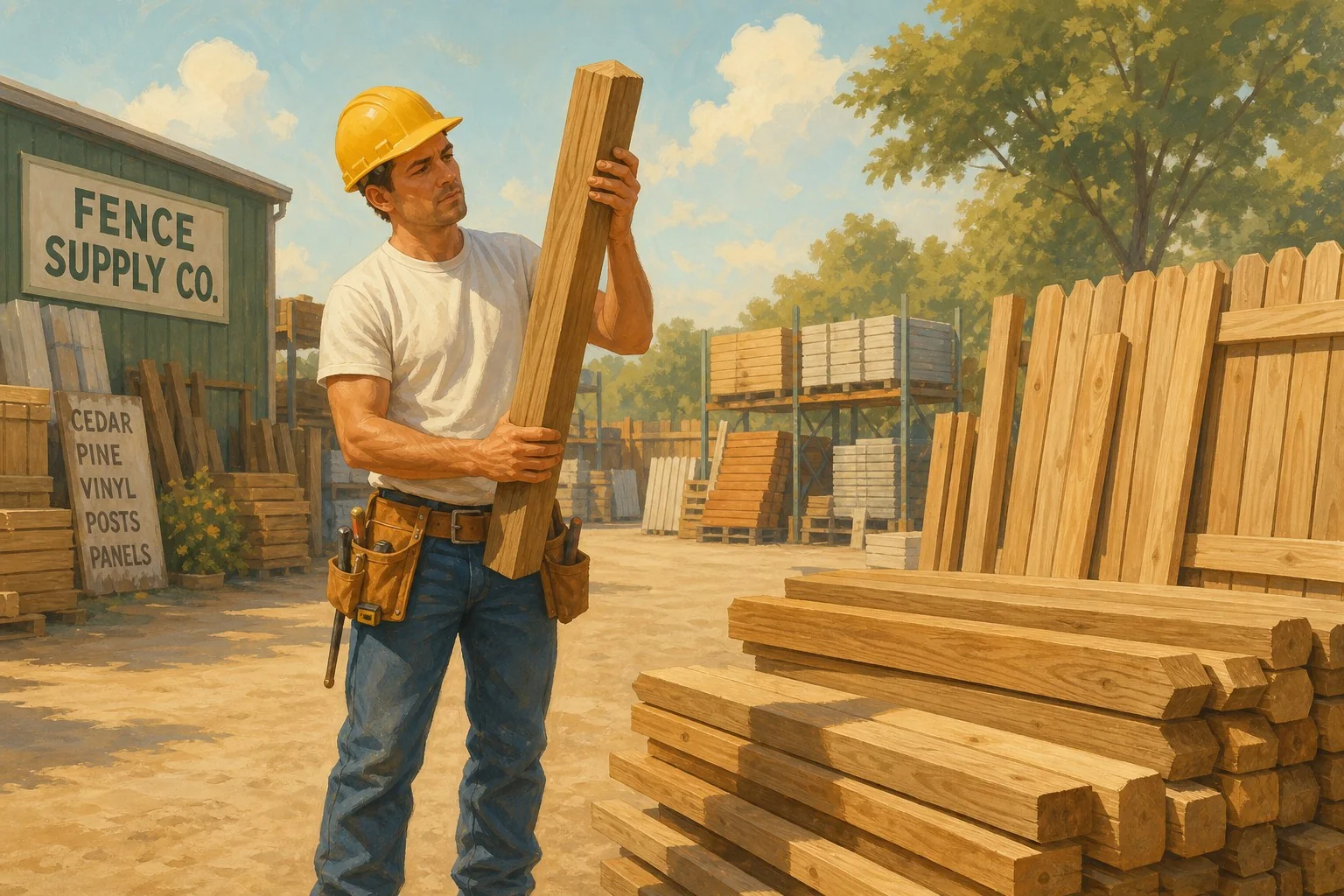
Most homeowners spend a lot of energy vetting their fence contractor — checking reviews, asking for references, comparing quotes. That’s not wrong. But there’s a question almost nobody asks, and it’s the one that separates contractors who know what they’re doing from contractors who are going to give you a headache.
Ask them where they buy their material.
That question sounds simple. It’s not. The answer opens up a whole conversation about how the contractor operates, who they have in their corner when something goes sideways, and whether they’ve done this enough times to know what a real supplier relationship looks like.
What You’re Actually Asking
When a contractor buys fence materials from a supply house that works with installers day in and day out, that supplier knows the difference between a defective post and a post that got set wrong. They know what drainage conditions do to certain treatments. They know what gate hardware fails in high-cycle situations and what holds up. They’ve seen enough installs — and enough complaints — to give a contractor real answers instead of a runaround.
When a contractor buys materials from a box store or a discount distributor that doesn’t talk to installers, nobody in that supply chain understands what happens after the truck leaves. The fence goes up, something fails, and now you’ve got a contractor pointing at the supplier and the supplier pointing at the installer and you’re stuck in the middle.
That gap — between a supplier who gets it and one who doesn’t — is what you’re trying to close before anyone breaks ground in your yard.
Three Things to Ask Your Contractor About Their Supplier
1. Can your supplier help diagnose a problem if something fails?
This is the first real test. A good contractor should be able to say yes without hesitating. If their supplier has been around and works primarily with the trade, they’ll have the experience to look at a failed section and tell you whether it was a product issue or an installation issue. That distinction matters enormously for who’s responsible and what the fix looks like.
If your contractor says something like “I’d have to check” or seems confused by the question, that’s your signal. They probably don’t have that kind of relationship with anyone. They buy off a pallet somewhere and figure it out themselves when things break — which means you figure it out with them, at your expense.
2. Does the supplier back the product if there’s an install-related warranty issue?
Fence material warranties are written to be narrow. Manufacturers cover defects. What they don’t cover — usually — is anything that touches installation. Galvanization that failed because the posts were set in concrete that traps moisture. Pressure-treated lumber that split because it wasn’t acclimated or was over-fastened.
A supplier with real trade relationships knows how to navigate that. They’ve made calls on behalf of contractors before. They know which manufacturer reps will work with them and which ones disappear the second there’s a claim. A contractor who buys from someone with no trade presence has no leverage with anyone when something fails. It’s just you and a warranty document and a lot of fine print.
3. How long has your contractor been buying from that supplier?
Longevity matters here. A contractor who’s been buying from the same supply house for five, ten, fifteen years has built up something — goodwill, credit, a track record. That supplier will pick up the phone. They’ll prioritize an order when a job is running behind. They’ll tell the contractor honestly if a product has been having problems lately.
I had a homeowner in Roxborough call me after her fence job went wrong. The vinyl panels were warping badly after one summer. The contractor who built it had bought the panels from a distributor he’d used once before because they were twenty dollars cheaper per section. When the panels warped, the distributor said it was an installation problem. The contractor said it was a product problem. The homeowner said she wanted a fence that didn’t look like it was melting. Nobody had leverage over anybody, because there was no relationship to pull on. She ended up replacing half the fence herself and eating the cost.
A contractor with a real supplier relationship doesn’t end up in that situation, because they’re not chasing the cheapest pallet every job. They’ve already had those conversations. They know what holds up.
Why This Matters More Than the Lowest Bid
When you’re comparing fence quotes, the difference between a contractor with a solid supply relationship and one without it doesn’t show up in the price line. It shows up later.
It shows up when the gate sags after eighteen months and your contractor calls their rep and gets it sorted versus when your contractor goes quiet and stops returning your calls. It shows up when the lumber you paid for was sitting in a yard too long and starts checking and splitting by year two. It shows up in whether you get a straight answer about what went wrong or whether everybody starts covering themselves at your expense.
You can’t tell from a quote whether your contractor has that kind of relationship. That’s why you ask.
A contractor who works with a supply house that understands installation knows things that a contractor who buys off the rack doesn’t. They know what performs in clay soil and what doesn’t. They know which post caps hold up in freeze-thaw cycles and which ones are marketing. They know which products the manufacturer actually stands behind and which ones come with a warranty that’s designed to never pay out. That knowledge comes from the supplier, and the supplier shares it because they have a stake in the job going well.
What a Good Answer Sounds Like
When you ask a fence contractor where they buy their material and why, a contractor who knows what they’re doing will give you a specific answer. They’ll name a place. They’ll say something about quality, consistency, or their rep. They might mention a product line they’ve had good luck with.
A contractor who doesn’t have that relationship will give you a vague answer. “I use different places depending on the job.” “Wherever I can get the best price.” That might be true, but it tells you they’re not anchored to anyone. And if something goes wrong, neither is their accountability.
You’re not just hiring someone to dig holes and set posts. You’re hiring someone who has access to the right materials, the right information, and the right people to back them up when a job doesn’t go perfectly. Because eventually, something on every fence job doesn’t go perfectly.
The ones who have a real supplier test that relationship before they ever pull a permit. Make sure the guy you’re hiring does too.