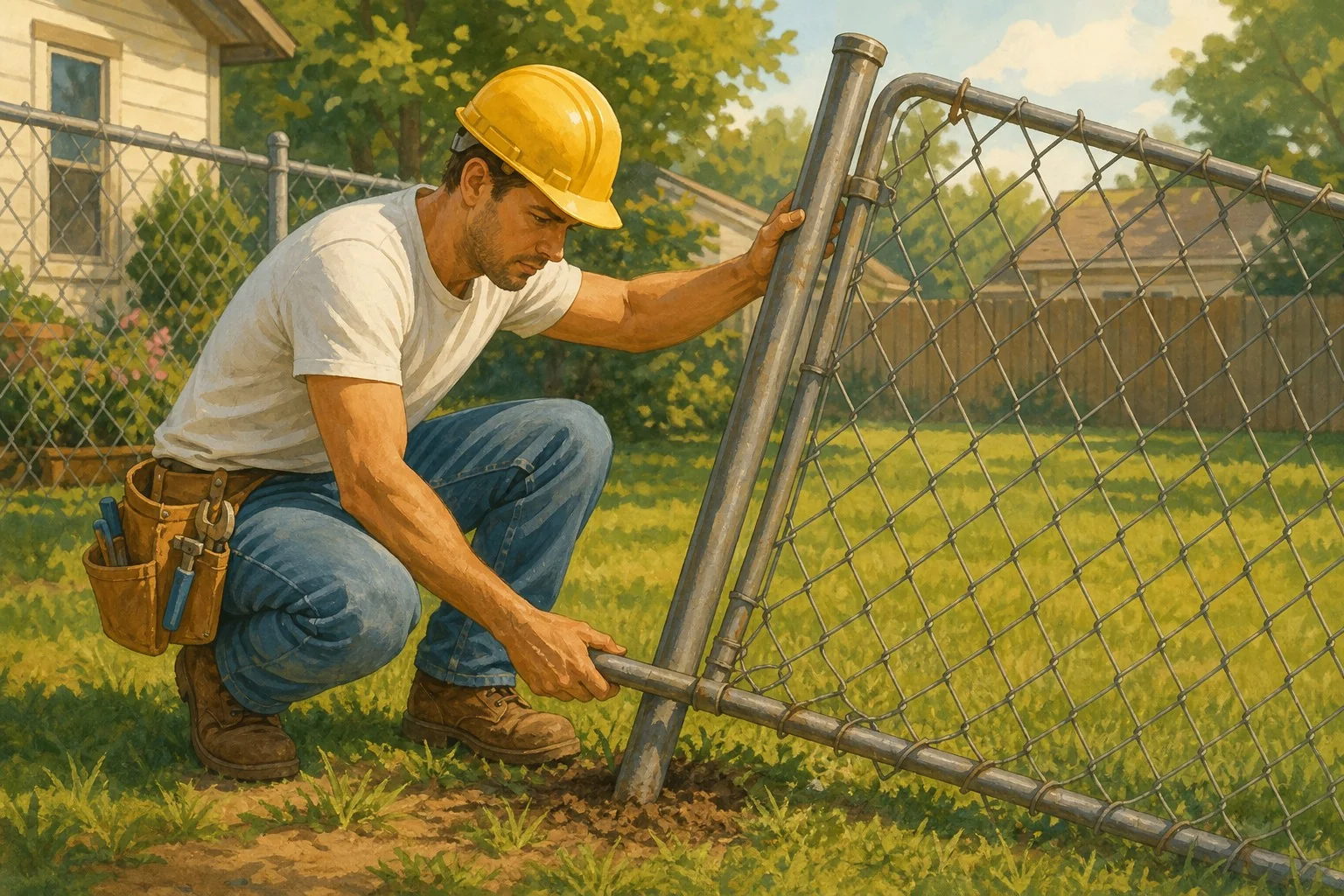
If your chain link gate is sagging, dragging on the ground, or bouncing when the wind hits it, there’s a good chance the posts were undersized from day one. It’s one of the most common installation mistakes out there, and it’s completely avoidable if whoever put the fence in knew what they were doing.
Let me tell you exactly what the right sizes are, why they matter, and what happens when you ignore them.
The Three Post Types — And Why They’re Different
Chain link fencing isn’t a one-post-fits-all situation. There are three distinct post types, and each one does a different job.
Line posts are the ones running between your terminal posts — the backbone of the fence line. These are 1-5/8 inch diameter. That’s it. They’re not carrying much load; they just keep the fabric taut and upright. Using something bigger here is overkill and a waste of money.
Terminal posts are your corner posts, end posts, and pull posts. These take the tension load of the entire fence run. They need to be 2-3/8 inch diameter minimum. This is where you start seeing budget-cutting installers go wrong. They’ll spec 1-5/8 across the board to shave cost, and three years later your fence is leaning like it had a few too many.
Gate posts are the most critical. If you’re hanging a gate — especially anything over four feet wide — you need 2-7/8 inch posts, and often you should be going bigger depending on gate weight and span. Some heavy commercial gates want 4-inch schedule 40 pipe. The gate hangs off these posts. All that swing weight, wind load, and daily use is bearing on them constantly. Undersize these and the gate starts sagging within a year or two. Sometimes faster.
Why Getting This Wrong Costs You Twice
Here’s what happens in practice. A homeowner hires a low-bid fence crew. The crew installs 1-5/8 inch posts throughout — line posts, terminal posts, gate posts, everything — because it’s cheaper and faster, and they’re banking on you not knowing the difference.
The fence looks fine on day one. By year two, the terminal posts are pulling inward and the fence fabric is going slack. The gate is drooping at the latch side, catching on the ground, or swinging open on its own because the post has started to lean. Now you’re calling someone to come fix it, paying for parts and labor on a job that should have been done right the first time.
I had a customer in South Philly call me in to look at a fence that was barely three years old — gate post had started to tilt noticeably, and the gate wouldn’t latch anymore. Pulled the post and found they’d used 1-5/8 inch pipe in a hole that wasn’t deep enough, with barely any concrete around it. The original crew pocketed the difference and left someone else to clean it up. We had to pull the post, dig it out properly, and reset it with the right diameter pipe in adequate concrete. Not a complicated job — but it was a completely unnecessary one.
Inspections Will Catch This
If you’re pulling a permit for fencing — and in most jurisdictions you should be — the inspector is going to look at post sizing. Many municipalities follow the Chain Link Fence Manufacturers Institute standards or reference them directly. Show up with undersized gate posts and you’re looking at a failed inspection, a required correction, and a reinspection fee. That’s before you factor in the cost of digging out and resetting posts that are already in the ground.
Do it right the first time. The material cost difference between correct and incorrect post sizing is not that significant. What’s significant is doing it twice.
Three Things to Verify Before Any Chain Link Install
1. Confirm post specs before the crew starts.
Ask specifically: What diameter are the line posts? Terminal posts? Gate posts? If the answer is “they’re all the same,” walk away or get a written correction. They should not all be the same. A reputable installer knows this without being prompted.
2. Gate width determines gate post size.
A gate under four feet wide on a residential fence can get away with 2-7/8 inch posts if they’re properly set. A double drive gate — something in the 10 to 12 foot range — needs bigger posts and deeper footings. The math isn’t complicated, but it has to be done. If your installer isn’t asking about gate dimensions before sizing posts, they’re guessing.
3. Concrete depth and diameter matter as much as post diameter.
The right post in a shallow hole with a coffee can worth of concrete around it is still a failure waiting to happen. Terminal and gate posts want to be 30 to 36 inches deep in most residential installs, more if you’re in a frost-heavy area. The footing diameter should be at least three times the post diameter. This isn’t optional — it’s what keeps the post from walking when the fence takes lateral load.
The Bottom Line
Chain link is about as straightforward as fencing gets, which is exactly why there’s no excuse for getting the post sizing wrong. The specifications exist. They’re not hard to follow. When a contractor ignores them, they’re either cutting corners or they don’t know what they’re doing — and either way, you’re the one who ends up paying for it.
Check the specs. Ask the questions before anything goes in the ground. A fence is only as good as what’s holding it up.