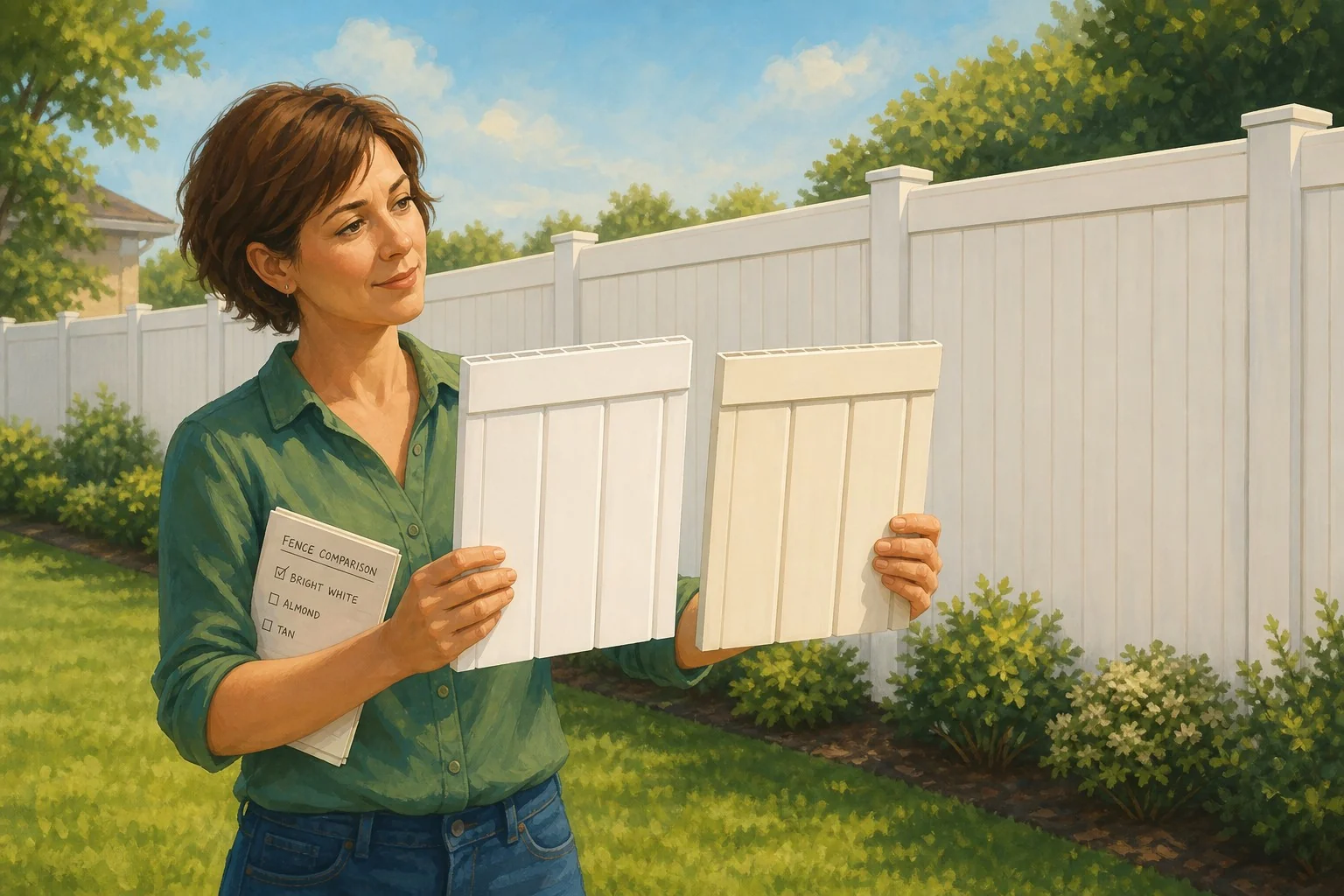
Yes. A vinyl fence is a PVC fence. Same material, two names. Salespeople and marketers use “vinyl” because it sounds friendlier than a plastic acronym. “PVC” stands for polyvinyl chloride — and if you say that at a fence showroom, some kid in khakis is going to look at you like you just spoke Latin.
They’re the same product. Don’t let anyone tell you otherwise, and don’t pay a premium because one brochure says “premium vinyl” and another says “PVC.” You’re buying the same fence.
Why PVC/Vinyl Became So Popular
Before about the 1990s, your options were wood, chain-link, or wrought iron. Wood looks great when it’s new and becomes a maintenance nightmare within five years — painting, sealing, replacing rotted boards, pulling nails. PVC came along and offered something different: it doesn’t rot, doesn’t need paint, and doesn’t rust.
For a homeowner who doesn’t want to think about their fence again for 20 years, that’s genuinely appealing. For a contractor, it’s easier to sell than wood because the long-term maintenance argument basically closes itself.
The material has limits, though. PVC gets brittle in very cold weather. It fades over time, especially in full sun. And if a car, tree limb, or truck backs into it, it cracks rather than bends — unlike metal, which at least dents before it fails. Keep those realities in your head when you’re shopping.
What 30 Feet of Vinyl Fence Actually Costs
This is where people get confused, because the range is wide and the reasons aren’t always obvious.
Material only (no installation):
- Basic 6-panel privacy fence sections for 30 linear feet: roughly $600–$1,200
- Mid-grade panels with thicker walls and better UV stabilizers: $1,200–$1,800
- Premium styles (scalloped tops, lattice inserts, decorative post caps): $1,800–$2,500+
The price difference between cheap and mid-grade matters. Cheap PVC panels use thinner-walled extrusions that flex, discolor faster, and crack sooner. The wall thickness on a panel is usually measured in inches — look for at least 0.080“ to 0.100“ on a privacy fence. Anything thinner than that and you’re buying trouble.
Installed cost for 30 linear feet:
- Budget end: $1,500–$2,500
- Typical residential job: $2,500–$4,000
- Premium product with professional installation: $4,000–$5,500+
Posts go in concrete. Gates add cost. Corner posts add cost. Slopes in the yard add cost because you’re stepping or racking panels to follow the grade, and that takes more time. If your 30 feet involves a gate, two corners, and a slope, you’re at the higher end of that range — full stop.
The Things That Move the Price
Post depth and diameter. Your fence is only as strong as what holds it in the ground. Posts need to go at least a third of their total length into the ground — and do the math correctly here. A 6-foot privacy fence typically uses 8-foot posts. A third of 8 feet is 2.67 feet. So the minimum you’re actually looking at is 2.5 to 3 feet, not 2 feet. Two feet is undersized, and any contractor quoting you that depth is cutting corners. In freeze-thaw climates like ours in the mid-Atlantic — Bristol, PA area frost line runs 30 to 36 inches — you need to get below that line or your posts are heaving every spring. Figure 3 feet as your floor and go deeper if you can. Bigger diameter posts cost more but last longer. If a contractor is pricing cheap, ask what post size they’re speccing.
Gate hardware. A basic walk-through gate on a residential fence runs around $1,300 installed — that’s hardware plus labor. A double drive gate is closer to $3,000 installed. Those numbers catch people off guard when they don’t factor them in up front, especially if they’ve been looking at hardware-only prices online and expecting to pay a fraction of that.
Ground conditions. Rocky soil costs more to dig. Roots cost more to clear. Clay that holds water needs attention to drainage around posts, or they’ll heave. If you’re in a place with rocky ground or heavy clay, assume your install cost is toward the top of the range.
Permits. Depending on your municipality, a fence permit can run $50–$200. Some places don’t require them for fences under a certain height. Know before you build — not after. A fence installed on a setback violation is a fence you may have to tear down.
What to Watch For When Getting Quotes
I’ve seen enough fence installs to know that price shopping without understanding what you’re comparing is how homeowners end up with a fence that’s leaning in two years.
When you get quotes, ask every contractor the same questions:
- What’s the panel wall thickness?
- What size posts, and how deep are they going?
- Are posts set in concrete, and what mix?
- Who is actually doing the work — you and your crew, or a sub?
That last one matters. A contractor who hands a job off to whoever is cheap this week isn’t controlling quality. You want to know who’s swinging the digger bar.
I had a homeowner call me once after getting a fence installed by the lowest bidder. Posts set 18 inches deep in sandy soil with no concrete. Six months later, after a nor’easter, half the fence was at a 15-degree angle. We pulled every post, reset them properly, and she paid for the job twice. Lowest bid cost her double.
Don’t shop on price alone. Shop on what you’re getting for the price.
Vinyl vs. Wood: Why You’re Probably Still Right to Choose Vinyl
If you’re comparing vinyl to wood for a 30-foot privacy fence, vinyl wins on total cost of ownership for most homeowners. Wood is cheaper upfront — you might pay $1,000–$2,000 installed for basic pressure-treated pine. But in five to seven years you’re painting or staining, replacing boards, and dealing with posts that are rotting at ground level.
PVC needs essentially nothing. Hose it down when it gets dirty. Check the post footings every few years after a rough winter. That’s about it.
If you want the warmth and look of wood and you’re genuinely willing to maintain it, get wood. But be honest with yourself about whether you’ll actually maintain it. Most people won’t.
Bottom Line
Vinyl and PVC fence are the same product. For 50 linear feet, expect to spend $2,500–$4,000 installed — that’s what a typical contractor charges when you factor in retail material markup, labor, and overhead. Buy your materials direct through a wholesale supplier like Fence Deck Supply and you’ll pay retail prices for labor only, cutting your total cost significantly. Go cheap on the material or the post depth and you’ll be calling someone to fix it sooner than you think.
Get at least three quotes. Ask the right questions. And don’t pick the lowest number without knowing what it includes.