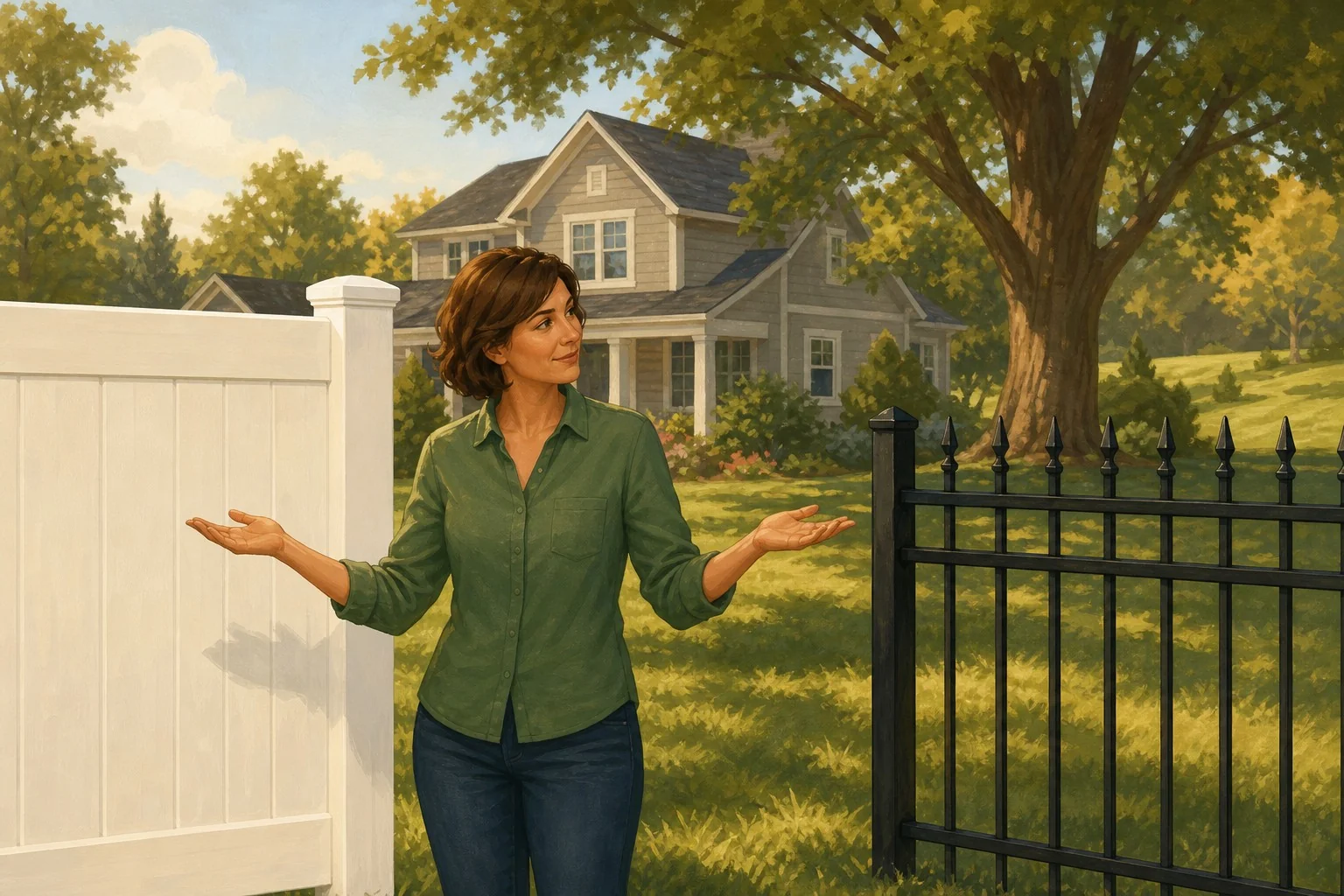
You’re shopping for a fence and you’ve narrowed it down to vinyl or aluminum. Both look decent in photos. Both sound reasonable at the supply house. And now you’re standing in front of a sales brochure that makes each one sound like it was engineered by NASA.
Here’s what the brochure won’t tell you: the answer depends on where you live, what you’re fencing in, and how much you actually want to deal with maintenance over the next twenty years. Lucky for you, we’re talking about PA and NJ — which means we’re talking about real winters, humid summers, and weather that beats the hell out of everything it touches.
Let’s sort this out.
How Long Does Each One Actually Last?
Vinyl manufacturers love to throw around “lifetime warranty.” And technically, vinyl can last 20 to 30 years without rotting, rusting, or needing to be painted. That part is true.
But vinyl is plastic. And plastic in a Mid-Atlantic climate gets tested hard — UV exposure, freeze-thaw cycles, wet springs, the works. Cheap vinyl gets brittle after a decade. Quality vinyl from a reputable manufacturer holds up longer, but it’s not invincible. A big enough impact — a branch, a car bumper, a kid with a dirt bike — cracks it. And when vinyl cracks, you’re replacing panels, not patching them.
Aluminum is a different story. A properly installed aluminum fence — powder-coated, not cheap painted — can last 40 to 50 years without significant deterioration. It doesn’t rust the way steel does, it doesn’t rot, and it doesn’t get brittle in cold weather. The finish can fade or chip over time, but that’s cosmetic. The structure stays solid.
In terms of raw lifespan, aluminum wins. That’s just the honest answer.
PA & NJ Climate: Why It Matters More Than You Think
We get it from both ends here. Summers are humid and hot. Winters throw ice storms, heavy snow, and hard freezes at you, sometimes in the same week. The freeze-thaw cycle is what really separates the materials.
Vinyl expands and contracts with temperature swings. In most cases that’s fine — it’s built for it. But posts set in concrete and panels snapped into brackets start to show stress over time if installation wasn’t done right. If somebody cut corners on post depth or didn’t leave the right expansion gaps at the brackets, you’ll see buckling and warping within five to ten years.
Aluminum doesn’t have that problem to the same degree. It expands and contracts too, but less so, and it’s not susceptible to the same structural fatigue from temperature cycling. A properly installed aluminum fence in Jersey winters looks the same twenty years later as it did when it went in.
One thing to note: coastal NJ. If you’re near the water, salt air accelerates corrosion on aluminum unless the powder coat is intact. Inspect it every few years and touch up any chips before they become rust spots. It’s a twenty-minute job. Don’t let it slide.
Maintenance: What You’re Actually Signing Up For
People buy vinyl because they think it’s maintenance-free. It’s lower maintenance, not no maintenance.
Vinyl fencing picks up mildew, algae, and dirt — especially in shaded areas or anywhere with moisture. In a PA or NJ yard, that’s most yards. You’ll be hosing it down and scrubbing it every year or two to keep it looking like it’s not abandoned. The white stuff in particular shows every bit of grime. It’s not hard work, but it’s not nothing either.
Aluminum needs even less. Wipe it down, check the powder coat for chips, touch up if needed. That’s about it. It doesn’t stain, it doesn’t mold, and it doesn’t hold onto dirt the way vinyl does.
If you’re genuinely looking for the fence that demands the least from you over twenty years, aluminum is it.
When Vinyl Makes More Sense
None of this means vinyl is a bad choice. It’s not. There are situations where it’s the right call.
Privacy fences. Aluminum is an ornamental material — it’s the open-picket, decorative style. If you want a solid panel fence for a backyard where you don’t want the neighbors watching you grill, vinyl is your option. A solid vinyl privacy fence with good post depth and quality panels will do the job for 20-plus years with minimal hassle.
Pools. Many municipalities and HOAs require fence heights and panel styles that vinyl handles better. And vinyl doesn’t have the same safety concerns around sharp edges or chipping that metal can present in a pool environment.
Budget. If you’re fencing a large property and aluminum is out of reach, a quality vinyl fence is a reasonable alternative — just don’t go cheap on it. Cheap vinyl fence is a waste of money and time.
I had a job in Bucks County, residential property, new build, the owner wanted the whole perimeter done in the cheapest vinyl we could source. I told him straight out that the stuff he was looking at would be chalky and cracked in ten years. He did it anyway. Eight years later he called me to replace sections. Always the same story.
The Bottom Line
If you’re putting in an ornamental fence around your front yard, a garden, or a patio — aluminum, full stop. It outlasts vinyl, requires less maintenance, and holds up better in our climate. Spend the money on quality powder coat and good installation and you’ll likely never touch it again.
If you need privacy — solid panels, not ornamental — vinyl is what you’ve got, and it works fine when it’s done right. Go with a reputable brand, not the bargain bin at the big box store, and make sure whoever’s installing it knows what they’re doing with post depth and expansion.
Either way, the fence is only as good as the installation. Bad posts, wrong concrete mix, insufficient depth — it doesn’t matter what the panels are made of. The whole thing will give you trouble. Get someone who knows what they’re doing, or learn what to ask before you sign anything.