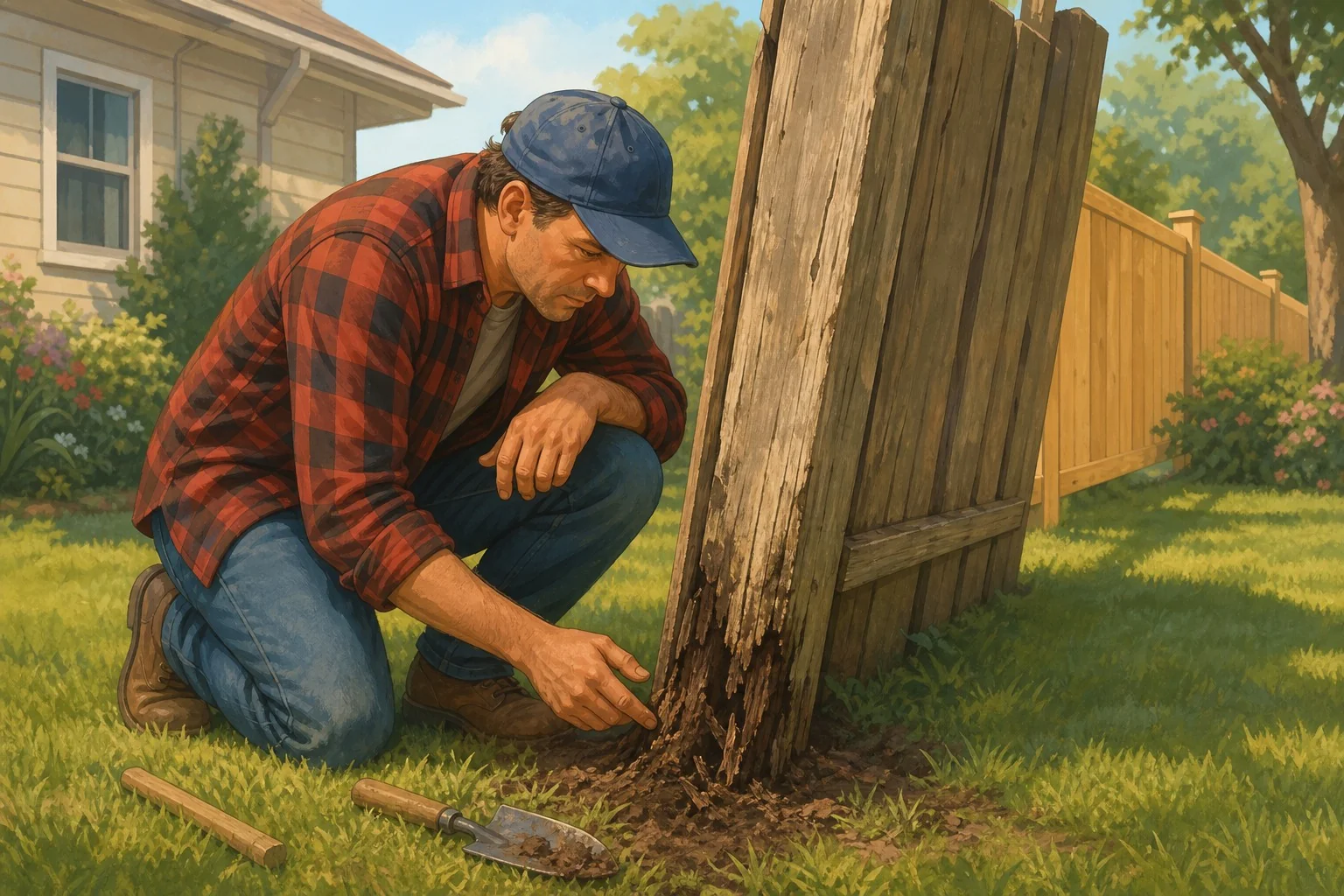
A fence should last 15 to 25 years. Cedar, done right, longer. Vinyl, longer still. So when I see a five-year-old fence leaning like a drunk on South Street, I know exactly what happened. It wasn’t the weather. It wasn’t bad luck. Somebody cut a corner, and now the whole thing is paying for it.
Here’s the truth nobody selling fences wants to tell you: most fences don’t die of old age. They get killed. And once you know the usual suspects, you can either avoid them on a new install or catch them early on the one you already have.
The wood is cheap, and you’re paying for it
The lumber at the big box store isn’t the same lumber a real fence company uses. Some of it is barely one step above pallet wood. Green, wet, warped before you even nail it up. Six months in the sun, it twists, splits, and starts sucking up water like a sponge.
If you want a wood fence to last, you want western red cedar or a properly pressure-treated pine rated for ground contact. Not “above ground.” Ground contact. There’s a difference and it matters. The label on the end of the board tells you. Read it. If the guy at the yard can’t tell you what rating it is, walk out and go somewhere else.
The posts are the whole ball game
I’ll say it flat out: 90% of the fences I’ve seen fail early failed at the posts. Everything else — the pickets, the rails, the caps — that’s cosmetic. The posts are the fence.
Here’s what goes wrong.
- Holes too shallow. In this part of the country you want at least a third of the post in the ground, minimum. On a six-foot fence, that’s two feet down, and you should be going deeper. Frost line matters. If the base of your post isn’t below where the ground freezes, it’s going to heave. Winter after winter, it walks itself right out of the dirt.
- No gravel at the bottom. Post drops in, concrete goes in on top, water pools around the wood, and the post rots from the base up. You want four to six inches of gravel under the post for drainage. Nobody sees it. Everybody skips it. That’s why fences rot from the bottom.
- Concrete collar sits above grade. Water needs somewhere to go. If your concrete forms a nice little bathtub around the post, congratulations — you built a rot factory. The concrete should crown up and away from the post, so water runs off.
I had a job in Roxborough a few years back where a homeowner called me out because his two-year-old fence was already leaning. I dug down at one post and the concrete came out in three pieces. The installer had used dry-pack, didn’t mix it with water, just dumped it in the hole and figured the rain would do the work. It didn’t. That fence had to come out and go back in from scratch. Two grand, gone, because somebody was in a hurry.
Gates: the part everyone gets wrong
A gate is a moving piece of a stationary structure. Physics doesn’t like it. Every time you swing it, you’re putting torque on the hinge post. So if that post isn’t beefier than the rest — bigger, deeper, better braced — the gate starts to sag inside of a year.
A few rules:
- Use a 6x6 for a gate post, not a 4x4. I don’t care what the pre-made kit says.
- Cross-brace the gate itself. The brace runs from the bottom hinge corner up to the top latch corner. Not the other way around. Get it backwards and gravity pulls the gate apart instead of holding it together.
- Use real hardware. Heavy-duty hinges rated for the weight of the gate. The stamped-tin hinges that come in a plastic bag are garbage.
If your gate is dragging on the ground after a year, the post is moving. Fix the post. Shimming the hinge is a band-aid on a bullet wound.
Water is the enemy, and drainage is the answer
Fences fail where they meet the ground. Always. That’s where water lives. If your yard slopes toward the fence line, or you’ve got a downspout dumping near a post, or the mulch bed is piled up against the pickets — you’re rotting the fence on purpose.
Keep grade sloped away from posts. Keep mulch and dirt off the wood. If a downspout is aimed at the fence, put an extension on it and send that water somewhere else. Standing water at the base of a fence is a death sentence, and it’s slower than you think, so by the time you see the damage, the post is already toast.
Nobody wants to hear this, but maintenance matters
A fence isn’t a set-it-and-forget-it thing. Wood fences want to be sealed or stained every two to three years. Not because it looks nice — though it does — but because the finish is what keeps water and UV out of the grain. A dry, gray, unsealed fence is one bad winter away from cracking.
Walk your fence every spring. Push on the posts. If any of them move, dig around the base and see what you’ve got. Look at the hardware — screws back out, nails pop, hinges rust. Ten minutes of looking once a year saves you a full replacement down the road.
Vinyl and aluminum need less, but they’re not zero. Check for cracked panels, loose caps, and posts that have shifted. Anything moving, deal with it before winter.
Bottom line
Fences don’t fail because they’re old. They fail because somebody put them in wrong, cheaped out on the material, ignored the water, or never touched them again after the last picket went on. If you’re buying a new fence, ask the installer about post depth, gravel, concrete crown, and gate bracing. If they blink at you, hire someone else. If you’ve already got a fence, walk it, seal it, and pay attention to the posts.
Do that, and your fence will outlast the mortgage. Skip it, and you’ll be writing another check in five years.