Why Your Fence Is Sagging in the July Heat (And What to Do About It)
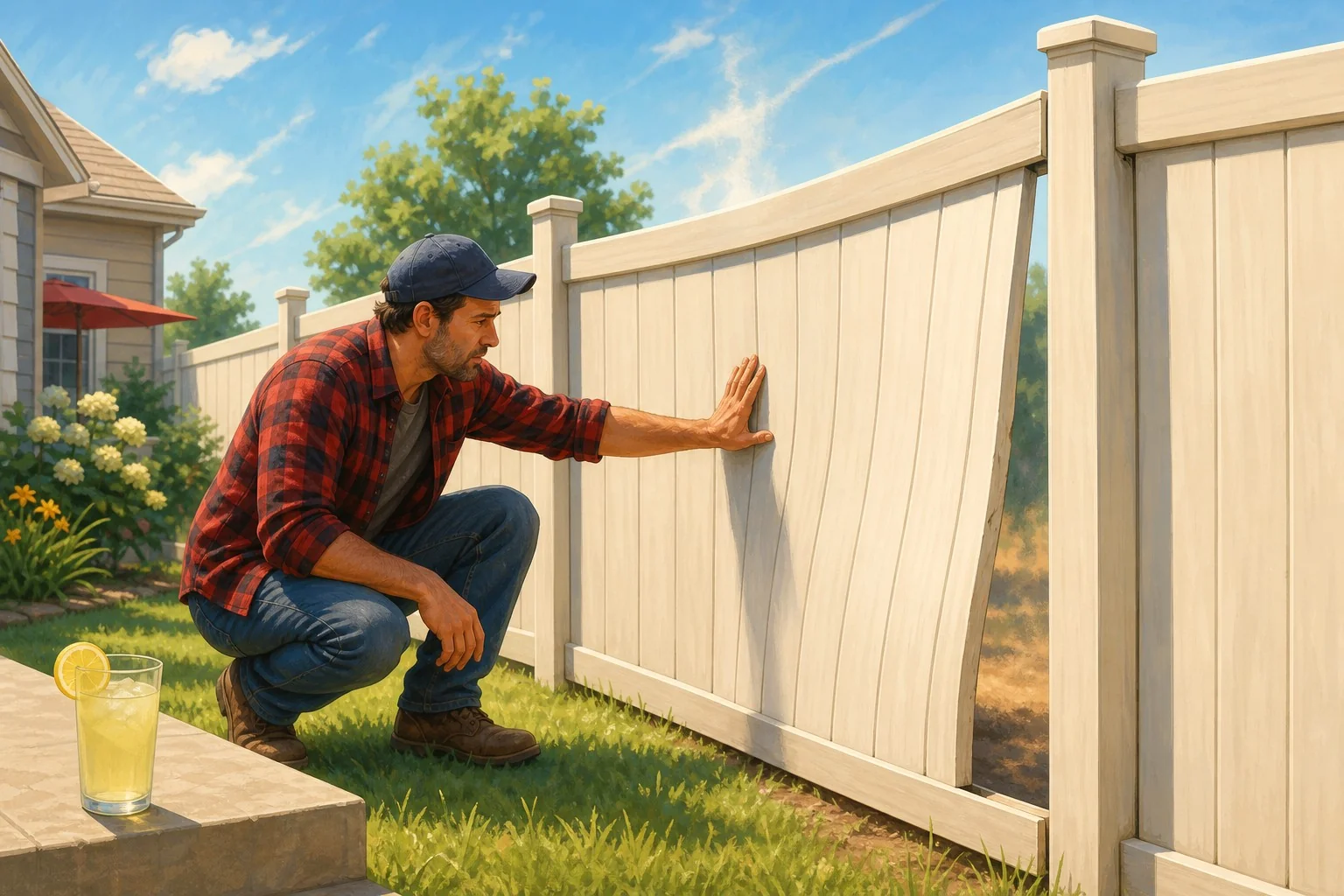
If you walked into your backyard this week and your fence looks like it’s had a couple beers, you’re not imagining it. July does this. Every year. And every year I get calls from people acting like their fence just decided to give up on them.
Here’s the truth. Fences don’t collapse in July because the wood is weak. They collapse because the ground is doing gymnastics underneath them and the wood is drinking humidity like it’s happy hour.
What summer actually does to your fence
Pennsylvania in July is not a friendly climate for anything made of wood and stuck in the dirt. You’ve got humidity in the 70s and 80s, afternoon thunderstorms that dump an inch of rain in twenty minutes, and then two days of dry heat that bakes the ground into concrete. The wood swells. The soil around your posts expands, contracts, expands again. Fasteners work themselves loose because the boards they’re holding are constantly on the move.
Now factor in the soil around here. A lot of the Delaware Valley sits on clay. Clay holds water like a sponge and then shrinks hard when it dries. If your posts were set in dirt instead of concrete — or set in concrete but the hole was too shallow — every wet-dry cycle nudges them. By mid-July, some of them are done pretending.
First thing to check: your posts
Go grab the top of each post and give it a real shove. Not a polite push. A shove. If the post moves more than a hair, that’s your problem. The panels themselves might look fine, but if the post is loose, the whole run is going to lean.
A properly set fence post in this region should be at least a third of its total length in the ground. A 6-foot fence needs a post that goes 3 feet down. Below the frost line. Set in concrete with a gravel base for drainage. If you don’t know how yours was set and it’s wiggling, I can almost guarantee somebody cut a corner when it went in.
Second: look at the base
Get down there and actually look at where the post meets the ground. Here’s what you’re checking for:
- Standing water or soggy dirt. That means water is pooling and rotting the post from the bottom up.
- Mulch or dirt piled up against the wood. People love landscaping right up to the fence. Don’t. It holds moisture against the post and speeds up rot by years.
- Soft or spongy wood. Poke it with a screwdriver. If it sinks in, that post is cooked. No amount of bracing will save it.
- Cracked concrete around the base. Freeze-thaw cycles all winter can split the concrete collar. When July hits and the ground shifts, there’s nothing left holding the post steady.
Third: check the hardware
Walk the fence line and look at every screw, nail, and bracket. In summer, wood expands. In fall, it contracts. Do that a few years in a row and fasteners start to back out. Nails are the worst offenders — they don’t grip when the wood swells and shrinks. If you see nails standing proud of the board by a quarter inch, that’s why your rails are sagging in the middle.
Replace loose nails with 3-inch exterior screws. Not drywall screws. Not whatever’s kicking around in the coffee can in your garage. Exterior deck screws, coated for outdoor use. They cost about eight bucks a pound and they’ll actually hold.
What you can fix yourself on a Saturday
If the posts are solid but the rails are loose, you can absolutely tighten that up in an afternoon. New screws, maybe a mending plate on a cracked rail, done.
If a single panel is sagging between two solid posts, a stringer added under the bottom rail will straighten it right out. Home Depot sells them and any homeowner with a drill can install one.
If the fence is just dirty and greyed out, that’s a power washer and a coat of stain — not a structural problem. Don’t overthink it.
What you should stop and call somebody for
Anything involving pulling a post is not a homeowner job unless you have a truck, a post puller, and a weekend to burn. I had a guy in Manayunk try to yank a rotten 4x4 out with a chain hooked to the back of his F-150. Ripped the whole footing out sideways, cracked his neighbor’s walkway, and had to pay to fix both. Cost him triple what a fence guy would’ve charged to do it right the first time.
If more than two posts are moving, or the fence sits on a property line, or it’s taller than 6 feet — get a pro out. Property line issues are their own headache and you don’t want to end up in a dispute with the neighbor because you eyeballed where the fence should sit.
The bottom line
Your fence isn’t dying because it’s old. It’s reacting to weather doing exactly what weather does in Pennsylvania in July. Half the time, the fix is a couple hours with a drill and a bag of screws. The other half, it’s a sign the posts were never set right to begin with, and that’s a conversation with somebody who does this for a living.
Either way — don’t let it go until October. Small fence problems in July are big fence problems by Thanksgiving.