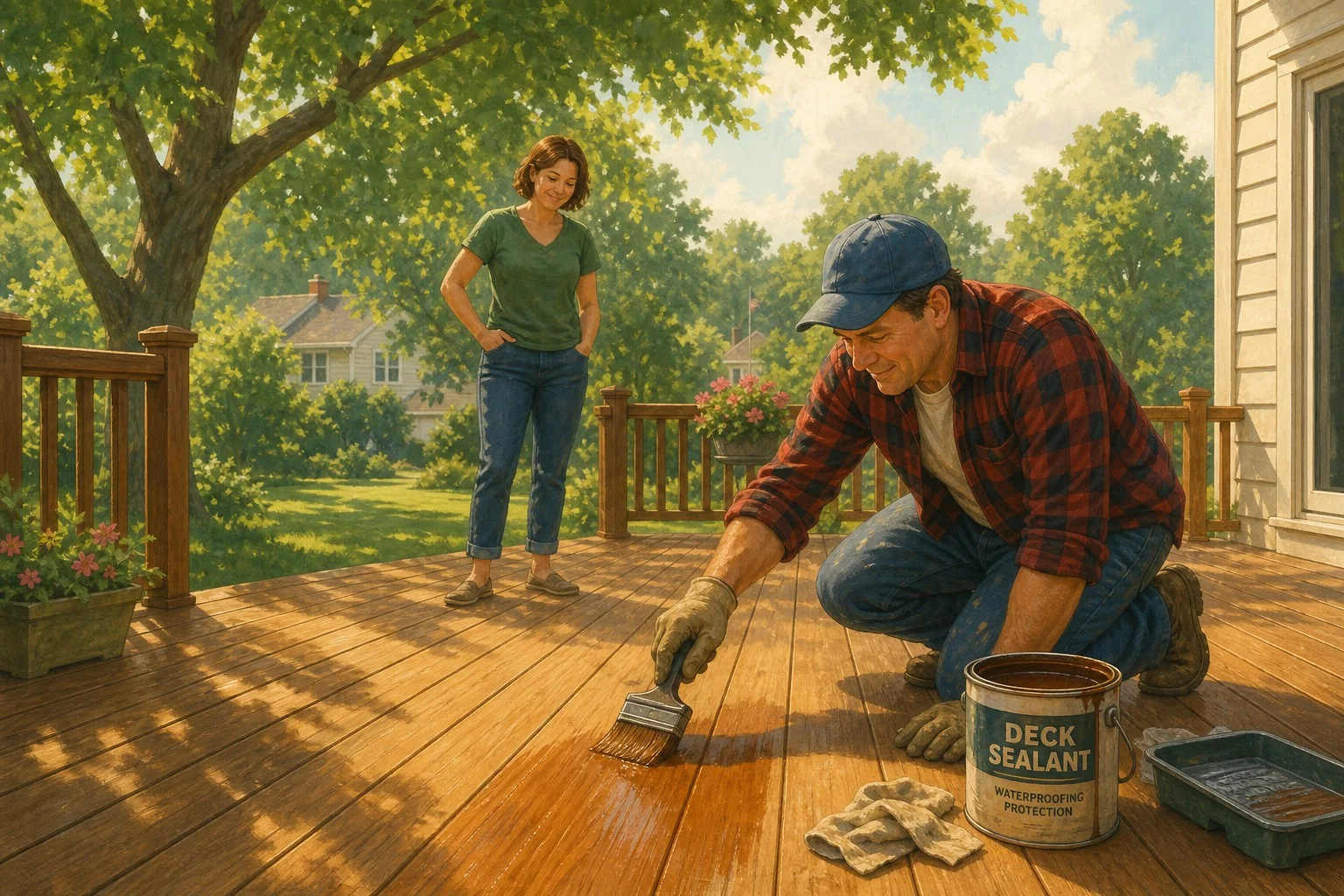
A Pennsylvania summer will chew up a wood deck faster than most people realize. We get the worst of both worlds out here — afternoon sun that bakes the boards, then a thunderstorm at 4pm that soaks them, then ninety percent humidity overnight that won’t let them dry. That cycle is what kills decks. Not termites, not age, not the dog. The wet-dry cycle and what grows in it.
Here’s how to keep yours looking decent without spending every weekend on your hands and knees.
Clean it on a schedule, not when it looks dirty
By the time your deck looks dirty, you’re behind. Pollen lands in April, mildew takes hold in June, and tannins from oak leaves start staining boards in July if you’ve got tree cover. Clean twice a year minimum — once in late spring after pollen drops, once in early fall before the leaves do.
Skip the pressure washer unless you actually know what you’re doing. More decks get ruined by a rented pressure washer than by any storm. Crank it to 3,000 PSI, hold the wand six inches off the wood, and now you’ve got a surface that looks like a corduroy jacket. Soft wash with a deck cleaner — oxygenated bleach, not chlorine — and a stiff brush. Rinse with a garden hose. That’s it.
If you’ve got mildew (black spots, usually on the shaded north side), the cleaner handles that too. Don’t grab the jug of chlorine bleach out from under the sink. Chlorine kills the mildew but it also breaks down the lignin in the wood and lightens the boards in weird patches. Two years from now you’ll be staring at your deck wondering why one section looks gray.
Re-seal when the water stops beading — and not before
Every spring I get the same question: “Should I re-seal my deck?” My answer is always the same — pour a cup of water on it. If the water beads up and sits on the surface, your sealer is fine. If it soaks straight in and darkens the wood, you’re overdue.
In our climate, most decks need a fresh coat of penetrating oil-based stain every two to three years. Pressure-treated pine on the south-facing side, where the sun beats it all day? Closer to two. A shaded deck with mature trees overhead? Three, sometimes four. Forget what the can says. The wood tells you when it’s thirsty.
When you do seal, pick a stretch of two or three dry days. Staining a deck at 10am and getting hit by a thunderstorm at 3pm will ruin a hundred and fifty bucks of product in twenty minutes. Check the radar. Then check it again before you crack the can open.
Use a stain with UV blockers and mildewcide built in. Cheap clear sealers are a waste of money in this region — UV chews through them in a season and you’re back at it before next Memorial Day.
Watch for the early warning signs before they cost you
Most deck failures start small and stay hidden until somebody’s foot goes through a board. Stuff to look for:
- Soft spots near fasteners. Press a screwdriver into the wood around screws and nails. If it sinks in, water’s been collecting and the wood is rotting from the fastener out.
- Cupping or crowning boards. A board that’s curled into a U-shape (cupped) or a hump (crowned) is holding moisture on one side. Usually that means the bottom of the board can’t dry out — bad airflow underneath.
- Black streaks at the joists. Pull a board up if you can. If the joists are streaked black where the deck boards sit on them, water’s trapped there. Left alone, the joists rot before the deck boards do — and then you’re rebuilding the whole frame, not replacing a couple of planks.
- Loose railing posts. Grab the top rail and shake it. If it moves more than a quarter inch, the post is loose. In summer humidity, wood swells and hides those bad connections. Come November when everything contracts, the posts get scary.
I had a place in Roxborough a few years back where the homeowner swore the deck was fine. Built ten years prior, never an issue. I pulled up one board and the ledger — the board that bolts the whole deck to the house — was holding two inches of standing water behind it because the flashing had failed. The structure was an inch from pulling off the house. We caught it. Most people don’t until they’re picking themselves up off the lawn.
A few other things worth knowing
Sweep the thing. Sounds stupid, but leaves, pine needles, and dirt trap moisture against the wood. Five minutes with a push broom once a week in summer does more than most expensive treatments.
Move your furniture around. Planters, grills, and chairs that sit in the same spot all summer leave shadows — sun-bleached wood around them, damp mildewed wood underneath. Shuffle stuff every couple weeks.
Don’t put down outdoor rugs unless you commit to lifting them weekly. Rugs hold water against the wood and grow mildew underneath them. You’ll pick the rug up in September and the boards will look like a bad tan line.
Keep an eye on whatever’s underneath the deck too. If gutters are dumping water near the posts, or the grade slopes toward the house, you’re dealing with a moisture problem the top side of the deck can’t fix.
The bottom line
A wood deck in this climate is going to age. That’s just how it goes. But there’s a difference between aging gracefully and falling apart. Stay ahead of the cleaning, watch the water, and check the hardware. Do that and you’ll get fifteen, twenty years out of it before you’re tearing it down and starting over. Ignore it and you’ll be writing a check for a rebuild long before you should be.