Pennsylvania summers are not kind to wood decks. You get heat, you get humidity, you get thunderstorms every other Tuesday, and then a stretch of 90-degree days that bake whatever moisture the rain left behind. By August, a deck that looked fine in May can have mildew running between the boards, a few warped planks, and finish that’s peeling like a bad sunburn.
This is not inevitable. It just requires paying attention before things get out of hand.
Here’s what to do, and when to do it.
Step 1: Clean the Deck First — Everything Else Comes After
Before you think about sealant or anything else, the deck has to be clean. If you seal over mildew or algae, you’re just trapping the problem under a layer of product.
Mid-summer, you’re typically dealing with:
- Green or black algae in shaded areas or between boards
- Gray mildew on horizontal surfaces that stay damp
- Dirt and pollen buildup from spring that’s had months to bake in
Use a deck cleaner made for wood — oxalic acid-based products like Defy Wood Brightener or similar are solid choices. Follow the directions, apply, let it dwell, scrub with a stiff-bristle brush, and rinse thoroughly. If you’re using a pressure washer, keep the PSI under 1,500 and use a fan tip, not a zero-degree nozzle. That zero-degree tip will etch the wood and leave you with fuzzy grain that soaks up dirt faster than ever.
Let the deck dry completely before moving on — minimum 48 hours, longer if it’s been humid. Sealing wet wood is a waste of time and product.
Step 2: Check Every Board for Warping, Cracking, and Rot
Walk the deck slowly. Really look at it.
Warping and cupping: Boards that have started to cup or crown — edges higher or lower than the center — are telling you they’re moving with moisture changes. A little movement is normal. A board that’s rocking underfoot or creating a trip hazard needs to come up and be replaced or refastened.
Checking and cracking: Surface cracks along the grain are normal on older decks. Deep cracks that run across the grain, or that go halfway through the thickness of the board, are structural concerns. Water gets in, sits, and rots the board from the inside.
Soft spots: Press your thumb into any board that looks discolored or stained. If it gives, it’s soft. Soft wood is rotting wood. It doesn’t come back. Replace it.
Fasteners: Check that screws and nails are still flush. Fasteners that have backed out create snagging hazards and allow water to pool around the hole. Drive them back in or replace with longer screws.
I had a client call me out to look at a deck that was supposedly “just a little bouncy.” Opened it up and found that four joists had rotted through because water had been sitting on the ledger board for two seasons — the flashing had failed and nobody noticed. What should have been a $200 maintenance call turned into a $6,000 structural repair. Staying ahead of rot is not optional.
Step 3: Apply UV-Protective Sealant Before Peak Summer Heat
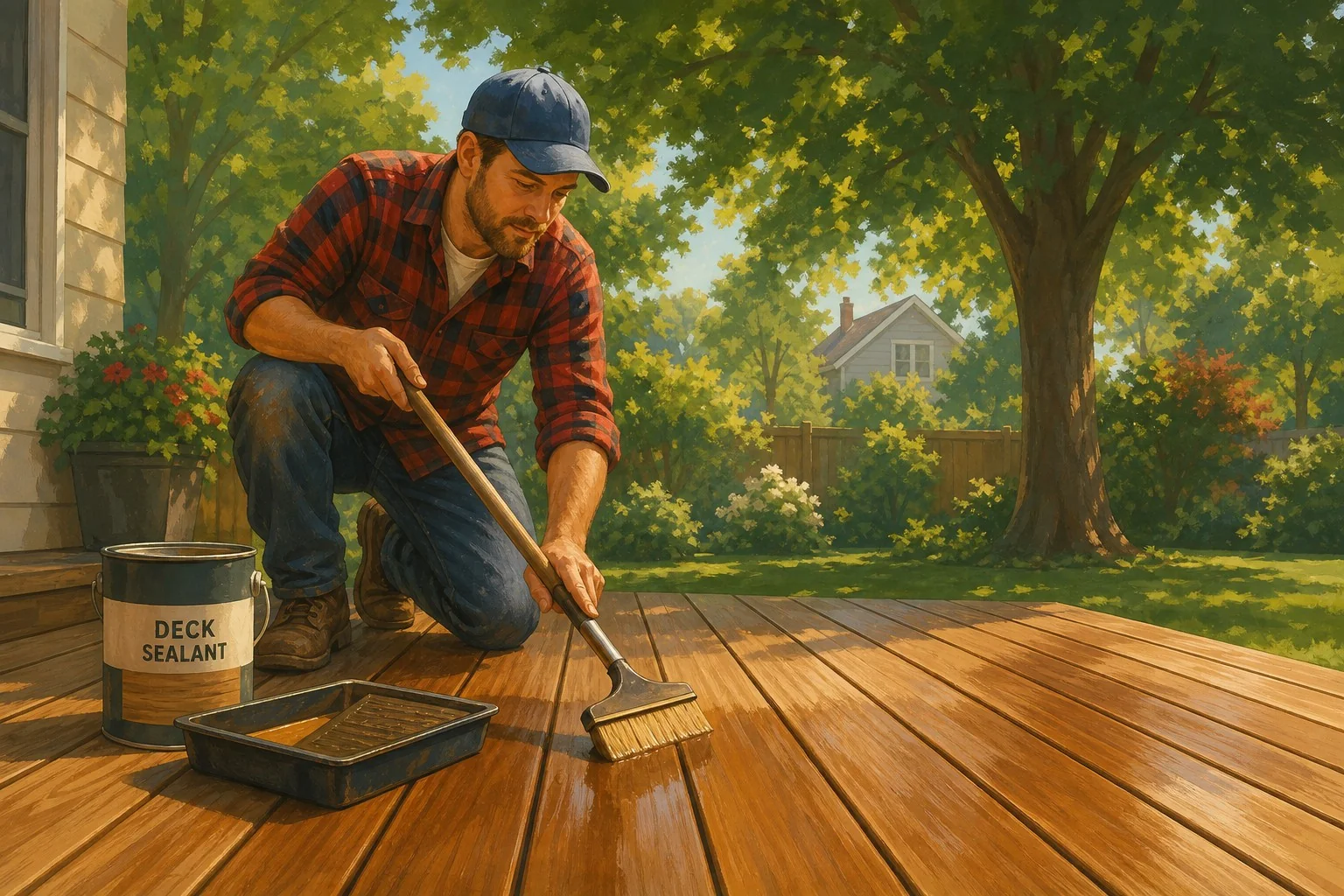
If you cleaned the deck and the boards are sound, seal it. Do it before July gets any worse.
Pennsylvania summers run hard on UV. Direct sun bleaches the wood, breaks down the lignin, and turns that warm natural color into gray ash. A quality sealant with UV inhibitors slows all of that down significantly.
What to use: A penetrating oil-based sealer does the best job on most residential decks — it soaks into the wood rather than sitting on top, which means it won’t peel. Brands like Armstrong Clark, Defy Extreme, and Ready Seal all perform well and are available at most lumber yards or home centers. Stay away from cheap film-forming sealers that look good for one season and then flake apart.
How to apply: Roll on with a 3/8“ nap roller and back-brush with a wide paintbrush to work it into the grain. Two thin coats are better than one thick one. Cover railing balusters and any vertical surfaces that get direct sun.
When not to apply: Don’t seal if rain is in the forecast within 24 hours, if temps are below 50°F or above 95°F, or if the wood is still wet from cleaning or rain. All three situations will give you a bad result.
Step 4: Mind the Gaps and the Details
The boards themselves get most of the attention, but the failure points are usually in the details.
Between the boards: Debris, leaves, and seed pods that sit in deck gaps trap moisture and accelerate rot on the edges of adjacent boards. Run a putty knife or deck gap cleaning tool through the gaps to clear them out after cleaning.
Railings and posts: Horizontal surfaces on railings hold water. The base of posts where they meet the decking is one of the first places rot starts. Check both. If the post base looks soft or discolored, get a hand on it and see if it moves.
Where the deck meets the house: The ledger board is where a lot of deck problems start. Water getting behind the ledger will rot the rim joist on your house. Make sure the flashing is still intact and that there’s no visible water staining or soft wood at that connection. If there is, stop what you’re doing and call someone.
When to Call a Pro
If you find structural rot in joists, beams, or the ledger — call someone. That’s not a DIY situation unless you have real experience with framing. Same if the deck has started to pull away from the house, or if you see any movement in the posts when you grab and push on the railing.
Surface-level maintenance — cleaning, sealing, replacing a warped board here and there — that’s well within reach for most homeowners. The structural stuff is different, and getting it wrong has consequences.
The Short Version
Clean first, let it dry, inspect everything, seal it with a quality penetrating product, and clear the gaps. Do it before July becomes August, because August in Philadelphia is not the time to be doing outdoor finish work.
Your deck is not a no-maintenance feature. It never was. But a few hours twice a year will keep it out of the “replacement” category for a long time.