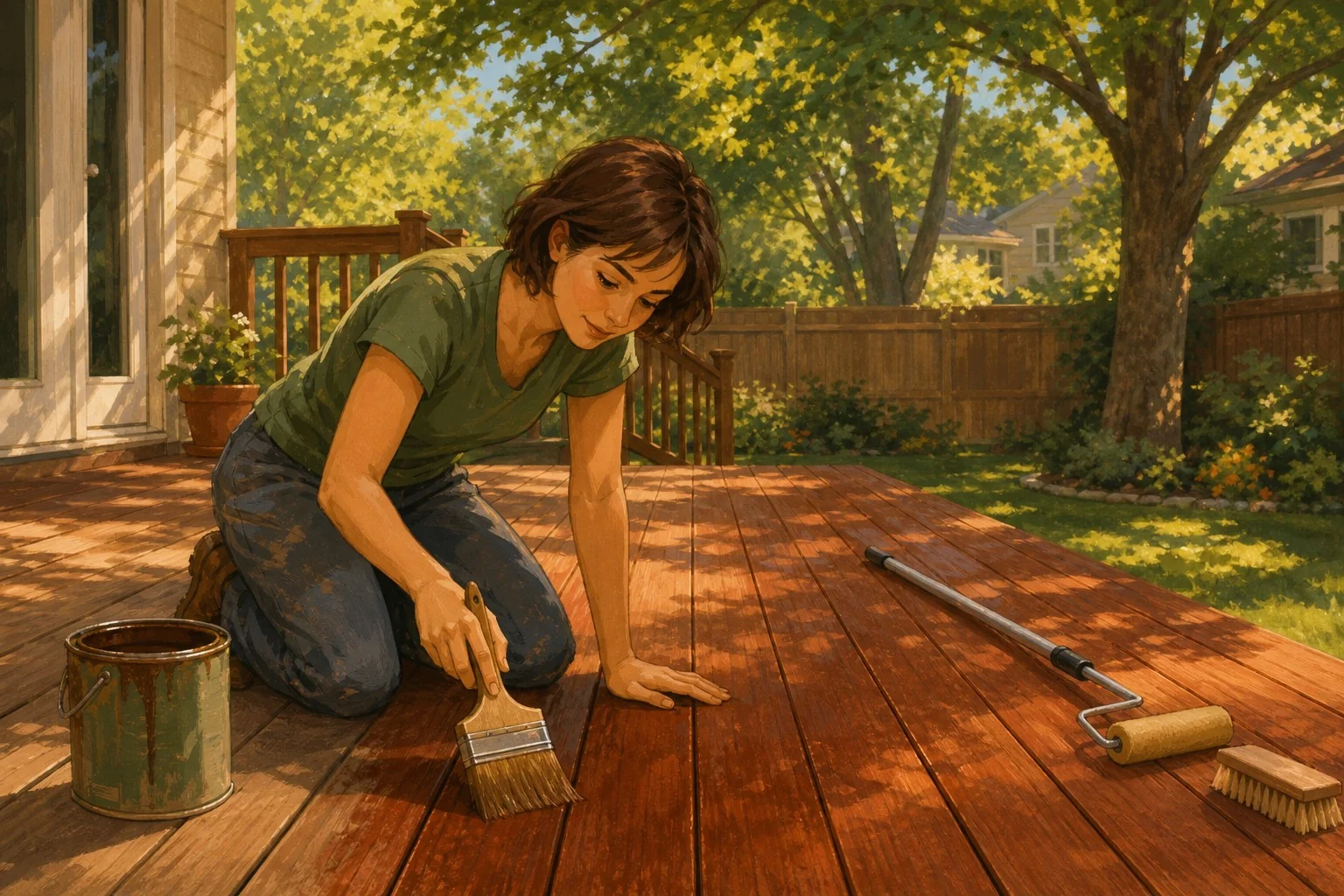
Every June, I get the same call. Someone’s deck looks like hell, they’re hosting a party in two weeks, and they want to know if there’s a “quick fix.” There isn’t. But there is a real fix, and if you start now — late June — you can still get ahead of the worst part of summer in Pennsylvania.
Here’s the thing about a PA summer. We get the wet spring, then the swampy humidity, then the August sun that bakes everything dry and cracked. Your deck takes a beating from all three. Most homeowners only think about it when a board splinters under their bare foot or the whole thing turns gray and fuzzy. By then you’re playing catch-up.
You don’t want to play catch-up. You want to be the homeowner who walks out on Labor Day weekend with a deck that still looks like a deck. So let’s go through what actually matters.
1. Walk the whole deck before you do anything else
I mean it. Walk every board. Push down on every plank with your foot. Wiggle the railings. Look at the joist hangers underneath if you can get down there. After a Pennsylvania spring — and we just had one with plenty of rain — wood swells, dries, and shifts. Nails pop. Screws back out. Boards cup.
What you’re looking for:
- Loose or popped fasteners. If you see a nail head sitting proud above the board, hammer it back down, or better, pull it and replace it with a 3-inch deck screw. Nails work loose. Screws don’t.
- Soft spots. Press hard on suspicious boards, especially near the ledger board (where the deck meets the house) and around any post bases. Soft wood means water sitting somewhere it shouldn’t.
- Split or cracked boards. A small surface crack is cosmetic. A crack that runs through the whole board is a tripping hazard waiting to happen.
- Wobbly railings. Grab every section and shake it. If it moves, fix it now. Not later.
I had a job in Manayunk a few years back — homeowner called me because her father-in-law went through a deck board at a Fourth of July cookout. Hairline split nobody caught. He was fine, mostly bruised pride, but it could’ve been a lot worse. Five minutes with a screwdriver in June would’ve saved everybody the embarrassment.
2. Clean the mildew before the humidity locks it in
If your deck has those greenish-black patches in the shady spots, that’s mildew, and it’s about to explode. Once July hits and the humidity sits at 80 percent for three weeks straight, mildew goes from a stain to a problem. It eats the finish and holds moisture against the wood, which is exactly what rots a deck from the surface down.
You don’t need anything fancy. Skip the pressure washer if you’ve never used one — people destroy soft wood decks with pressure washers all the time, chewing up the grain and leaving the surface fuzzy. Use a stiff bristle brush (not wire), a bucket of warm water, and either a deck-specific cleaner from the hardware store or a mix of oxygen bleach (sodium percarbonate) and water. Stay away from straight chlorine bleach — it kills your plants, kills the wood fibers, and lightens the color unevenly.
Scrub with the grain. Rinse thoroughly with a garden hose. Let the deck dry for at least 48 hours before you do anything else. If you skip the dry time and seal over damp wood, you’ve trapped moisture in and you’re going to be doing this whole thing again next year, except worse.
3. Get a coat of UV sealant on before the sun hits its peak
July and August sun in Pennsylvania is brutal on exposed wood. UV breaks down lignin, which is what holds wood fibers together. That’s why an untreated deck goes silver-gray and then starts checking and splitting. A good penetrating sealer with UV inhibitors stops that.
A few real tips:
- Pick the right product for your deck. Pressure-treated pine wants something different than cedar, and cedar wants something different than a hardwood like ipe. Read the can. Ask the guy at the paint store, not the kid stocking shelves at the big box.
- Check the forecast. You want two dry days before and two dry days after. A surprise thunderstorm three hours after you apply sealer will wreck the whole job.
- Apply thin coats. Two thin coats beat one thick coat every single time. Thick coats puddle, dry tacky, and peel by next spring.
- Don’t forget the end grain. The cut ends of the boards drink up water and UV like crazy. Hit those edges and the corners with extra product.
If your deck hasn’t been sealed in three or four years, don’t expect one coat to do miracles. You’re not restoring it. You’re stopping the bleeding. That’s still worth doing.
4. Keep up with it the rest of the summer
Once you’ve done the heavy work in June, the rest of the summer is just maintenance. Sweep leaves and debris out of the gaps between boards — that’s where moisture sits and rot starts. Move planters and furniture every few weeks so you don’t get permanent dark squares where the wood underneath never dries out. Keep the gutters above your deck clean so they’re not dumping water onto it every time it rains.
That’s it. That’s the whole game. Walk it, clean it, seal it, maintain it.
A deck is a long-term investment. Treat it like one and it’ll last twenty-plus years. Ignore it and you’ll be tearing it out in eight, which is a whole different conversation involving a contractor, a dumpster, and a five-figure check. Your call.